 THE GAME ARCHIVE
Reading the Land: Procedural Wilderness and Open-Ended Ambitions
Each new game in UnReal World begins with a world built through random and procedural generation, so the terrain is re-created rather than fixed. That generated landscape carries a detailed northern plant life, and it is laid out for close inspection as you travel. The map holds vast forests, mires, mountains and watercourses; the last of these can be crossed by rowing. Exploration therefore happens at a fine-grained level across an iron-age Far North, with the land itself assembled fresh for each run rather than repeated from a single hand-built map.
The procedural generation is paired with open-ended play, and the game states no forced role. You pick a life from the outset: fisherman, hermit seeking peace, adventurer, rough hunter, trapper or tradesman. Your character belongs to one of nine cultures, and the setting draws on northern folklore, knowledge and ways of living. Because turns are turn-based, each decision is made before acting, and the land can be lived off as you please. These choices sit alongside the generated wilderness rather than being imposed by a scripted path, leaving the ambition of the run to the player.
Skills Over Classes: Cookery, Hideworking, Herblore and Tracking
UnReal World replaces character classes with a skill-based system, and the roster runs from cookery and hide working to herblore and tracking. Rather than picking a profession that fixes what the character can do, you develop these abilities through practice in the iron-age north. The same skill list supports the everyday work the wilderness demands: tanning hides, picking berries, cooking food, tracking animals, setting traps, hunting with bows and spears, fishing, and crafting items. Culture is chosen separately from these skills, from a set of nine, so the character's background and the abilities being built are two distinct layers of the run.
Those nine cultures are not cosmetic. Membership in one places the character inside the detailed iron-age world where northern folklore, knowledge and way of life carry real weight, and the game describes interaction with cultures near and far as part of play. Trading with villagers is one concrete way those contacts are exercised, alongside the survival tasks of tracking, trapping, hunting, hide tanning, fishing, berry picking, cooking, sheltering and building a log cottage. Culture choice and skill growth therefore meet in the same world: the background shapes who you deal with, while cookery, hide working, herblore and tracking are developed as the character lives off the land.
Trapping, Hunting and Reading Animal Behaviour
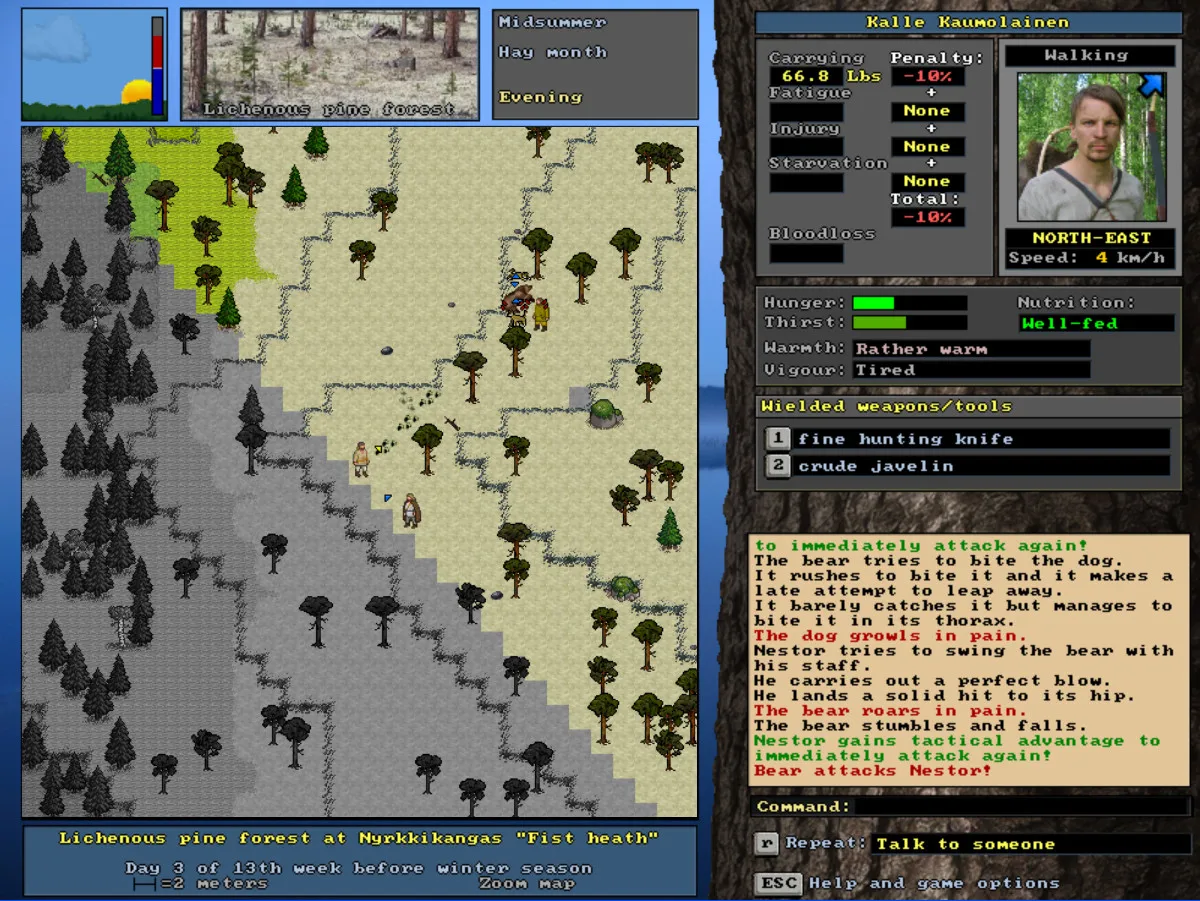
Tracking and trapping sit among the concrete survival tasks the game ties to living off the land. You can follow animals, set traps, and hunt with bows and spears, then tan the hides, fish, pick berries and cook food, all within the same iron-age setting. Temporary shelters and log cottages extend that work into building, and villagers can be traded with for goods. These actions are framed as survival in a harsh ancient wilderness, where the mechanics lean toward realism and historical atmosphere rather than abstraction.
Animals are modeled as a detailed kingdom, with species-specific behavior patterns and feeding relationships worked out in detail. That matters for hunting: the creatures you track and trap are not interchangeable targets but distinct species with their own habits and places in the food chain. Combined with the northern folklore and knowledge carried through the nine cultures, this gives the tracking and trapping work an ecological texture. The game presents these systems as part of a realistic, historically toned wilderness rather than a plain shooting gallery.
Crafting Shelter: From Traps and Weapons to Log Cabins
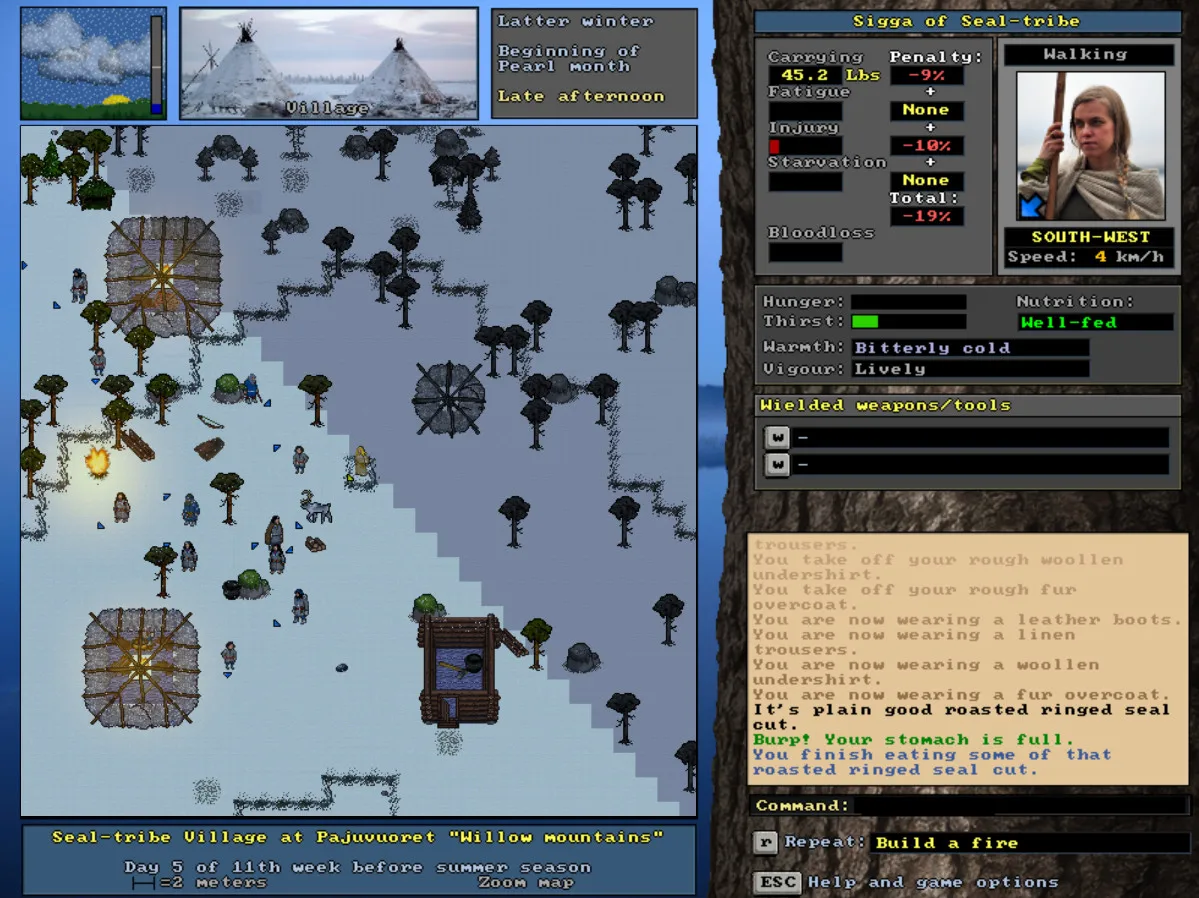
Crafting in UnReal World covers three connected kinds of work: making weapons, making traps, and raising constructions that range from temporary shelters up to log cabins. The practical result is that the same crafting activity serves both hunting and settlement, since a trap made for catching animals and a shelter raised for sleeping are produced through the same system. Building is not a separate mode bolted onto survival; it grows out of the shelter and cottage needs described alongside trapping, tanning hides, fishing, berry picking and cooking.
Crafting and construction are also moddable, and the same treatment extends to flora. That means the weapons, traps and buildings can be altered through modding, and so can the plant life of the generated world. The documented scope stops at naming these systems as moddable; it does not lay out the tools used or the limits placed on changes. For the crafting section, the concrete interaction is that item-making, shelter-to-cabin building and plant life all sit within a moddable layer rather than a closed, fixed set.
No Hit Points: Wounds, Body Locations and the Spirit World
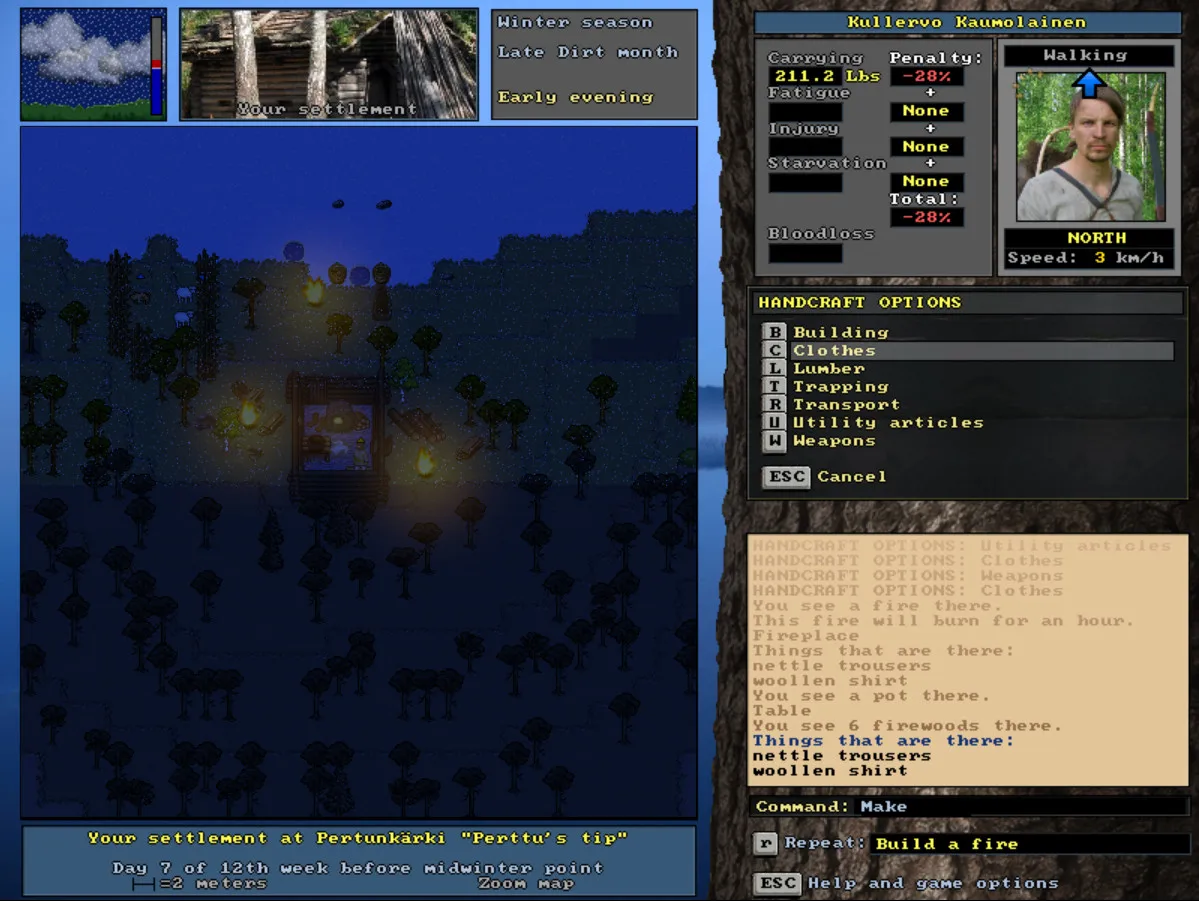
UnReal World does without a conventional hit-point pool. Instead, combat and hunting produce detailed injuries assigned to specific body locations, and those injuries come in several named forms: bruises, fractures, tears and cuts. Each wound is rated, and that rating determines how it affects physical activity, so the harm a character carries is tied to where it landed and how severe it is rather than to a single shrinking number. Struggles are described as tactical, shaped by weapons, battle experience and combatant-related factors.
Alongside the physical injury model, the game documents interaction with the spirit world and with supernatural guardians of nature. These guardians are presented as part of the same harsh ancient wilderness where everyday survival and the quest for success take place. The spirit-world element sits beside the concrete systems of wounds and rated injuries, so the supernatural layer and the bodily one are both part of how the setting is framed, rather than one replacing the other.
Sources & further reading.
- UnReal World — official game profileRetrieved Nov 2, 2026
First published .