 THE GAME ARCHIVE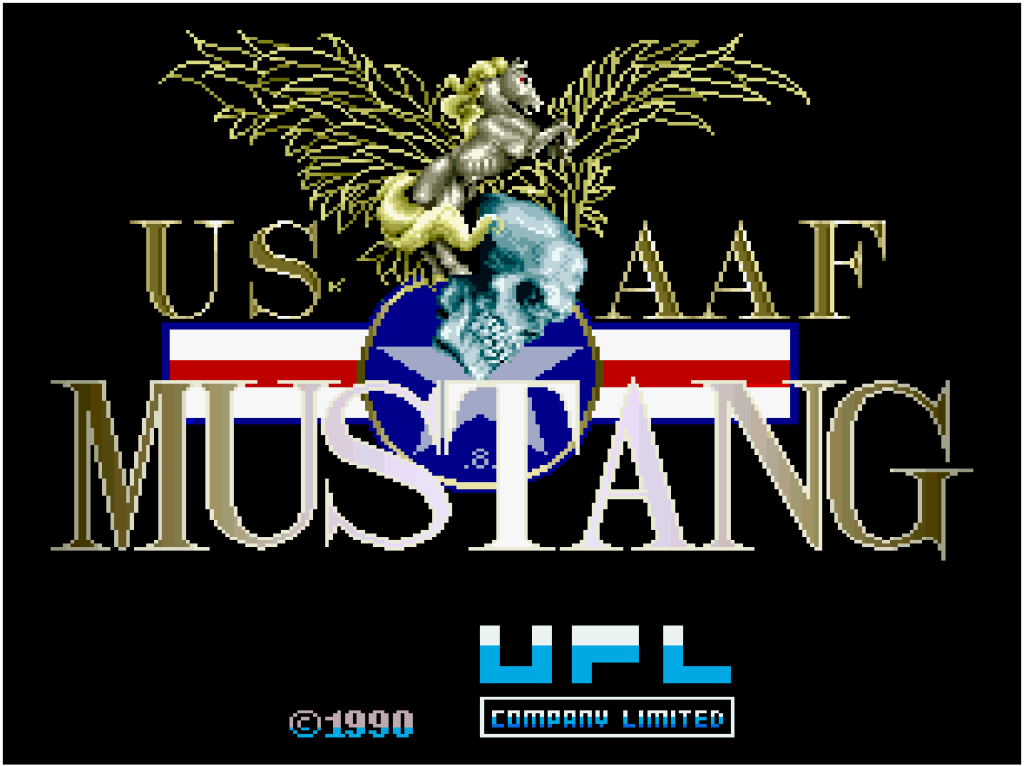
Pilot a Plane Against Enemy Squadrons
USAAF Mustang is a shooting game released by UPL in 1990 for arcade hardware. The documented premise is compact: players pilot a plane and take on enemy squadrons. That pair of rules defines the entire player-side fantasy the source describes. There is no documented character roster, no branching narrative, and no described pilot customization, so the plane is the sole player-controlled element in the record. What the player actually does, according to the documentation, is fly the plane into engagements with squadron formations and work through the stages those squadrons populate. The genre label, shooting, matches that structure, and the rest of the documented rules build outward from this single activity.
Because the documented systems are few and interlocking, each one carries weight. Piloting the plane matters because the squadrons are the opposition. Taking on those squadrons matters because clearing stages is the progress measure. Power-up items matter because they enhance the plane's weapons and are named as a way to gain the advantage while clearing stages. The Strike Forcer attack matters because it makes the plane temporarily invincible in a pinch while its attacks on enemies continue. Every documented rule points at the same loop: engage, upgrade, survive, advance. That loop is the whole of what the publisher material describes, and it is enough to reconstruct a clear picture of how the game expects a run to unfold.
Power-Up Items Enhance Your Weapons
Power-up items are the documented upgrade path. The publisher description states that players use power-up items to enhance their weapons and gain the advantage as they clear stages. That sentence is doing real work: it identifies the pickup as the input, the weapon as the thing changed, and the advantage as the payoff. It also ties the upgrade loop directly to stage clearing rather than treating it as optional decoration. In practical terms, the player's decision during a stage is whether to prioritize grabbing or preserving power-up items relative to simply surviving the squadron fire. The documented rewards for collecting them are concrete: better weapons and a better position from which to finish the stage.
Two of the documented objective fields describe the same mechanic from different angles. The first names taking on enemy squadrons; the second names using power-up items to enhance weapons. Read together, the two fields imply an ordering of attention within each stage: the squadrons are what you face, and the power-ups are what let you face them better. The phrase "gain the advantage" is the only documented framing for how enhancement translates into outcomes, so the safe reading is that improved weapons make the squadron encounters more favorable. Nothing in the record describes alternate upgrade currencies, shops, or between-stage menus, so the power-up item is the sole documented enhancement mechanic.
The STRIKE FORCER Attack Provides Temporary Invincibility
The Strike Forcer is the most distinctive documented system in USAAF Mustang. The publisher describes it as the key to victory and specifies its behavior precisely: it makes the player temporarily invincible in a pinch while continuing the attacks on enemies. That phrasing separates it from a pure escape move. A conventional panic button removes the player from danger; the Strike Forcer keeps the plane in the fight and simply removes incoming harm for the duration. The player's attacks keep flowing, which means the invincible window is also an offensive window. The word "temporarily" matters here, and so does "in a pinch," which frames the attack as a response to pressure rather than a default state.
Because the Strike Forcer preserves offense while suspending vulnerability, it interacts with the power-up economy in a specific way. Enhanced weapons from power-up items determine how much the player gets out of the protected interval, since the attack continues during invincibility. A player who has built up weapons converts the window into more damage than a player who has not. That is the clearest documented relationship in the game: power-ups set the value of the Strike Forcer, and the Strike Forcer buys the time to keep fighting squadrons. Clearing stages remains the fixed objective throughout, so the attack is a tool inside the stage loop rather than a separate mode.
Clear Stages to Progress
Progress in the documented version of USAAF Mustang is measured by clearing stages. The progression field records that single rule and nothing else. There are no documented experience points, no described between-stage upgrades, and no alternate routes. The stage is therefore both the unit of challenge and the unit of advancement: the player enters, deals with the squadrons inside, and the stage ends when it is cleared. The publisher's objective statement reinforces the same structure by describing power-up use as something that happens "as you clear stages," which places item collection inside the stage-clearing activity rather than before or after it.
The stage structure also shapes how the other mechanics should be read. Power-up items are collected during squadron encounters, so each stage is a stretch of time in which the player's weapon quality can change. The Strike Forcer is available as a defensive reaction within that same stretch. The measure of success at any moment is simply whether the stage has been cleared, which means the player is always working toward the same visible finish line. Progression is thus continuous with combat: there is no documented break point at which the game stops being about flying and shooting and starts being about management.
Arcade Release by UPL in 1990
USAAF Mustang is documented as a 1990 arcade release published by UPL, with the title recorded as USAAF MUSTANG and the genre recorded as shooting. The catalog entry supplies exactly those fields and nothing more. It does not provide a month or region for the release, does not list home ports or later reissues, and does not describe the arcade hardware. For readers, the practical consequence is that the game sits firmly in the original arcade era of 1990, published by UPL, and the record of its commercial identity is confined to those catalog facts. Any claim beyond them would go past what the publisher material supports.
The UPL credit and the 1990 date are the two firm anchors for the game outside its mechanics. The platform field records arcade, and the genre field records shooting, which together place USAAF Mustang in the coin-operated shooter category. Read as a set, the catalog fields describe a single product with a known publisher, a known year, a known platform, and a known genre, and the publisher description then supplies the gameplay rules that sit on top of those facts. Since no other release details are recorded, the feature treats the arcade original as the definitive version under discussion.
What the Shooting Label Means Here
The shooting classification is not an empty tag for USAAF Mustang; it is a fair description of the documented systems. The player pilots a plane, engages enemy squadrons, collects power-up items that enhance weapons, and can call on the Strike Forcer for temporary invincibility while attacks continue. Every one of those mechanics belongs to the shooter vocabulary, and all of them are documented in the publisher material. The label also aligns with the catalog's platform and publisher fields, all of which describe the same 1990 arcade product. Nothing in the record suggests a secondary genre or hybrid identity.
Reading the documented rules as a set clarifies what kind of shooter the label is pointing at. The player's throughput comes from weapon enhancement through power-up items. The player's resilience comes from the Strike Forcer's invincibility window. The player's score of progress comes from cleared stages. None of these systems replaces another; they are three layers over the same squadron encounters. That layering is why the publisher calls the Strike Forcer the key to victory while still describing power-ups as the route to the advantage. Each layer answers a different question a player faces during a stage: how hard do I hit, how long do I survive, and how far have I gotten.
Sources & further reading.
- USAAF MUSTANG — licensed publisher game documentation Retrieved Oct 16, 2026
First published .