 THE GAME ARCHIVE
A New Purple Void Every Run
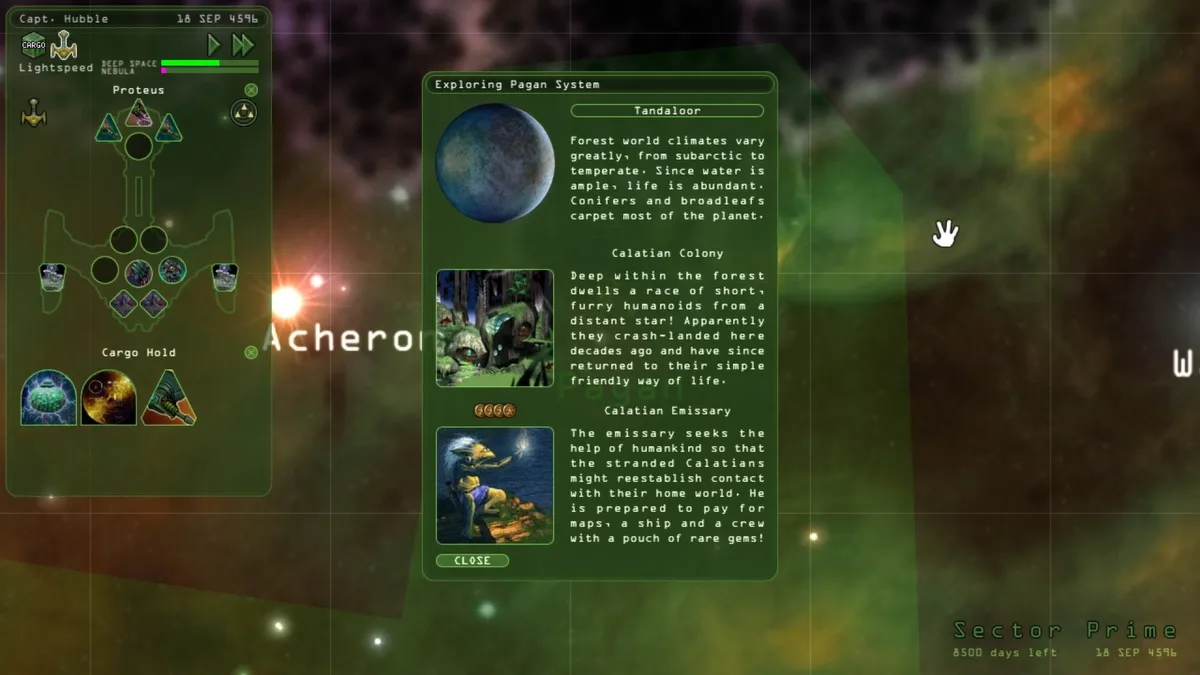
Every playthrough of Weird Worlds: Return to Infinite Space begins in the Purple Void, a peculiar, as-yet-unvisited region of the galaxy, and the game rebuilds that frontier from scratch each time. A new "sector prime" and its vast surrounding space are randomly generated per run, and the remix reaches the placement of distant stars and nebulae, the homeworlds of alien races, the distribution of lifeforms and artifacts scattered across the map, and plot-twisting quest events that steer a campaign. Because these pieces are reassembled rather than fixed, the layout a player explores on one attempt is not the layout waiting on the next.
The game is described as a hybrid roguelike built on space exploration and starship combat, so a run alternates between charting the sector and fighting within it. The documented scale is deliberately compact: unlike roguelikes that stretch across dozens of hours, Weird Worlds plays to its conclusion in less than thirty minutes. That short frame changes how the randomized sector functions — quest events, alien homeworlds, and scattered artifacts all sit inside a session meant to resolve quickly, so the remixed map and its occupants form the substance of a single short expedition rather than a long campaign.
Turn-Based Movement on a Living Star Map
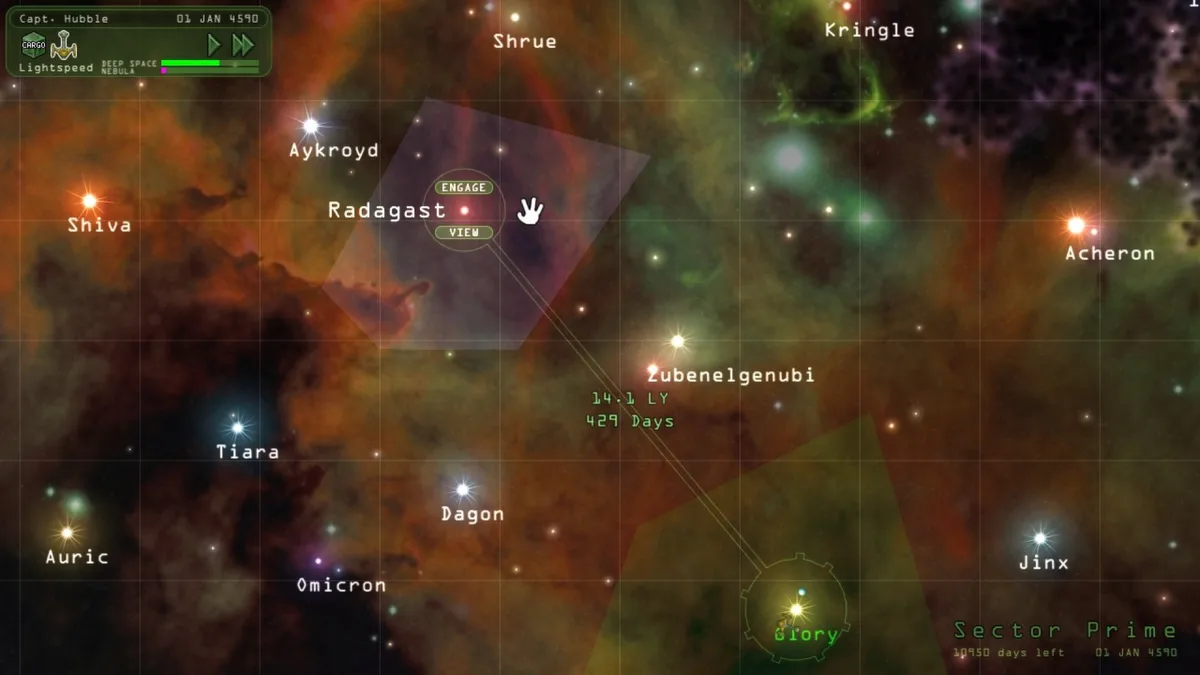
Movement across the Purple Void runs on a turn-based system layered over a fully animated star map. Rather than sliding a ship freely through space, the player advances through discrete turns while the map stays alive with motion, giving each order a settled rhythm before the next is issued. The map is the stage for the whole expedition: randomly generated stars and nebulae, alien homeworlds, and scattered lifeforms and artifacts all sit within that animated field, so planning a route means weighing where the remixed features have landed in this particular sector.
Because the sector is rebuilt for each session, turn-based travel means committing to a heading before the surrounding stars, nebulae, and homeworlds are fully charted. The animated map keeps those constituents visible as a field of destinations, and each turn resolves movement before the next decision. The short run length presses this rhythm together: the whole expedition reaches its conclusion in under thirty minutes, so turns spent crossing the frontier are shared with the exploration and combat the hybrid roguelike sets inside that compact window.
Real-Time Battles at Naval Speed
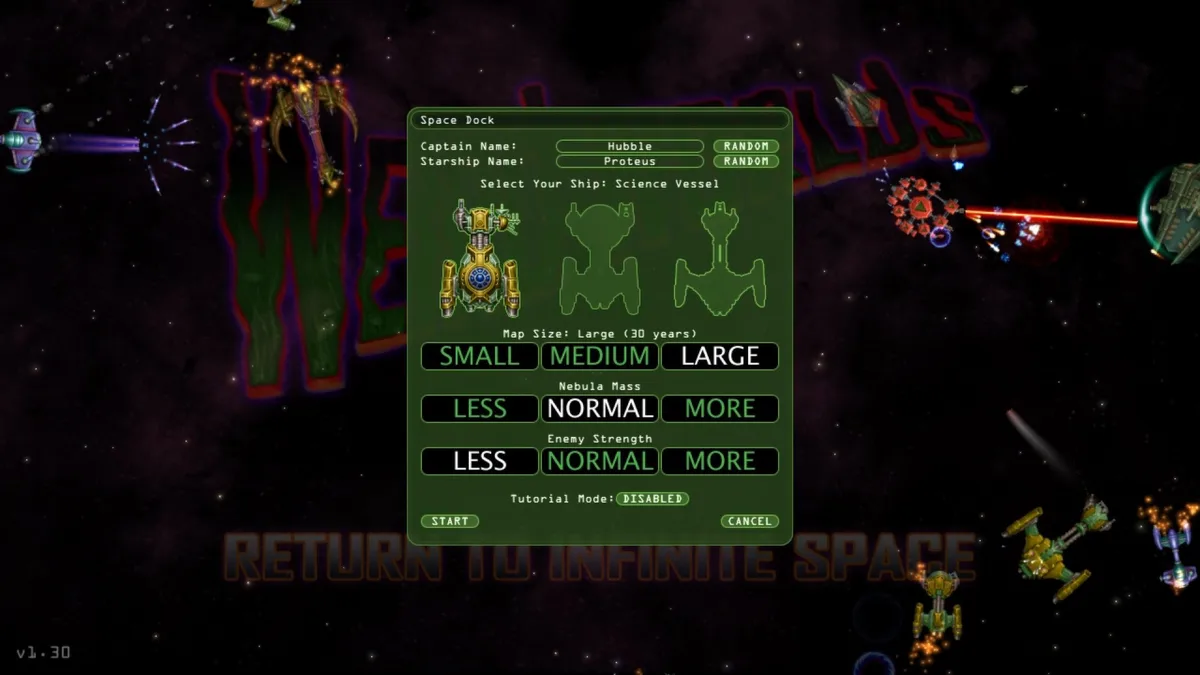
Starship combat in Weird Worlds plays out in real time rather than in the turn-based rhythm used for travel, and the game sets its battles at naval battle speeds instead of the faster pace of a super-melee. The juxtaposition matters because the same expedition moves between two tempos: discrete turns on the animated star map while charting the sector, and continuous action once a fight begins. The whole run still resolves in less than thirty minutes, so the real-time engagements are sized to fit that compact window.
A robust battle simulator is included alongside the campaign, giving starship combat a separate arena from the randomly generated sector. Within a campaign, the hybrid roguelike structure places exploration and starship combat side by side, so encounters are part of the same short expedition that remixes stars, nebulae, alien homeworlds, lifeforms, artifacts and quest events each time it is played. The battle simulator sits apart from that remixed frontier as a distinct, documented feature of the game.
Roguelike Runs That End in Under Half an Hour
A run in Weird Worlds: Return to Infinite Space is a hybrid roguelike of space exploration and starship combat, set in the Purple Void. Each time the game is played, a new sector prime and its vast frontier are randomly generated, remixing the locations of stars and nebulae, the homeworlds of alien races, the distribution of lifeforms and artifacts, and plot-twisting quest events. The map is therefore reassembled rather than fixed, so charting one attempt does not carry over to the next.
What separates this roguelike from the long campaigns common to the genre is its scale: Weird Worlds plays to its conclusion in less than thirty minutes. That compact frame means the randomly generated stars, nebulae, alien homeworlds, lifeforms, artifacts and quest events all sit inside a single short expedition. Exploration and starship combat share the same brief window, and the remixed sector is the substance of one sitting rather than a drawn-out campaign.
Mods, Music and the Battle Simulator
Beyond the campaign, Weird Worlds includes a robust battle simulator that gives starship combat its own arena, separate from the randomly generated sector. Instead of meeting a fight while charting stars, nebulae and alien homeworlds, a player can stage battles directly in the simulator. This sits alongside the turn-based travel system and the real-time engagements fought at naval battle speeds, so the combat model can be examined on its own rather than only through the short, remixed expedition.
The game also ships with built-in support for community-created mods, which the official profile describes as able to change anything and everything in the game. Alongside that, the feature set lists award-winning music and sound as part of the presentation. So the documented package is not just the sector and its fights: it pairs a moddable framework with an audio presentation that was singled out for recognition, while the core run still resolves in under thirty minutes.
Sources & further reading.
- Weird Worlds: Return to Infinite Space — official game profileRetrieved Oct 28, 2026
First published .