 THE GAME ARCHIVE
Growing Limbs: Building Quozzle from Scratch
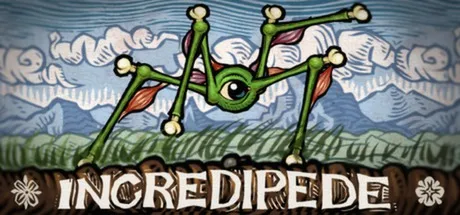
In Incredipede, the player builds Quozzle, a lone Incredipede on a quest to rescue her sisters, from the body outward. New arms, legs, and muscles can be grown wherever she needs them, so the creature is assembled as a working answer to each obstacle rather than a fixed avatar. Extra parts are optional design material: antlers or a tail can be added, her body stretched out like a snake, or the player can follow nature as a blueprint or depart into strange new directions. Every variant remains a creature to solve the level at hand.
The build itself is framed by the wooden-block print art style and a set of 120 puzzle levels. Designing a creature to solve each level centers on adding legs and muscles, which then makes movement possible: the player controls the creation using WASD and flexes those muscles to walk, flap, grab, or transform. In practice, limb placement and muscle layout turn into the method for moving through the world, from swinging through trees and climbing sheer cliffs to crossing rivers of lava and soaring on thermal winds during the campaign.
WASD Muscle Flexing: Walk, Flap, Grab, Transform
Once the parts are in place, movement is driven by muscle flexing rather than a separate movement animation. The player steers the assembled creature with the WASD keys while triggering its muscles to walk, flap, grab, or transform. These are the same muscles added during construction, so a leg grown for support becomes a walking mechanism, and a wing-like limb becomes a flapping one. The documented actions cover four distinct results: walking along a surface, flapping through the air, grabbing something, and transforming the creature. How a given build performs depends on where the player placed legs and muscles during assembly.
The level goal is always to design a creature that can solve the puzzle before it by adding legs and muscles until the body can handle the route. Because the WASD controls flex those added muscles to walk, flap, grab, or transform, the sandbox builder and the moment-to-moment handling form one loop: build a body, test whether its limbs and muscles produce the needed action, then rebuild if not. The puzzle count is 120 levels, each solved by the creature rather than by a preset character. No original release year is asserted here; any store record date for the Steam product would be only a product date.
From Snake to Fifty-Legged Horror: Body Plans
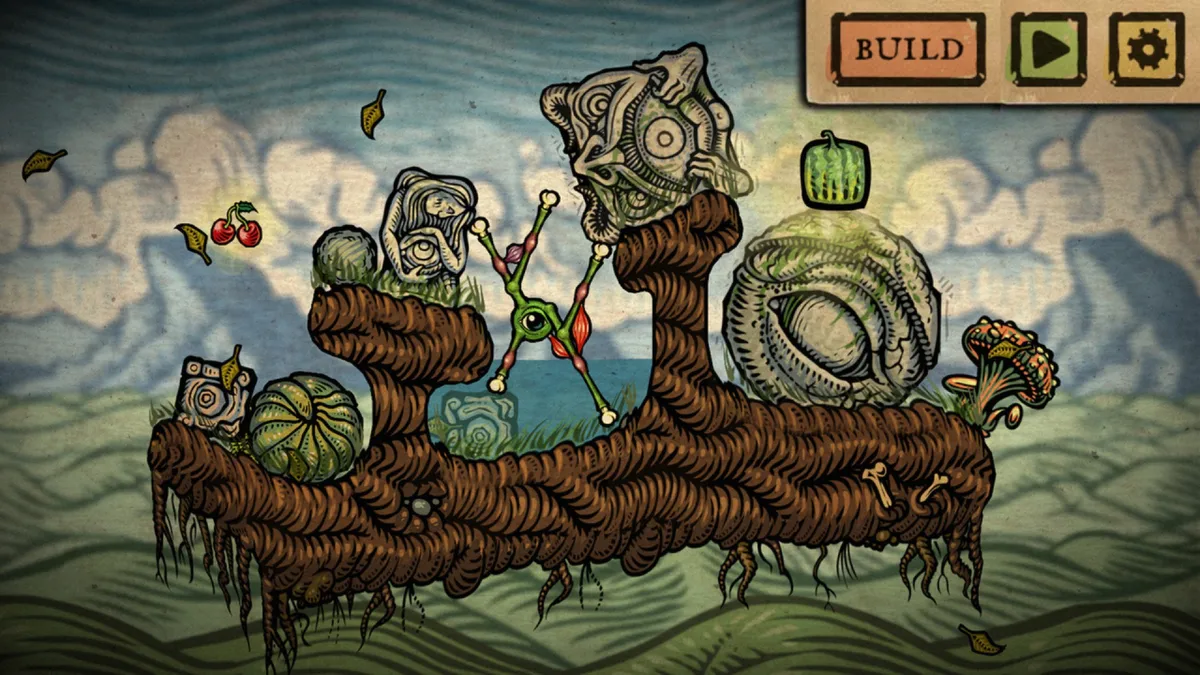
In Incredipede the body plan is not fixed: arms and legs are grown to change the creature's form. The documented range includes a snake, a spider, a butterfly, and a fifty-legged horror, presented as examples of what the player can build rather than as a closed list. Each label describes a different arrangement of grown parts, so the design decision is how many limbs to add and where they sit on the body. A snake-like body, a many-legged mass, and a winged shape all come from the same act of growing arms and legs before play begins.
The chosen body plan then determines how the creature is handled. The documented goal is to control the creation in a fumblecore dash to solve each puzzle, and the documented movement skills are swinging through the trees, climbing sheer cliffs, and flying. Those actions depend on the grown limbs: a body built for swinging is not the same build as one shaped for climbing or for flight. Because the player grows the arms and legs first, the limb arrangement is what supplies the creature with its means of crossing a level, and reaching a new kind of terrain means returning to that arrangement.
Cliffs, Lava, and Thermal Winds: Crossing 120 Levels
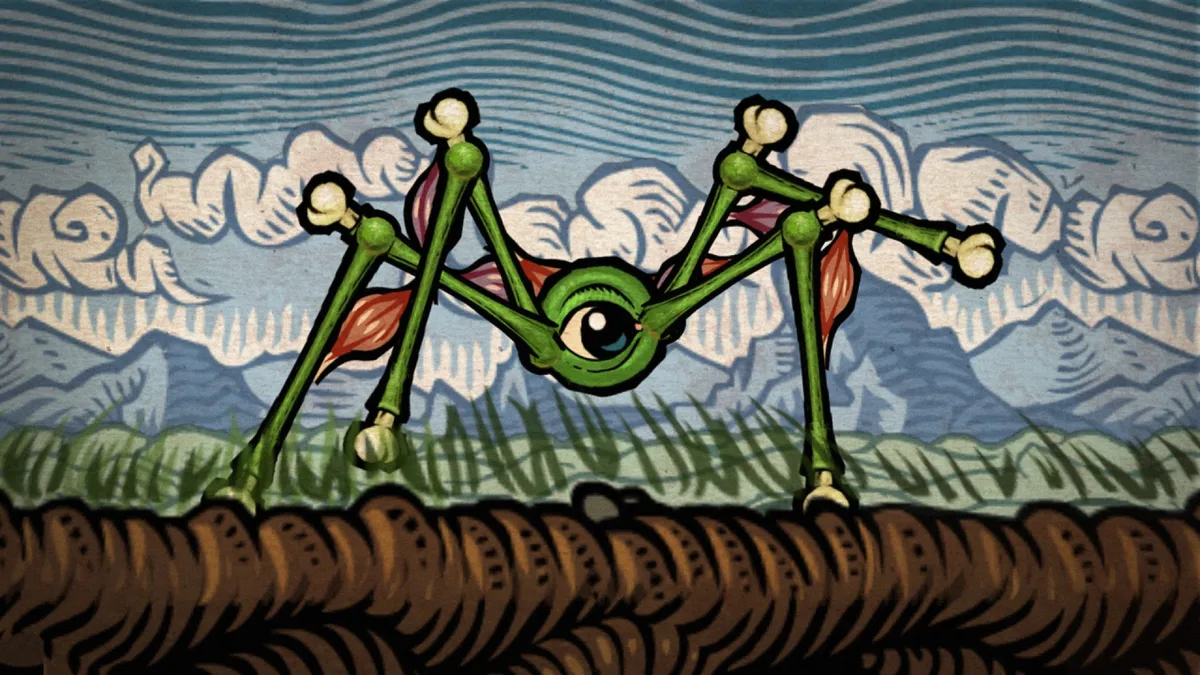
Across the 120 puzzle levels, the campaign sends Quozzle through terrain that changes which grown parts matter. She swings through the trees, climbs sheer cliffs, crosses rivers of lava, and soars through the air on thermal winds. Each of those routes draws on muscles flexed with the WASD keys to walk, flap, grab, or transform, so the creature that handles lava crossings is not necessarily the one built to ride warm air. Limb placement made before play determines which crossing is possible.
The interaction between build and terrain becomes clearest when a level asks for more than one skill. A creature arranged for climbing can be rebuilt with a wing-like limb for flapping when thermal winds replace the cliff face, and a body stretched for swinging through trees can be reshaped for lava terrain. Because muscles are added during assembly and then triggered in play, the four documented actions stay tied to where legs and muscles sit. The 120-level count is the scope of that design loop; no original release year is stated here, and any Steam product date would describe only the store record.
Campaign Rescue and Player-Made Challenges
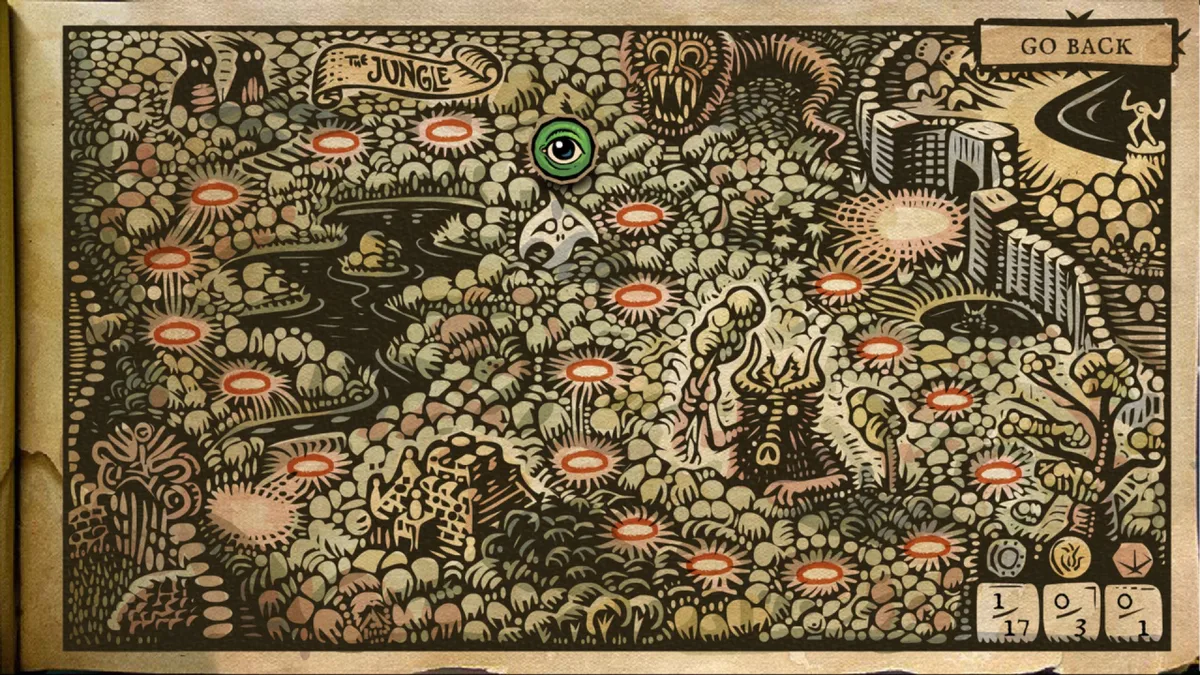
The campaign frames the puzzle solving with a rescue: Quozzle is a lone Incredipede working to rescue her sisters, and that mission runs alongside helping her save her village and uncover the truth about the terrible invaders. These goals give the 120 levels a destination beyond each single puzzle. The player still answers every obstacle by growing legs and muscles onto the creature, then steering the finished body with the keyboard to walk, flap, grab, or transform. The campaign is therefore a sequence of builds tied to a continuing story rather than a string of disconnected rooms.
Beyond the built-in campaign, a level editor opens the same creature-building rules to player-made content: thousands of player-made challenges are documented alongside the campaign. The tools mirror the campaign loop, since a level is solved by adding legs and muscles to a creature and then flexing those muscles with WASD to walk, flap, grab, or transform. The editor extends the puzzle count past the 120 campaign levels, letting challenges come from other players rather than only from the campaign designers. The documented scope pairs one authored campaign with a large body of community levels. No original release year is asserted, and any Steam product date is only a store record.
Wood-Block Print Looks and Jungle Sound
Incredipede dresses its creature-building and puzzle solving in a wood-block print style, a crafted look that gives the grown limbs and flexed muscles a carved, printed character. That visual treatment sits over the same loop of designing a creature for each level by adding legs and muscles, then controlling the creation with the WASD keys to walk, flap, grab, or transform. The style is the documented presentation for the campaign and the level editor with its player-made challenges, so the aesthetic covers both the authored puzzles and the community-built ones.
Alongside the printed look, the game carries an ambient soundscape built from strange animal calls and relaxed jungle beats. Those sounds accompany the same activity the rest of the game centers on: growing legs and muscles onto Quozzle to solve each level, then flexing the added muscles with WASD to walk, flap, grab, or transform. The jungle-flavored audio and the wood-block print visuals together form the documented atmosphere around the creature design and the puzzle solving, rather than changing how the build or movement rules work.
Sources & further reading.
- Incredipede — official game profileRetrieved Oct 28, 2026
First published .