 THE GAME ARCHIVE
Turn-Based Skirmish: Four Teams, Last One Standing
Each match places as many as four teams of pink worms onto a battlefield, and the configuration options let you shape the style of play before the first turn begins. Because this is a turn-based strategy game, teams alternate their actions rather than acting simultaneously. The stated goal is direct: make sure your side is the last team standing. Weaponry, tools, and a watchful eye for the enemy are handed to the worms so they can pursue that objective across the map until only one team remains.
Elimination is the documented combat outcome: teams fight until a single side survives, so the match ends when opposing worms have been removed from contention. The battlefield itself is ever-changing, and weapon crates fall onto it during play, alongside crazed exploding sheep. With as many as four teams in the same turn-based skirmish, the last-team-standing rule gives every exchange a clear direction, and the falling crates feed new weaponry into a fight that continues until one team is left.
Toys of the Trade: Grenades, Crates, and Exploding Sheep
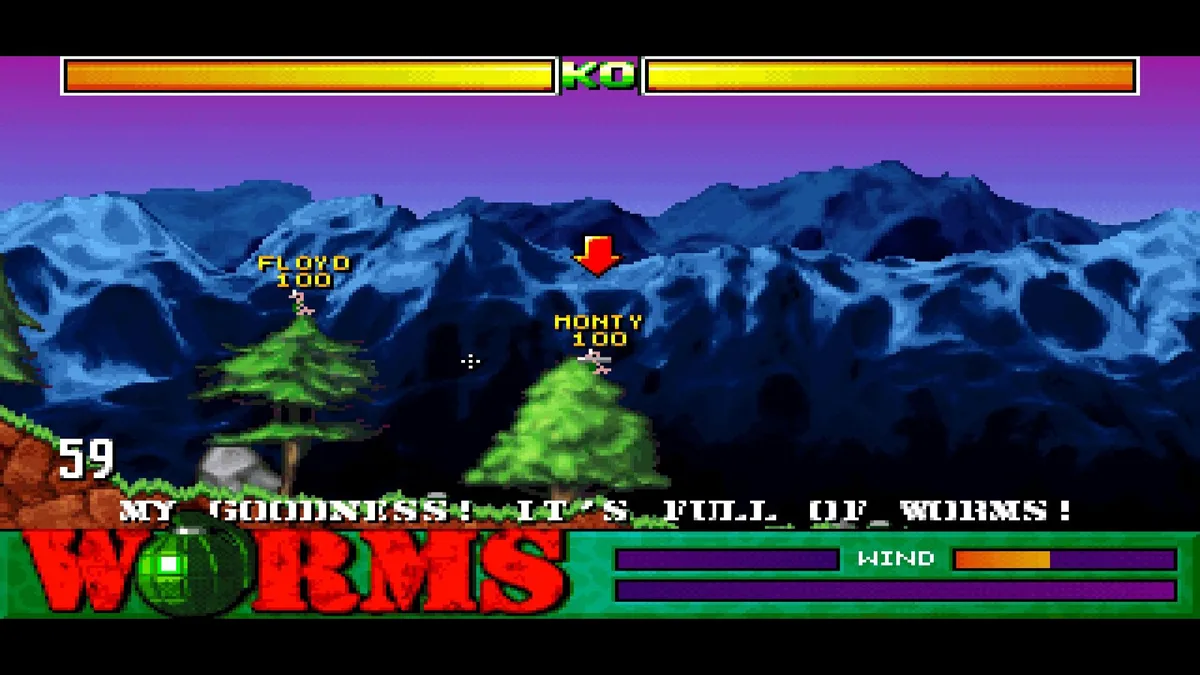
Weapon crates fall onto the ever-changing battlefield during play, and each one feeds new weaponry into the fight. Grenades are among the tools thrown, while crazed exploding sheep also appear on the map as a documented part of the arsenal and hazards in play. Because up to four teams of pink worms take turns, a falling crate can shift what is available on a later turn, and the same battlefield that drops supplies is also the ground the sheep wander across. The selection of weapons and tools is what the worms are handed to pursue the last-team-standing goal.
The documented rules tie these toys together with turn order and an unstable map. Teams alternate actions rather than acting at once, so a worm can throw a grenade, wait while crates continue to fall, then choose from whatever new weaponry has arrived; exploding sheep add another unpredictable element to the same exchanges. The match runs until a single side survives, and because the battlefield never stays fixed while supplies keep dropping, no two games follow the same sequence. Each turn is therefore shaped by what the prior turns left on the ground.
Campaign Patrol and Weekend Skirmishes
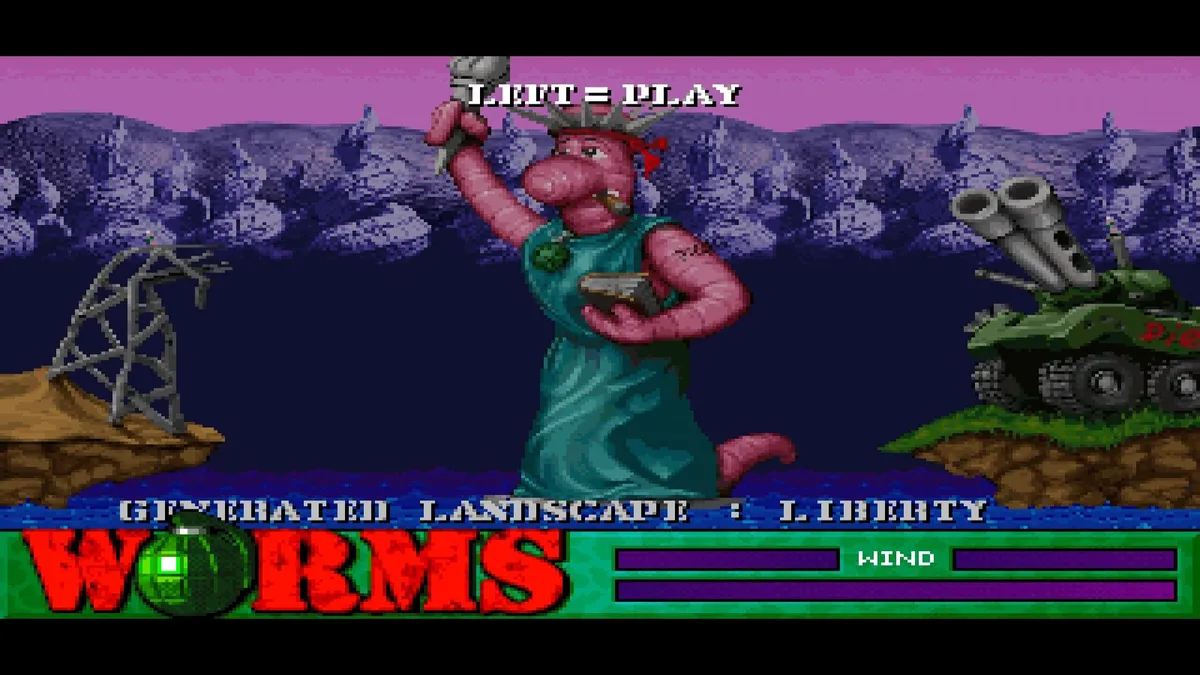
A dedicated single-player campaign lets you see where the familiar weapons and utilities were first unveiled, and you can work through that campaign at your own pace. Away from that structured path, the game is built as an ideal way for friends to enjoy a few hours together in short sessions. The stated aim stays constant across both: you are the last team standing. Configuration options are numerous enough to tailor the whole style of play, so the same pink worms, weaponry and tools can support either a brief campaign patrol or a long weekend of skirmishes.
The documented time scale is deliberately broad: it is a game you can pick up with a few spare minutes or play an entire weekend. That range is the reason the word skirmish fits the mode. Friends can configure the match through the many available options and decide how much of the weekend belongs to the game. The same campaign that teaches where each weapon originated also supplies a shorter outing when only a few minutes are free. The result is a game that stretches from a quick session to a marathon, with the myriads of settings adjusting the style of play along the way.
Shifting Ground: Battlefields That Never Repeat
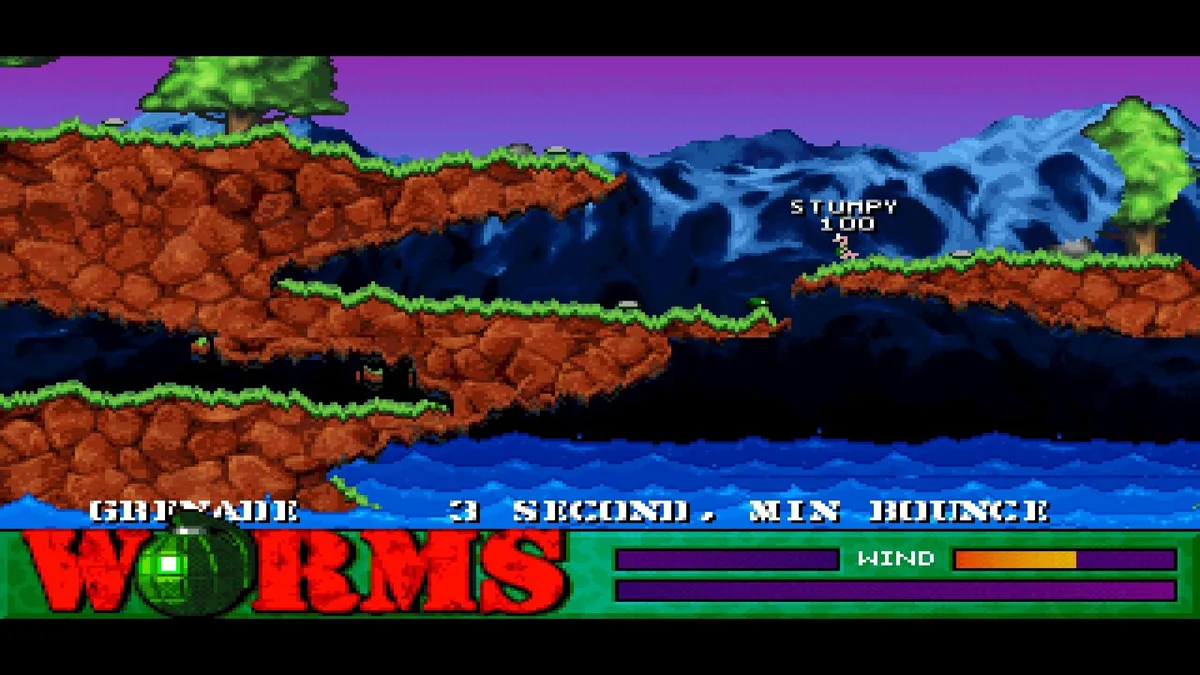
Think of a landscape, any landscape, and scatter platoons of pink worms across it. That landscape is not static: the game describes an ever-changing battlefield, so the terrain shifts as play proceeds. Weapon crates fall onto this shifting ground, dropping new tools and armaments at unexpected spots, while crazed exploding sheep wander into the same space. Because the battlefield itself keeps changing, cover that existed early may be gone later, and a crate that lands on one turn can alter what is available on the next.
The documented rules produce this constant variety. Up to four teams alternate actions on the ever-changing battlefield, where falling crates and crazed exploding sheep add unpredictable elements. With an almost infinite range of playing possibilities, no two games are ever the same. Each turn reshapes the ground and the available arsenal, so the match’s sequence cannot repeat. These interactions are why the outcome depends not only on planning but also on sheer outrageous fortune, as the game itself states.
Sources & further reading.
- Worms — official game profile Retrieved Oct 16, 2026
First published .