 THE GAME ARCHIVE
Point, Click and Use Verb Commands—No Typing Required
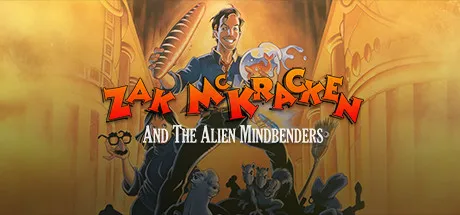
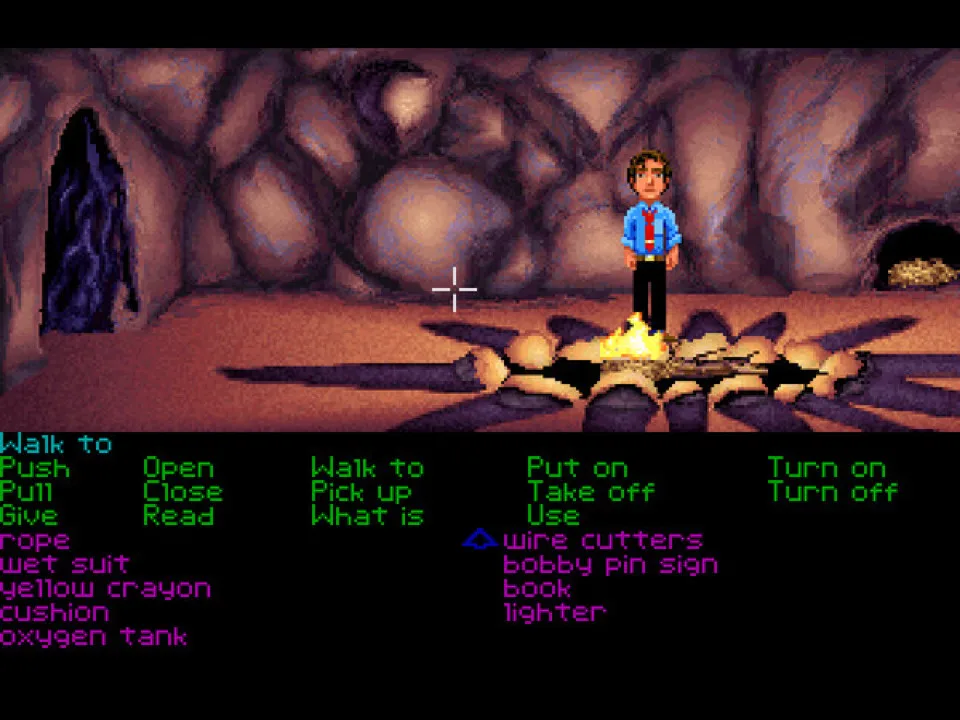
Zak McKracken and the Alien Mindbenders uses a point-and-click interface built around verb commands. Those commands provide the means to interact with the world and solve its puzzles, without requiring typed instructions. The defining combination is pointing and clicking to act through verbs: this is not an adventure that asks you to write out what you want to do. Its old-school command interface is part of the puzzle-solving system itself.
The no-typing approach extends to talking with the people in Zak’s world, not just working through puzzles. Both activities use point-and-click interaction, while the verb-command system supplies the broader framework for acting within the adventure. That gives the interface two documented jobs: handling encounters with characters and supporting puzzle solutions. The mystery is therefore presented through actions and conversations rather than a requirement to enter written commands.
Four Controllable Characters on an Adventure Across Earth and Into Space
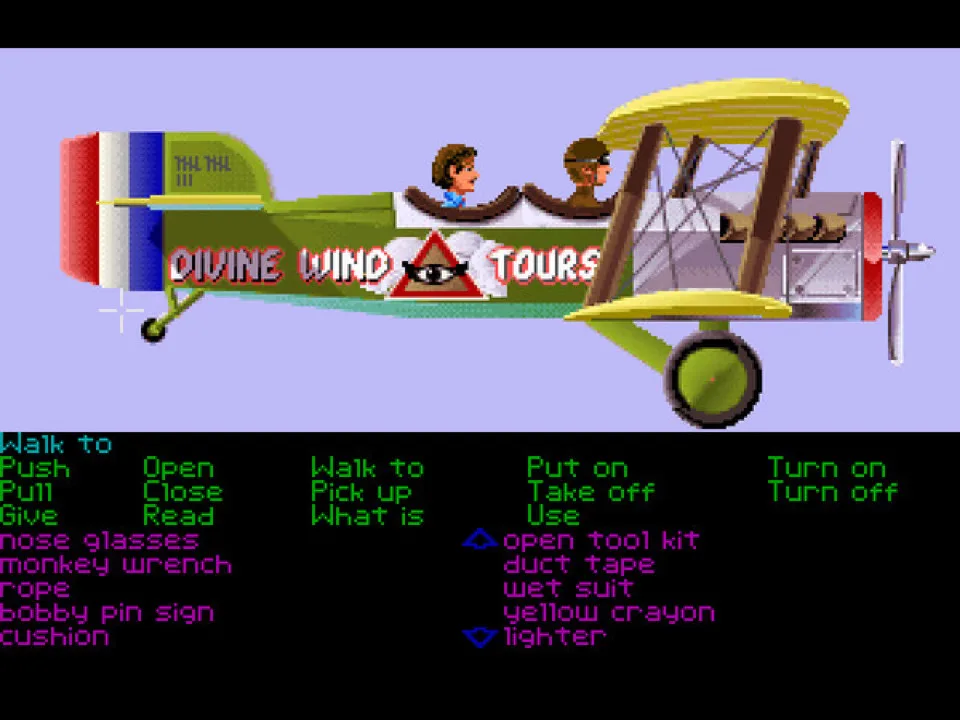
Zak is one of four controllable characters, rather than the adventure’s only playable participant. His companions are Annie, who heads the Society of Ancient Wisdom, and her friends Leslie and Melissa, two Yale students. All three already accept the alien threat without needing Zak to convince them. Together, these four characters form the playable cast for an adventure whose settings extend across Earth and beyond it, taking the action outside the boundaries of a single town or country.
Space travel has a particularly eccentric detail: Leslie and Melissa have reached Mars in a modified van. That vehicle gives the extraterrestrial setting a concrete connection to two members of the controllable cast, alongside Annie’s association with ancient wisdom and Zak’s place at the center of the adventure. The geographical scope includes journeys around the globe as well as excursions into space; Mars is the named destination that establishes just how far beyond Earth this four-character story reaches.
Piece Together the Ancient Puzzle, Unmask the Aliens and Destroy Their Machine
The adventure’s central threat is a machine designed to make humanity stupid. In the story’s 1997 setting, aliens are gradually reducing people’s IQs to single digits, and they have taken over the phone company. Stopping that scheme falls to Zak McKracken, a reporter at the disreputable National Inquisitor. His usual material includes invented stories about flesh-eating melons and vampires that avoid meat, so an actual alien conspiracy puts him in an awkward position: the threat sounds much like the sensational stories he already writes. Destroying the stupidity machine gives the mystery a specific objective beyond simply establishing that aliens exist.
Puzzle solving supplies the practical work behind that objective, with the alien scheme providing the mystery those puzzles sit within. Zak is not merely pursuing an unusual story for his newspaper: he must stop a device that is already diminishing human intelligence. The phone-company takeover also gives the conspiracy a recognizable earthly foothold, rather than leaving the danger as a distant threat from space. These are the concrete stakes of the investigation: an occupied communications business, a machine harming the population, and a tabloid reporter tasked with stopping its creators. The adventure frames its puzzle-solving challenge around that unlikely rescue mission.
Talk to Eccentric Characters in an Off-the-Wall Pixel World
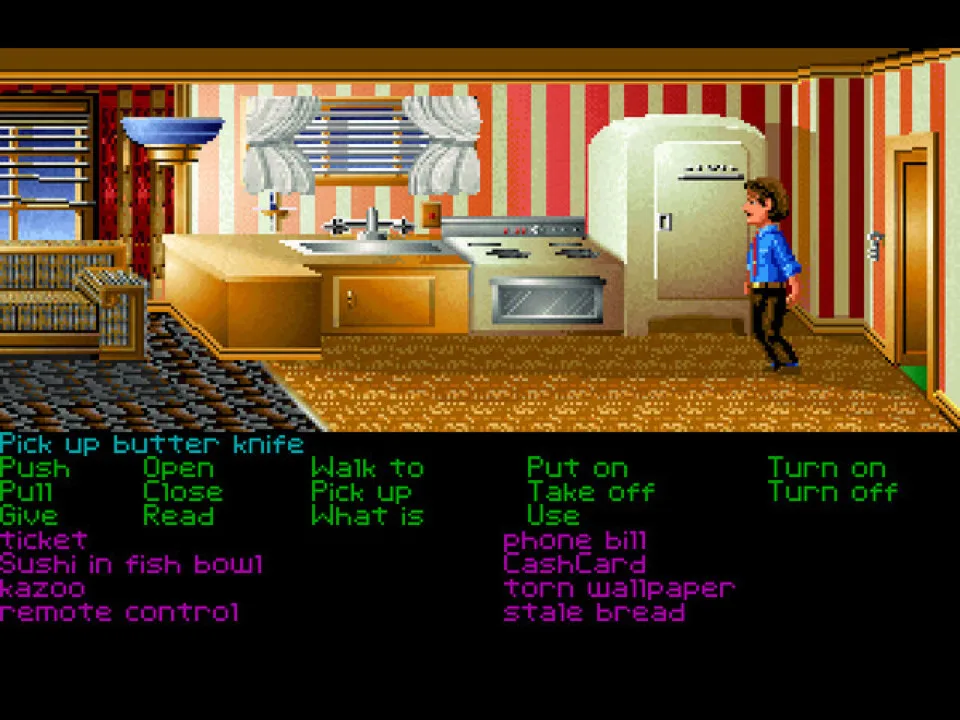
Zak’s world pairs its mystery with off-the-wall comedy, and its eccentric inhabitants are part of that comic identity. Talking to characters belongs alongside solving puzzles as a documented activity, so encounters with this cast are not confined to watching the story unfold. The tone is deliberately absurd rather than solemn: this is a mystery populated by odd personalities, not a straight-faced investigation.
The visual presentation supplies the other defining element of this eccentric world: late-1980s pixel graphics. That description identifies the artwork’s period and medium, while the humor establishes the comic tone of the adventure. Together, pixel art, unusual characters and an intentionally outlandish sense of humor give this puzzle mystery its particular presentation, distinct from the command system used to interact with it.
Sources & further reading.
- Zak McKracken and the Alien Mindbenders — official game profileRetrieved Nov 4, 2026
First published .