 THE GAME ARCHIVE
A War You Have Already Lost—On Paper
AI War: Fleet Command is an indie strategy game from Arcen Games. Its premise is deliberately lopsided: humanity has already lost its war against the machines, and the player commands a remnant so small that the AI central command has not registered it. The enemy fields tens of thousands of ships, while the player will never have more than a few thousand. The campaign's primary goal is to reach and destroy the heavily guarded AI cores, a task that cannot be solved by a straight assault. Instead, careful strategy governs everything the player does.
The Core Loop: Quiet Subjugation and the Cost of Attention
The defining tension is that the AI subcommanders will fight to the death when they see the player's ships, yet the player's opportunity comes from quietly subduing those subcommanders without alerting central processing to the danger until it is too late. This is not merely a flavor note. Progression requires quietly subduing the subcommanders, and doing so weakens central command in turn. The player is therefore asked to pick fights that reduce the enemy's command structure while keeping the scale of those fights below the threshold that would draw a decisive response.
That threshold is the central strategic constraint. Drawing too much attention brings the full might of the AI overlords crashing down, so avoiding detection is critical to preventing retaliation. In practice, every operation has to be weighed against the attention it creates. A commander who treats the game as a conventional conquest campaign and simply rolls through every defended position will trigger the retaliation the remnant cannot survive. The core loop is therefore a cycle of locating a subcommander, arranging a quiet engagement, and absorbing the benefit before the AI can respond in force.
Into the Galaxy: Stealing Technology and Recapturing Planets
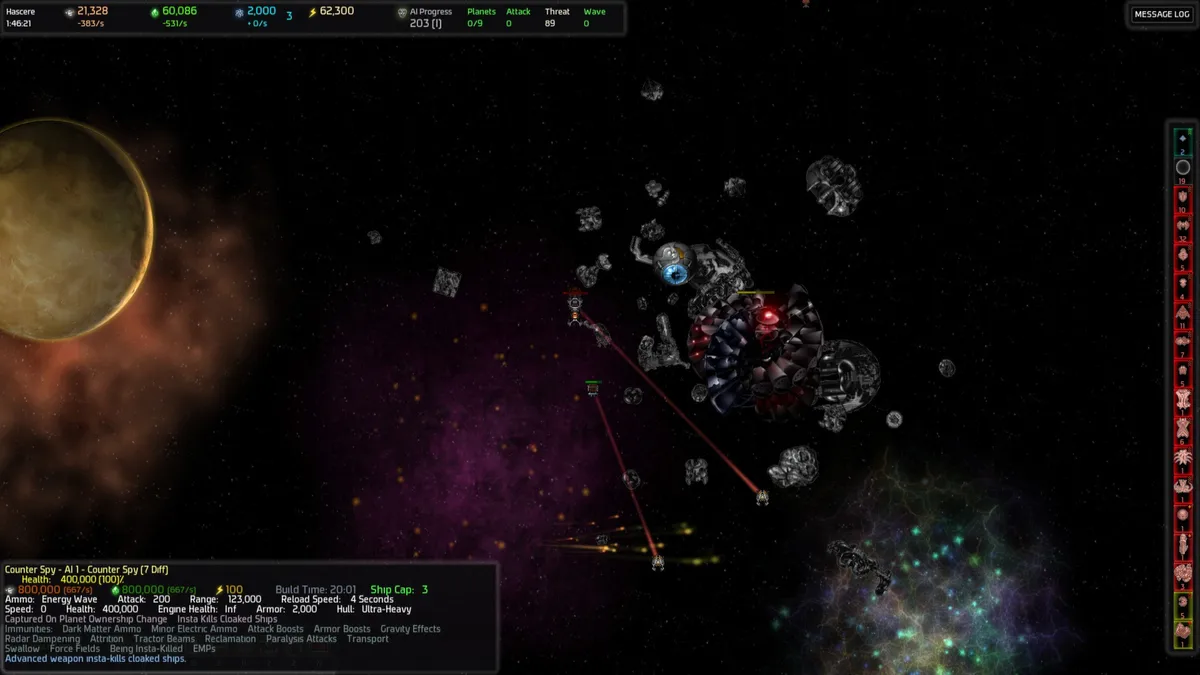
Between the opening remnant and the final assault sits a campaign of expansion and theft. The store description directs the player to go forth into the galaxy, steal AI technology, and recapture the planets needed to achieve the player's ends before saving what remains of humanity. These activities are not separate modes; they are the steps that make the heavily guarded AI cores reachable. Technology taken from the AI and planets brought back under human control both feed the same long approach toward the final targets.
Because attention is the limiting resource, expansion cannot be treated as an automatic good. Each captured planet and each raid on AI technology is a decision about exposure. The player must judge which worlds are actually required to achieve the campaign's ends and which can be left alone, since unnecessary activity invites the retaliation that the whole strategy is designed to avoid. This makes the map a puzzle of priorities rather than a checklist of conquests.
Three Fleet Advantages: Speed, Automation, and Rapid Fighters
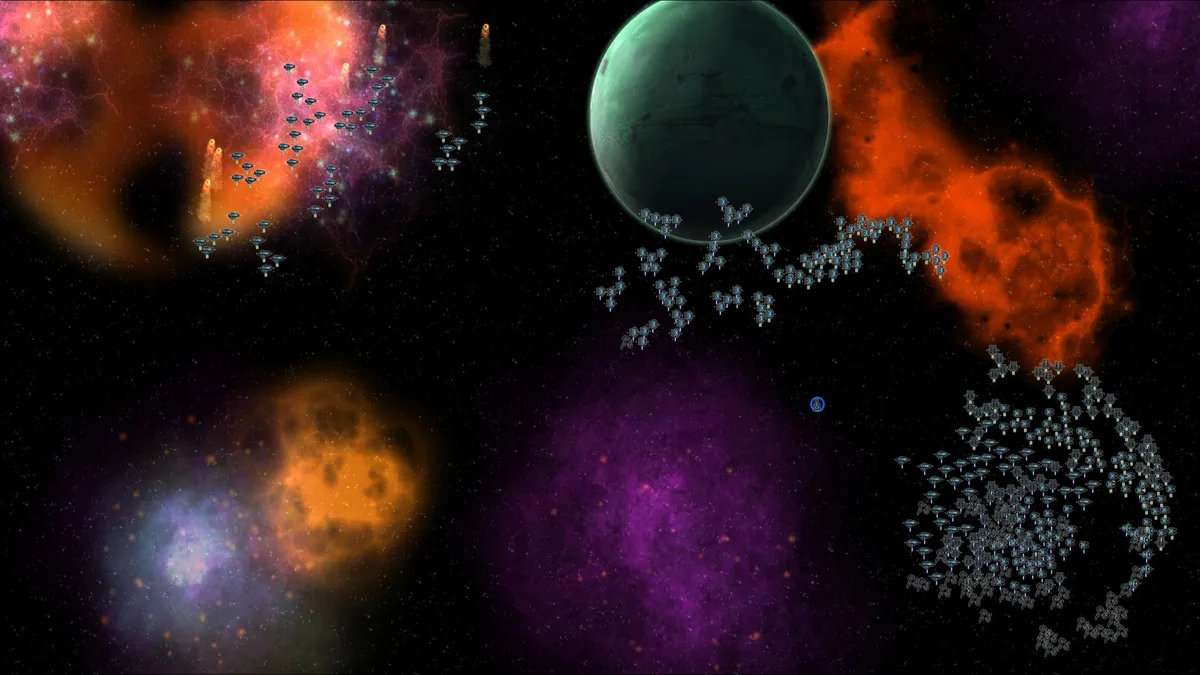
The game gives the player three concrete tools to offset the enemy's numbers. Player ships are significantly faster than AI forces, which matters in a war where engagements must be chosen and disengaged from rather than endured. Safe AI routines can automate defenses and mining outposts, freeing the commander from supervising rear positions. And production techniques can churn out fully outfitted unmanned fighters in seconds, allowing losses to be replaced quickly instead of waiting through long build times.
These systems reinforce one another in ways that directly shape player decisions. Faster ships make it possible to strike a subcommander and withdraw before slower AI forces can pin the fleet, which is precisely the kind of operation a low-attention strategy requires. Automated defenses and mining outposts mean the player can keep the economy running without pulling attention away from the front. Rapid fighter production supplies the expendable hulls that risky raids consume. None of these advantages removes the detection rule; they make it possible to operate quietly for longer against a vastly larger enemy.
The Endgame: Reaching the Heavily Guarded AI Cores
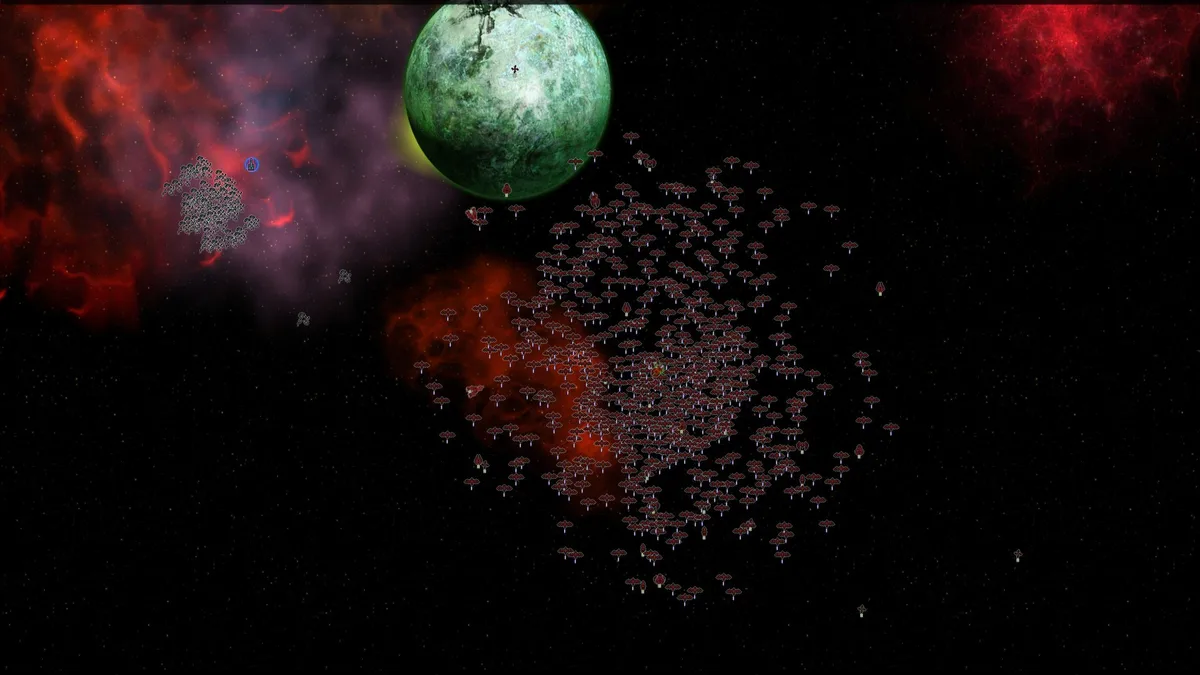
The endgame is defined by the heavily guarded AI cores, the primary targets the entire campaign exists to reach. They are not an incidental boss encounter but the goal against which every earlier decision is measured. Quiet subjugation of the subcommanders weakens central command, technology theft and planet recapture build the position from which an assault is possible, and rapid fighter production supplies the hulls that a final push consumes. The player's few thousand ships still face tens of thousands, so the assault has to be prepared rather than improvised.
The risk at this stage is that the accumulated attention of the campaign finally exceeds what the AI will tolerate. The same rule that governs the early raids governs the final approach: draw too much attention and the full might of the AI overlords comes crashing down. A successful commander therefore arrives at the cores having kept the war quiet for as long as possible, with the subcommanders weakened and the fleet's replacement pipeline intact, rather than having spent the remnant's advantage in open battles along the way.
Starting Guidance: Play the Attention Budget, Not the Map
New commanders should treat attention as the resource that actually limits the campaign. The documented rules imply a specific opening discipline: prioritize quiet subjugation of AI subcommanders because weakening them weakens central command, take only the planets and technology the campaign's ends require, and avoid actions that invite the full retaliation of the AI overlords. The fleet's advantages should be used to serve that discipline. Automated defenses and mining outposts keep the rear running without supervision, while rapid production of unmanned fighters replaces the losses that quiet raids incur.
The speed advantage should shape how engagements begin and end. Since the player's ships are much faster than AI forces, a commander can choose fights with subcommanders and then break contact instead of being forced into attritional battles. That same speed makes it easier to avoid the kind of prolonged visibility that escalates into central retaliation. The practical advice is to resist the urge to fight everything: in a war against tens of thousands of enemy vessels, the remnant's survival depends on making the enemy fight where and when the player chooses.
Release and Platforms
AI War: Fleet Command was released in 2009 and is developed and published by Arcen Games. It is listed on Steam for Windows, macOS, and Linux and is categorized there under the Indie and Strategy genres. This article describes the documented core game; it does not assess expansion content or later package additions, for which the supplied source does not provide evidence.
Scroll sideways to see the full table →
| Field | Detail |
|---|---|
| Title | AI War: Fleet Command |
| Developer / Publisher | Arcen Games |
| Release year | 2009 |
| Platforms | Windows, macOS, Linux |
| Genres | Indie, Strategy |
Sources & further reading.
- AI War: Fleet Command — official game profile Retrieved Oct 19, 2026
First published .