 THE GAME ARCHIVE
Revenge on Feshyr: The Nameless Hero's Opening Drive
ArcaniA, released in 2010 as a Windows RPG from Spellbound, begins with war spreading across the southern islands until it reaches the idyllic isle of Feshyr. You play the new nameless hero, whose village has been pillaged and destroyed by the king's paladins. The opening drive is therefore revenge: the hero sets out to settle the score with the paladins responsible for the attack on Feshyr. That personal motive is the starting point the game gives for the journey that follows.
The stated premise does not end with a simple raid. The hero soon realizes that the cowardly attack did not just happen on a reckless mercenary's whim, so the revenge objective points beyond the paladins themselves toward whoever stood behind the assault. For a role-playing game, that frames the early motivation around a destroyed home village and a named enemy force, with the discovery that the attack was not merely opportunistic pushing the hero onward past the initial grievance.
Three Attack Types and a Gradual Combat Learning Curve
ArcaniA's combat setup on Windows rests on three basic attack types. Rather than opening with a full repertoire, the game presents an intuitive system whose learning curve unfolds gradually, so the basic attacks form the foundation a player builds on over time. Special moves sit alongside those three core attacks as the advanced layer of the combat system, giving the fighting a structure that expands as the player progresses through the adventure rather than demanding everything at once.
The documented rules interact in a straightforward way: the three basic attack types are the entry level of the combat system, while special moves belong to the same system as its more advanced options. Because the learning curve is described as gradual, the design intent is that a player meets the simple attacks first and only later adds the special moves. The result is a combat model where the three attack types and the special moves are not separate systems but stages within one intuitive whole.
Lock-On Targets, Intuitive Controls, and the Hint System
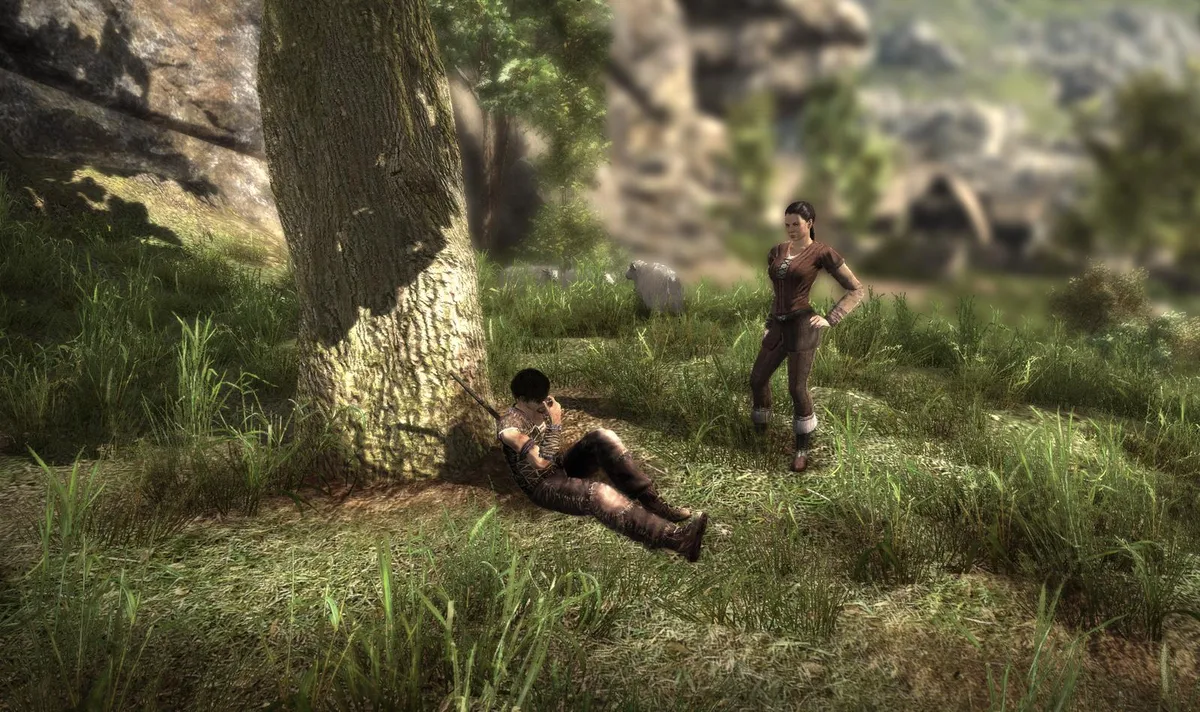
Combat aiming in ArcaniA gives the player lock-on targets, so a chosen enemy can be held as the focus of an attack instead of being tracked freehand. The same feature list places lock-on alongside an interface and controls described as intuitive, grouping targeting with the broader set of input tools the game offers on Windows. Lock-on therefore belongs to the accessibility layer that also includes the interface and the control scheme, rather than standing apart as a separate combat mode.
A sophisticated hint system is listed as part of the same accessibility package, appearing next to the intuitive interface, the controls and the lock-on targets. The documentation ties these together as aids the game supplies to the player, so hints function as a built-in guide rather than an external resource. Separately, the game's pacing is sustained through the main plot with regular surprises, cliffhangers and vigorous cut scenes, a continuous-action arrangement distinct from the hint and targeting aids.
Experience Points, Leveling, and Upgrading Attributes, Skills, and Crafting
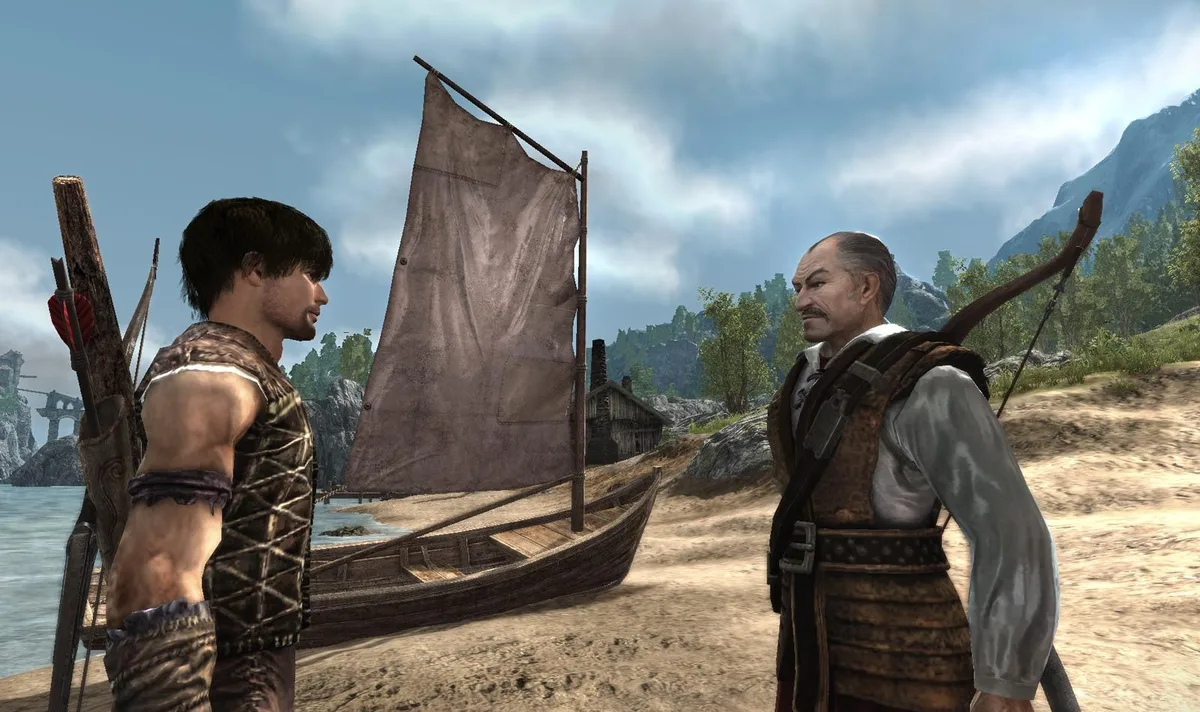
Hero development in ArcaniA runs on experience points and leveling. The hero earns experience points through play, and accumulating them raises his level. Each level-up then feeds into three upgrade areas named by the game's feature set: attributes, skills, and crafting abilities. Character growth is therefore chained together as one mechanic — earn experience, gain a level, spend the improvement on the attribute, skill, or crafting ability of your choosing. The documented rules treat these three upgrade categories as the destinations that leveling opens up, not as separate systems.
The progression rules and the world design sit side by side in the same description. Experience points and leveling handle the hero's own improvement, while the open world supplies the freedom and the nearly unlimited options associated with the Gothic series. The two documented elements interact at the level of play: leveling gives the hero new attributes, skills, and crafting abilities to develop, and the open setting is where that developed hero moves and chooses among his options. The feature list presents progression and open-world freedom as companion pillars of the same adventure.
A Completely Open World in the Gothic Tradition
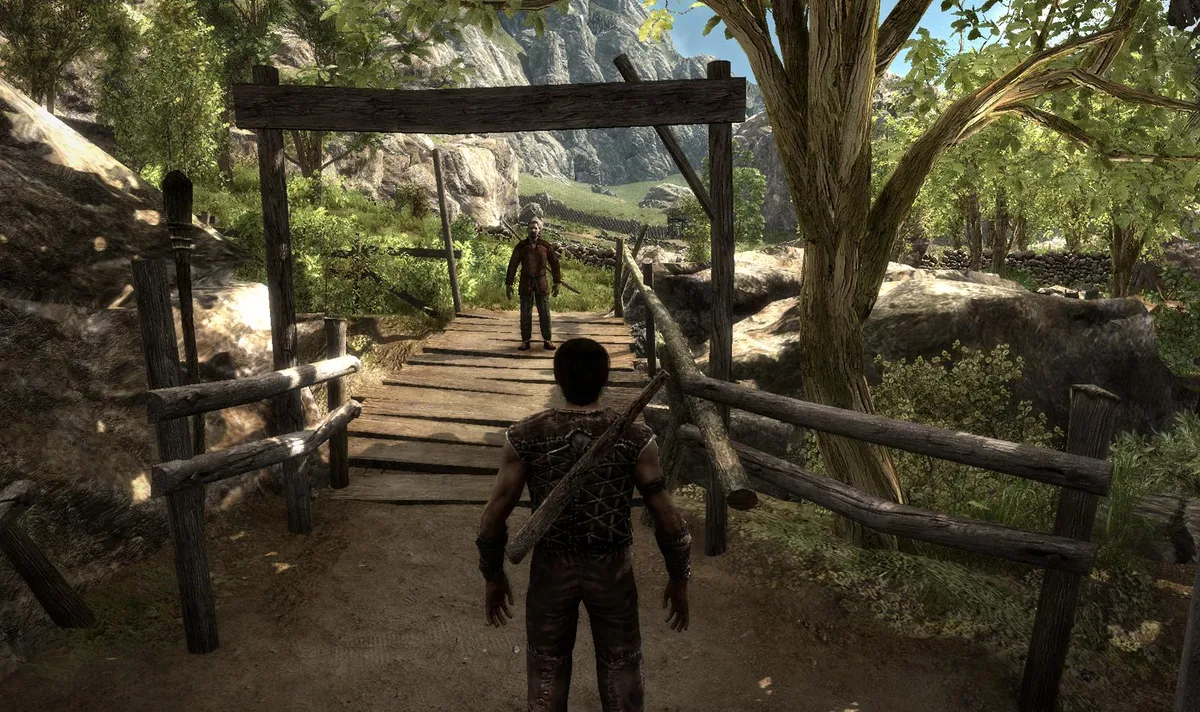
ArcaniA's Windows release organizes its adventure around an explicitly open world, described as offering the complete freedom and nearly unlimited options associated with the Gothic series. That setting is the space where the developed hero moves and picks among the options available to him. It sits alongside the hero-development rules rather than replacing them: experience points and leveling handle the hero's own improvement, while the open world supplies the breadth of choices the game advertises. The feature list presents these as companion pillars of the same adventure rather than competing modes.
Pacing across that open world is handled through the main plot, which is kept moving by regular surprises, cliffhangers and vigorous cut scenes. This continuous-action arrangement is documented separately from the accessibility aids, so hints, lock-on targets and the interface belong to a different layer than the story beats that drive events forward. The main plot therefore supplies the momentum, while the open-world freedom supplies the room to move and choose. Both are listed together among the game's key features for its Windows version.
Sources & further reading.
- ArcaniA — official game profile Retrieved Oct 17, 2026
First published .