 THE GAME ARCHIVE
What the Player Actually Does
Mystery Case Files: Return to Ravenhearst is a Windows adventure from developer Big Fish Games, published by BFG Entertainment and dated 2010 in the catalogue. Its play is easiest to describe as a repeated two-part action: move from room to room, then solve puzzles and seek out clues within each place you reach. The catalogue places the title under both the Adventure and Casual genres, and the publisher's own description frames the experience as new immersive adventure-style gameplay set in Ravenhearst's spectral halls. The stated scale is more than 150 detailed scenes, so the manor is not a handful of set pieces but a large collection of individual locations to work through.
That pair of verbs — solving and seeking — is the spine of the game. Each room presents a space to comb for clues and a puzzle to resolve, and the two activities are described together rather than as separate modes. The player does not simply walk through the manor; the estate is worked through location by location. Because the scene count runs past 150, the investigation is necessarily piecemeal, and progress depends on finishing what a given room asks before the route carries the player onward.
The Premise: A Warning Inside the Manor
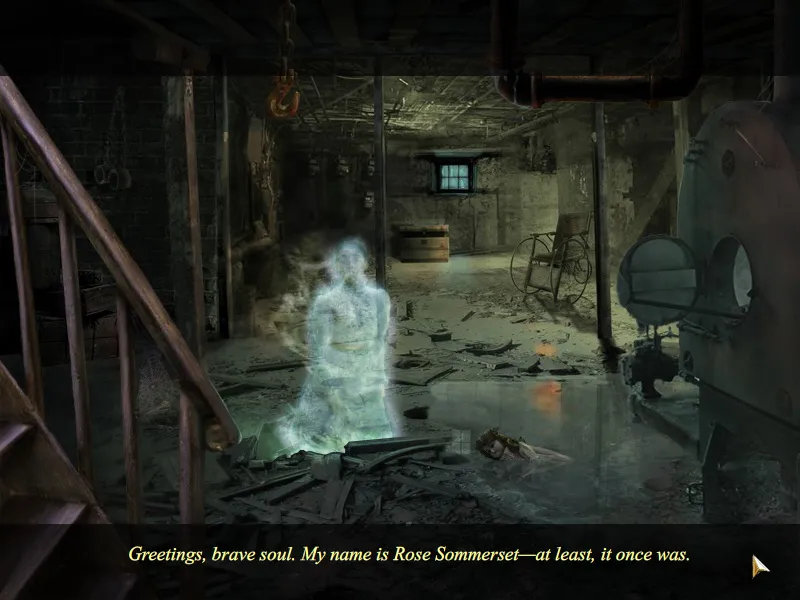
The setup is short and functional. Emma's soul is free, but her ghost returns with a dire warning: evil still lurks in Ravenhearst Manor. The store description identifies the title as a thrilling sequel, and it sends the player deep inside the cursed estate. That message does more than decorate the menu screen — it supplies the reason the player searches room after room. The manor is presented as a place where something remains wrong, and the investigation exists to find out what.
For a player, the premise explains why the work is thorough rather than hurried. A freed spirit's warning implies unfinished business, so every creaking room is a candidate for the next clue. The game leans on atmosphere to sustain that search: Ravenhearst's spectral halls are sold as an experience, and the soundtrack is described as epic and original. Players who respond to moody haunted-house material get the framing immediately, and the room-by-room structure gives that mood somewhere concrete to live.
The Core Loop: Enter, Search, Solve, Move On
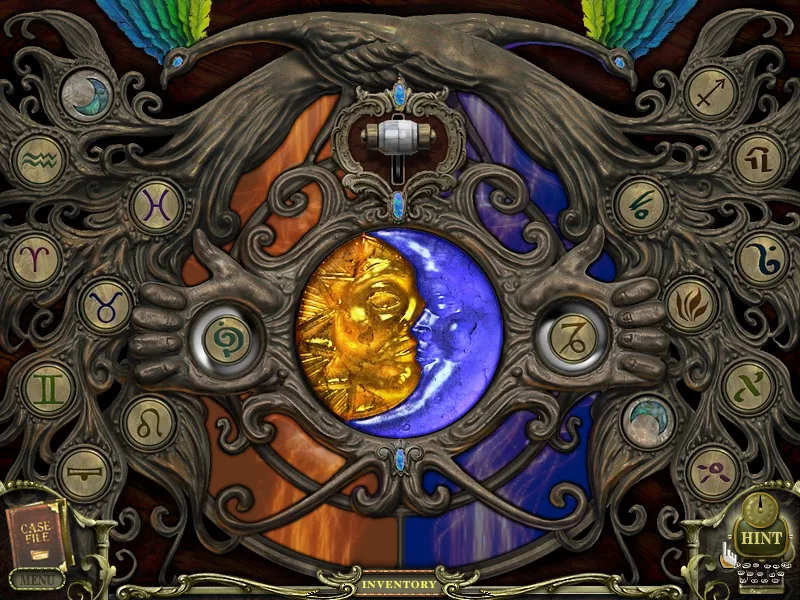
The documented loop repeats a predictable rhythm. The player moves from room to room; in each room the tasks are solving puzzles and seeking out clues. Once a location has been dealt with, moving on opens the next set of scenes and the same work begins again. Cues reinforce the transitions — the description asks the player to feel the floorboards creak while crossing from room to room — and the original soundtrack carries the stretch between them.
The important decision this creates is one of order and attention. Because clues sit inside the detailed scenes rather than in a single hub, the player has to decide what in a room is worth examining and treat the puzzle in front of them as the gate to whatever comes next. Progress is puzzle-based: advancing means resolving what each location presents. The practical consequence is that a stuck player is not looking for a map marker or a new area — the next move is inside the room in front of them, in the clues not yet found or the puzzle not yet solved.
That gate structure also shapes pacing. A room that asks for clue-finding rewards patient looking, while one that asks for puzzle-solving rewards working the mechanism itself. The player alternates between the two without a documented mode switch to manage — the publisher describes them in a single breath as what you do while moving through the house. Reading each room correctly, rather than mastering one fixed ruleset, is the recurring skill the design puts in front of the player.
Why 150+ Scenes Matters
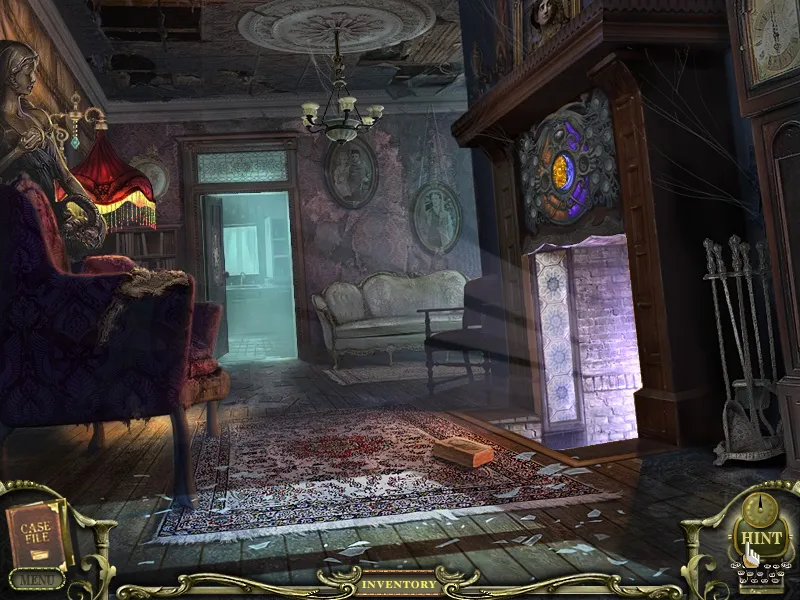
The scene count is the clearest measure of scope the source gives. More than 150 detailed scenes means a long succession of individually worked locations, and the room-to-room route is how the manor is covered. Each scene is described as detailed, which matters for a game built on clue-seeking: a location earns its place by being worth inspecting, not by passing by in a corridor. The store text also calls the game the biggest MCF game to date, framing the size as an explicit selling point rather than an incidental number.
For players, scale changes the session rather than the rules. The loop never changes — search and solve in the current scene, then move on — but a library of 150-plus rooms means the investigation is long and the manor accumulates as a mapped-out whole in the player's head. The adventure-style presentation is what ties those rooms together into a single estate, and the spectral-hall framing keeps the repeated search from feeling like a checklist of unrelated screens.
Atmosphere, Audio and Adventure-Style Play
The design characteristics the source emphasizes are immersion and sound. The gameplay is described as new and immersive, adventure-style in structure, and set in spectral halls; the soundtrack is described as epic and original. These are not cosmetic footnotes for a searching game. Creaking floorboards between rooms and a scored backdrop are atmosphere doing mechanical work — they make the next room feel like part of one haunted place and give the player a signal that a transition has happened.
Genres, Release and Getting Started
The catalogue lists Return to Ravenhearst under both Adventure and Casual, released for Windows in 2010, developed by Big Fish Games and published by BFG Entertainment. Those two labels both describe the same release; the source records no separate editions or variants. For a new player the practical guidance follows from the documented loop rather than from a manual: expect to work each room as a self-contained search, expect the puzzle in that room to be what carries you to the next, and expect the soundtrack and creaking boards to accompany the transitions. Nothing in the supplied evidence documents controls, difficulty options, scoring or online play, so none of that should be assumed.
Sources & further reading.
- Mystery Case Files: Return to Ravenhearst™ — official game profile Retrieved Oct 18, 2026
First published .