 THE GAME ARCHIVE
Call of Duty: World at War arrived in 2008 as Treyarch's entry in the series, published by Activision and listed on Steam for Windows. It builds on the engine used by Call of Duty 4: Modern Warfare and places players in gritty and chaotic World War II combat across European and Pacific fronts. Rather than treating the game as a store page, this feature looks at what the player actually does: fight through harrowing campaign battles, band together in a four-player online co-op version of that campaign, and take part in class-based multiplayer action expanded with vehicle combat, new weapons, and perks.
Premise: Fighting Across Europe and the Pacific
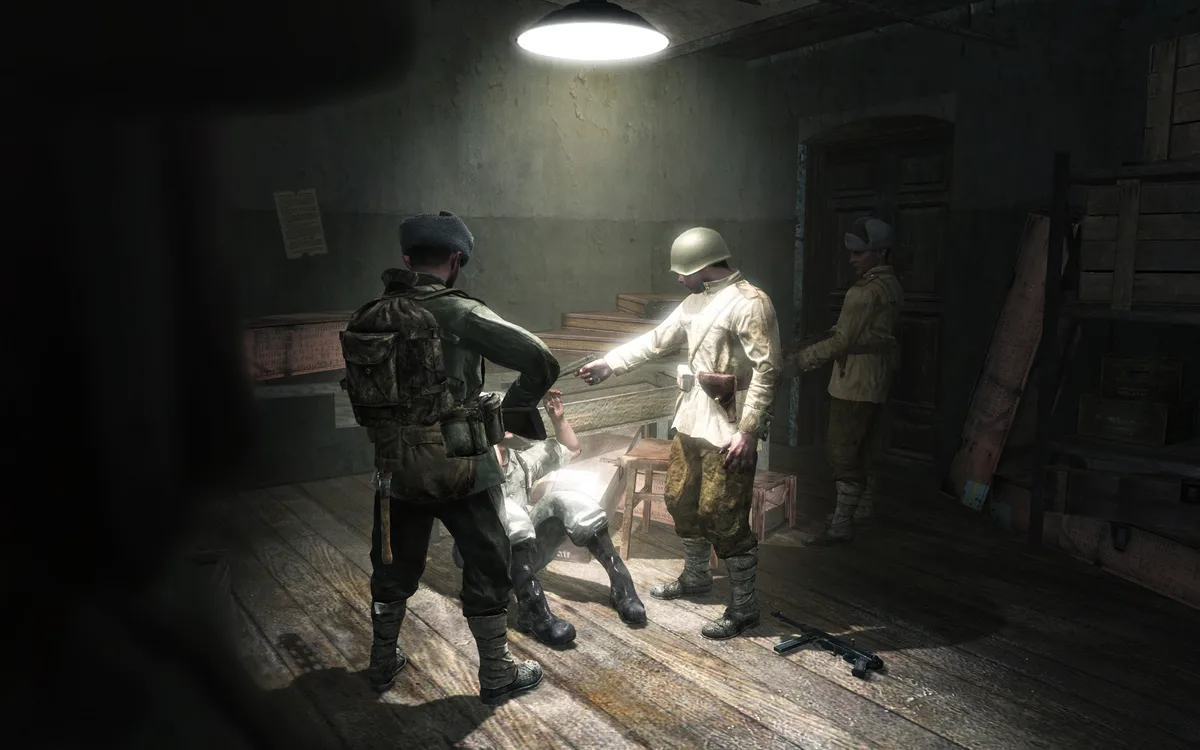
The game's combat is set against the final push that led to the demise of the Axis powers, moving through European and Pacific locations. Players take the role of a U.S. Marine and a Russian conscript, facing Imperial Japanese and elite German soldiers across infantry, vehicle, and airborne missions. The tone is not a clean war-story recreation; the store pitch describes swamp ambushes, tree-top snipers, and fearless Kamikaze attacks as part of the campaign's hostile terrain and enemy behavior.
 View full image ↗
Core Gameplay Loop: Campaign, Co-Op, and Multiplayer
The core loop splits into two connected halves. In the campaign, the player advances through scripted WWII missions using infantry weapons and vehicles, reacting to ambushes, Banzai charges, and entrenched enemies. In multiplayer, the loop shifts toward class selection, persistent progression, and team-based play, with tanks and other vehicles adding a second layer to the standard infantry combat.
What makes the loop distinctive is that the co-op campaign is not a separate mode. Treyarch describes it as the first time the franchise introduces co-op play, framed around the idea that no one fights alone. Up to four players can join campaign missions online, and the mode carries over multiplayer-style challenges, rankings, and online stats, plus a competitive co-op variant that shows which player on the team performed best.
This design choice matters because it makes the campaign replayable in a way a solo-only WWII shooter is not. A player who has already finished the missions can return with a smaller or larger squad, chase co-op challenges, and compare rankings with teammates, effectively treating the campaign as a progression system rather than a one-time story.
Mechanics and Systems
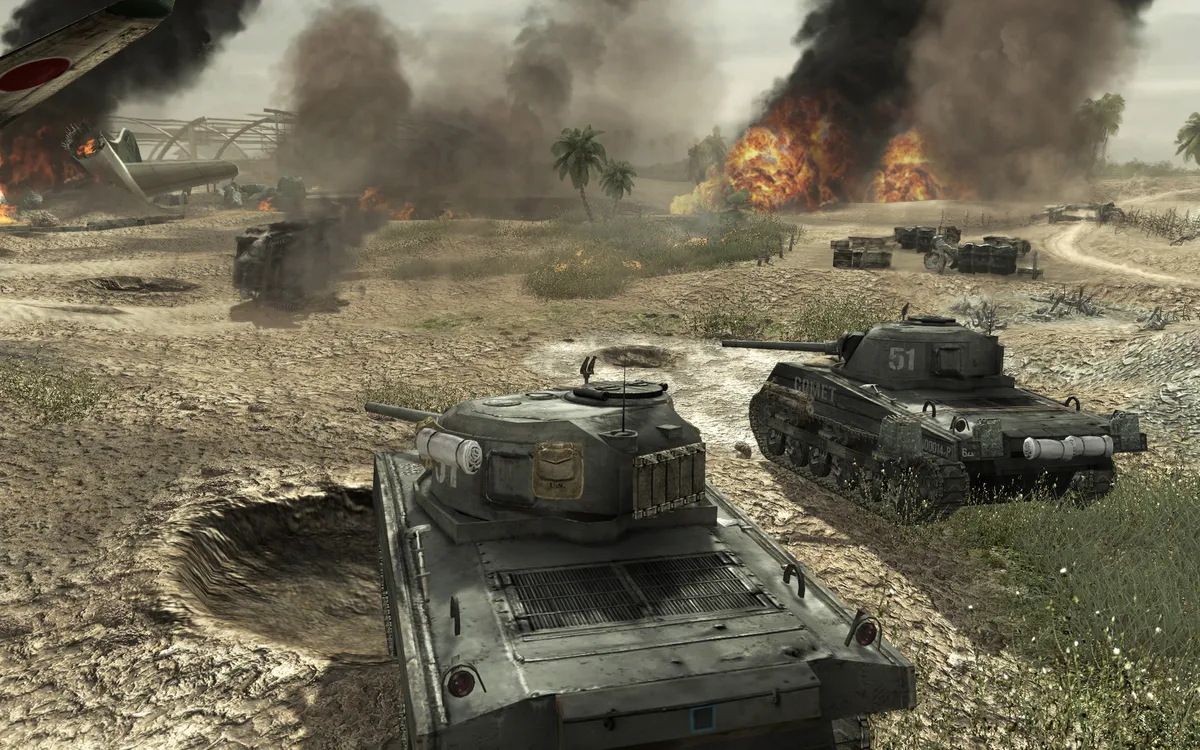
Multiplayer continues the class-based structure associated with Call of Duty, expanded with tank combat, persistent stats, player rankings, upgradeable weapons, squad-based gameplay, customizable classes, and perks. These systems are described collectively as enhancements over the Call of Duty 4: Modern Warfare multiplayer experience, with the stated goal of setting a new standard for online warfare. For a player, that translates to choosing a class, leveling it, unlocking upgrades, and adapting to engagements where a tank can change the pace of a match.
The campaign side leans on enemy variety rather than pure difficulty. Kamikaze fighters, ambush attacks, Banzai charges, and cover tactics are all explicitly listed as enemy behaviors, meaning players are expected to read situations rather than simply push forward. The competitive multiplayer also adds what the source calls a higher level cap, more weapons, and more perks, maps, and challenges than prior entries.
 View full image ↗
Modes and Progression
Co-op campaign is the headline mode. It supports up to four players online, carries multiplayer components such as challenges and rankings, and includes a competitive variant. Multiplayer itself is the other main pillar, built around customizable classes and squared-off team play. Between the two, progression runs through persistent stats, rankings, and upgradeable weapons, so time spent in either setting feeds a broader sense of advancement.
Source-Backed Starting Guidance
Because this feature is based on the official listing rather than a hands-on session, the safest starting advice is to treat the two halves as separate learning curves. The campaign is where enemy behavior can be observed and where the co-op systems are introduced; multiplayer is where classes, upgrades, and vehicle combat pay off. The source lists Windows as the platform for this Steam entry, so that is the verified environment for the description above.
 View full image ↗
Visual and Design Characteristics
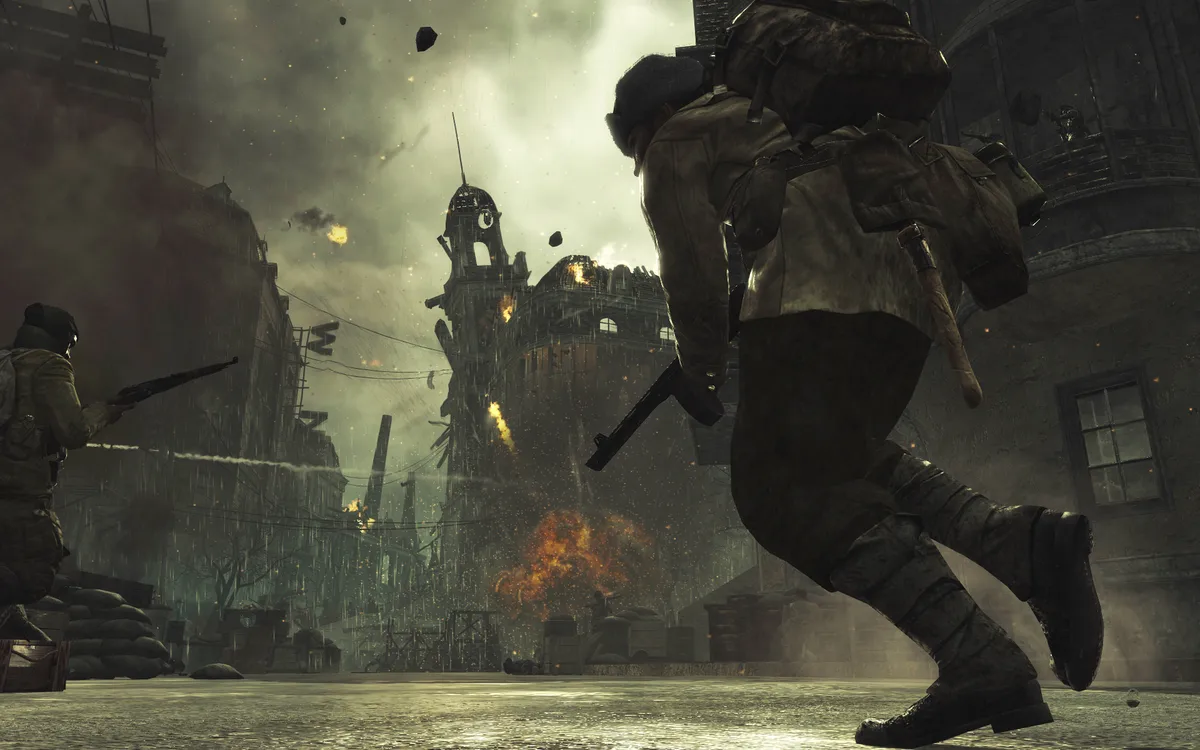
The official description places heavy emphasis on cinematic quality, listing highly detailed character models, self-shadowing, environmental lighting, depth of field, rim-lighting, texture streaming, and physics-enabled battlefields with fire that spreads through environments. These are the visual and technical claims tied to the game, and they explain why the combat is presented as raw and chaotic rather than sanitized. Fire that spreads, in particular, is a design detail with direct gameplay implications: environments can change during a fight rather than serving as static backdrops.
Edition Differences and Current Official Access
This profile is scoped to the Steam entry for Call of Duty: World at War, published by Activision and developed by Treyarch, with a listed release year of 2008. The source does not document original release history beyond that year, later re-releases, or modern compatibility patches, so those are not asserted here. Readers seeking current availability or system details should consult the official store page directly.
Scroll sideways to see the full table →
| Field | Value |
|---|---|
| Game title | Call of Duty: World at War |
| Release year | 2008 |
| Platform (Steam entry) | Windows |
| Developer | Treyarch |
| Publisher | Activision |
| Genre | Action |
| Engine basis | Call of Duty 4: Modern Warfare |
| Co-op campaign | Up to four players online |
| Competitive co-op | Supported |
| Vehicle combat | Tanks and vehicles |
| Multiplayer structure | Class-based with perks and upgradeable weapons |
Sources & further reading.
- Call of Duty: World at War — official game profile Retrieved Oct 10, 2026
First published .