 THE GAME ARCHIVE
Deus Ex: Game of the Year Edition is a first-person role-playing game set in a near-future world on the edge of collapse. At the time of writing, the Steam entry for this edition lists Ion Storm as developer, Eidos Interactive Corp. as publisher, Windows as its platform, and 2007 as its release year. That 2007 date is scoped strictly to how this particular edition is catalogued — it is not offered here as the original game's release history.
What follows is a source-based look at the game's documented design: the premise it sets up, the core loop of action, character interaction and problem solving, the development systems built around skills and augmentations, and the way multiple solutions to the same obstacle are meant to let the game adapt to how each player plays.
A Dangerous World in 2052
The game's premise places the player in the year 2052, in a world described as dangerous and chaotic. Terrorists operate openly, and drugs, disease and pollution add to the toll, while the world's economies edge toward collapse and the divide between the very wealthy and the very poor widens. Against that backdrop, an ages-old conspiracy bent on world domination decides the moment has come to emerge from the shadows and take control.
The storyline is described as built on "real" conspiracy theories, current events and expected advances in technology — the material that grounds the fictional conspiracy in recognizable anxieties rather than pure fantasy. The world is also described as populated by people rather than monsters, a choice intended to create empathy with the characters and enhance the setting's realism.
Locations are likewise described as realistic and recognizable, with many built from actual blueprints of real places and framed within a near-future scenario. Together with the human cast, this positions the game as a grounded, place-driven RPG rather than an abstract fantasy quest.
The Core Loop: Action, Interaction, Problem Solving
The documented core of the game is "real role-playing from an immersive 3D, first-person perspective." That framing matters because it tells you what the game asks you to do across its runtime: play out action sequences, interact with characters, and solve problems. These three activities are described as the substance of the game rather than side content wrapped around a single dominant mechanic.
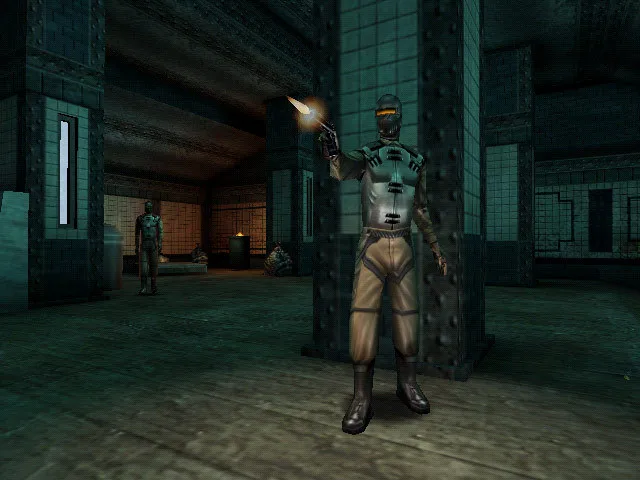
Crucially, problems are described as having multiple solutions. The source material repeats the idea that there are several ways past the obstacles in the game, and that the game adapts itself to your style of play. In practice, that means a guarded doorway, a blocked path or a hostile encounter is not gated to one correct answer; the game is built to accept a different approach from you than it would from someone else.
 View full image ↗
Three Documented Approaches: Talk, Fight, Use Skills
The source material names three broad ways to get past obstacles: talk, fight, or use skills. This is the clearest statement of the game's flexibility. A conversation can be the tool that opens a path; combat can be the tool that opens the same path; and a skill — a capability your character has developed — can open it a third way. Because these options are described as coexisting, the player is effectively choosing a method, not just a target.
This is also what makes the loop feel like role-playing rather than a linear shooter with optional dialogue. The obstacle stays the same; the verb changes. Which verb is available, and how effective it is, comes back to how you have built the character.
Skills, Augmentations, Weapons and Items
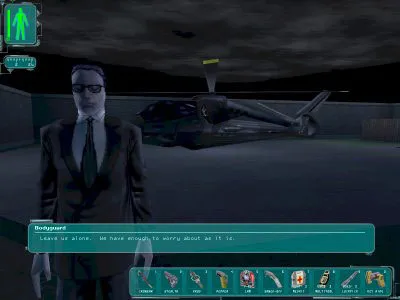
Character development in this edition is organized around four documented pillars: skills, augmentations, weapons and items. These are listed together as the components that shape a character, and they are tied directly to the multiple-solutions promise. The source states that these systems, combined with multiple solutions to problems, ensure that no two players will end the game with similar characters.
The interesting implication of that claim is not merely that the game has upgrades. It is that the upgrade choices and the solution choices compound. A player who leans into skills may find one route through a situation; a player who invests in augmentations and carries different weapons and items will meet the same situation with a different toolkit and a different set of viable answers. The variability is a stated design outcome, not an incidental side effect.
 View full image ↗
How Progression Connects to Playstyle
Taken together, the documented systems describe a progression loop with a clear shape. You develop skills; you gain and use augmentations; you choose weapons and items; and those choices feed back into how you are able to get past obstacles. The game is described as adapting to your style of play, which means progression is meant to reinforce the approach you have already been taking rather than overriding it.
Because there are multiple solutions to problems and multiple ways to build a character, the source frames the outcome as a varied game experience. The stated design goal is that the game should not funnel every player toward the same ending character; variety is treated as the product of the systems, not a difficulty setting or a mode.
Source-Backed Starting Guidance
The most useful guidance the source actually supports is about mindset rather than a route. The game documents three broad methods for getting past obstacles — talk, fight, or use skills — so when you meet a problem, the question worth asking is which of those methods your current character can bring to bear, not which single method the game expects. That framing is drawn directly from the described design.
The second supported principle is that the game adapts itself to your style of play, and that your skills, augmentations, weapons and items jointly determine what is viable. Investing consistently in a direction and using the tools that match it is the loop the source describes. Specific controls, routes, difficulty settings and early-game advice are outside what this source documents and are not asserted here.
 View full image ↗
What Makes the Design Distinctive
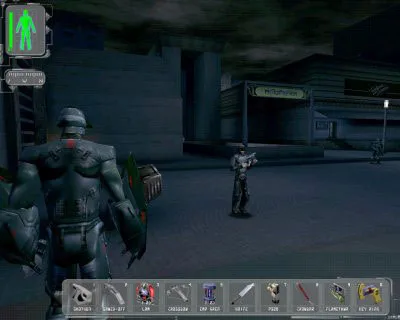
Three documented features stand out. First, the game merges action, character interaction and problem solving inside a single first-person 3D space rather than separating them into distinct modes. Second, its locations are described as realistic and recognizable, with many built from actual blueprints of real places — an approach that trades invented architecture for places with visible real-world lineage. Third, its cast is made of people rather than monsters, a deliberate choice meant to sustain empathy and realism.
The storyline's grounding in real conspiracy theories, current events and expected technological advances completes the picture: this is a game that builds its fiction out of the world its players recognize, and then asks them to move through that fiction with the methods their character has earned.
At a Glance
Scope note: this article is based on the official store information and feature claims for Deus Ex: Game of the Year Edition and has not been independently play-tested. Where the source does not document a system — including controls, specific puzzle solutions and other mechanical details — this article leaves that ground unmapped rather than guessing.
Scroll sideways to see the full table →
| Field | Value |
|---|---|
| Game title | Deus Ex: Game of the Year Edition |
| Developer | Ion Storm |
| Publisher | Eidos Interactive Corp. |
| Genre | Action |
| Platform (as listed) | Windows |
| Release year (as listed for this edition) | 2007 |
| Setting | Earth, 2052 |
| Perspective | First-person 3D |
| Core activities | Action, character interaction, problem solving |
| Progression pillars | Skills, augmentations, weapons, items |
| Obstacle approaches | Talk, fight, or use skills |
Sources & further reading.
- Deus Ex: Game of the Year Edition — official game profile Retrieved Oct 8, 2026
First published .