 THE GAME ARCHIVE
Half-Life is a 1998 action title developed and published by Valve. This profile covers the game as it is described on its official store entry; it does not reconstruct original retail history, later re-releases, or modern compatibility. What the entry communicates is a design pitch: a frighteningly realistic world, a survival objective, and a multiplayer mode for playing against friends and other players worldwide. The striking part is what that pitch implies about play. The stated survival mechanism is thinking, not reflex shooting, which frames the game as a problem to be read and reasoned through rather than an obstacle course to be shot through.
What You Do: Solving Problems to Stay Alive
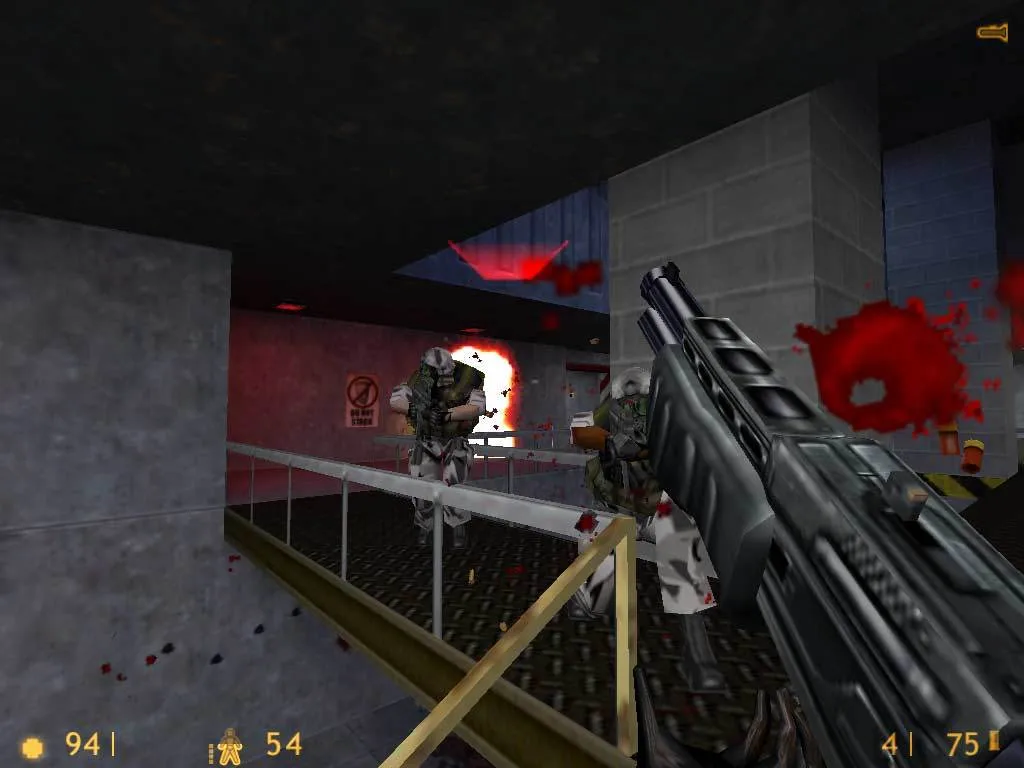
The documented objective is survival in a setting described as frighteningly realistic, with the framing that players must think to make it through. That wording places problem-solving at the center rather than treating action as raw reflex. The distinction matters for how the game is approached: if thinking is the stated survival mechanism, then the environment and the situations it presents are resources to read and respond to, not simply scenery. An enemy encounter, in this framing, is also a reasoning problem.
The same description names a multiplayer mode that lets players face friends and other players around the world. The source also labels this as competitive and cooperative play. Taken together, the entry presents two ways to engage: a single-player survival-and-thinking experience, and a networked mode that shifts the pressure from the environment to other people.
 View full image ↗
The Core Loop as the Source Describes It
Stripped to what is actually supported, the loop reads as follows: enter a realistic-feeling scenario, read it well enough to avoid being killed, and use thinking to progress rather than force. The survival objective and the problem-solving elements reinforce one another; each encounter is a reasoning problem framed as a threat. That is a narrower claim than a full breakdown of mechanics, but it is a coherent one, and it is the loop the official description is selling.
The multiplayer mode functions as an alternative to that loop rather than an extension of it. Where the single-player framing rewards caution and reading the situation, the described multiplayer framing centers on other players — friends or strangers — which changes the kind of thinking the game rewards. The source does not detail the rules of that mode, so the honest summary is that it exists and is oriented toward competition and cooperation with other players, without claiming to know its specific structure.
Supported Systems and Modes
The store profile lists three desktop platforms: Windows, macOS, and Linux. Those are the platforms recorded for this entry. The profile does not state performance expectations per platform, and nothing in the source should be read as a claim about how the game runs on any of them.
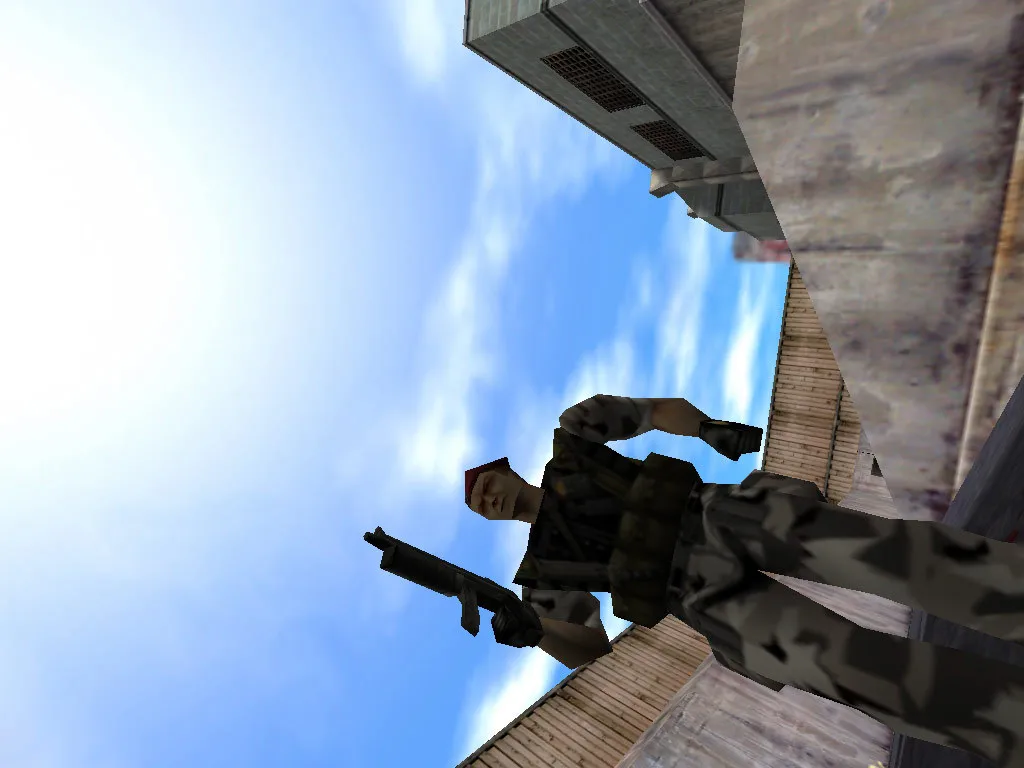
Two broad modes are named: a single-player survival-and-problem-solving experience, and multiplayer competition or cooperation with other players. The description calls the multiplayer portion "exciting" and emphasizes playing against friends and enemies around the world, which frames it as a social mode rather than a solo extension.
 View full image ↗
What Distinguishes the Design Pitch
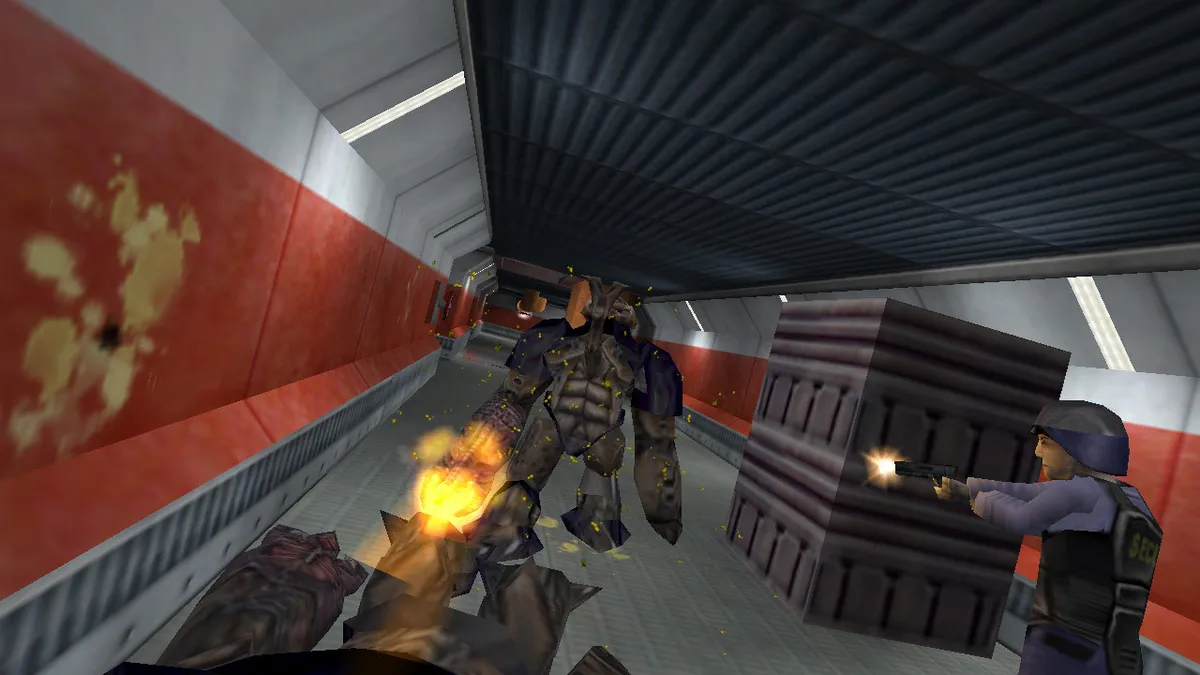
Three elements separate this description from a generic action listing. First, the environment is described as frighteningly realistic — the realism is presented as a design goal tied to tension, not as a graphical bullet point. Second, thinking is the stated survival tool, which positions the game closer to problem-solving than to pure shooting. Third, the claim of recognition by more than 50 publications positions the release as one with substantial contemporary critical attention.
The source also frames this as Valve's debut title, which is meaningful context: it means the design choices described here are the studio's opening statement rather than a refined later iteration. That framing comes directly from the store description and should be treated as the release's own self-presentation.
Source-Backed Starting Guidance
Any starting advice has to stay inside what the source supports. The one operational instruction implied by the description is to prioritize thinking over reaction: survival is tied to making good decisions rather than to a specific control scheme or difficulty setting. Beyond that, the profile does not document controls, difficulty options, or a recommended order of play.
For the multiplayer side, the source establishes only that a mode exists and is oriented toward playing against other people. It offers no guidance on setup, matchmaking, or etiquette, so no advice of that kind is offered here.
 View full image ↗
Scope Note on This Profile
Reference Facts
- Game title: Half-Life
- Release year on this entry: 1998
- Developer: Valve
- Publisher: Valve
- Genre: Action
- Listed platforms: Windows, macOS, Linux
- Documented objective: survive in a realistic world
- Documented mechanic focus: problem-solving
- Documented multiplayer: competitive and cooperative play with other players
Scroll sideways to see the full table →
| Field | Value |
|---|---|
| Title | Half-Life |
| Release year (this entry) | 1998 |
| Developer | Valve |
| Publisher | Valve |
| Genre | Action |
| Platforms | Windows, macOS, Linux |
| Multiplayer | Competitive and cooperative |
Sources & further reading.
- Half-Life — official game profile Retrieved Oct 8, 2026
First published .