 THE GAME ARCHIVE
What a Cargo Commander Actually Does
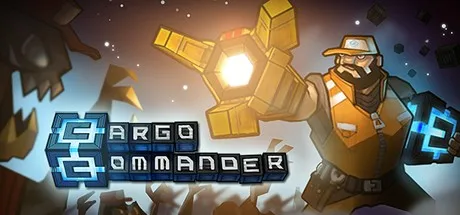
Cargo Commander casts you as Cargo Corps' latest recruit, alone in space and light years from your family, armed with only your Fistcannon, your Platform Drill and the meanest cup of coffee in the sector. Your stated responsibilities are simple: travel the vast reaches of wormhole-filled space salvaging priceless cargo from alien-infested containers. Everything the game asks of you flows from that job. You move between your ship and the containers, punch and shoot the deadly mutants inside them, and pull out over 80 different cargo types while earning your way back home.
The distinguishing idea is not the salvage premise but how each run is generated and shared. Levels are randomly generated around names: you choose any name to spawn a new custom sector, then share it with friends to compete for a high score. That single rule links the structure of the map to a piece of text, which makes a sector a reproducible social object rather than a private roll of the dice. Serious Brew, the developer and publisher, lists the game for Windows, macOS and Linux with a 2012 release year.
Fistcannon Work: Punch and Shoot
The Fistcannon is the one item the store copy names as your weapon, and the work it describes is blunt: punch and shoot deadly mutants in the face. Read that literally and the combat loop is a mix of two ranges of violence handled by the same recruit — a fist and a gun, applied to whatever is shambling between you and the freight. The catalogue does not break combat into separate stances or name individual mutant types, so treat the Fistcannon as the catch-all answer to anything hostile inside a container.
The fight is not parked in an arena. You punch and shoot mutants while traveling between your ship and the containers, so encounters sit on the transit route as much as inside the salvage targets. That is the practical shape of a run: leave the ship, cross to a container, deal with the mutants in the way, and carry on toward the cargo. Because movement between the two is an explicit part of the description, the tension comes from running that corridor repeatedly under fire rather than from a single staged battle.
Drill and Explosives: Making the Route
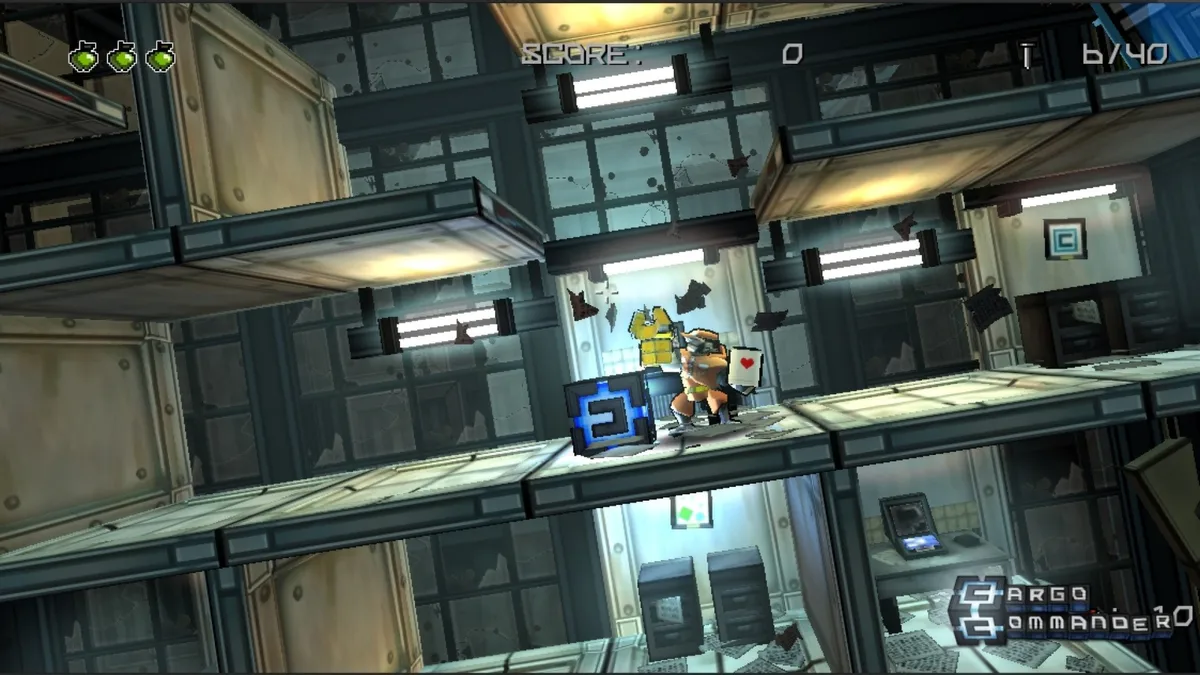
Environments are fully destructible, and the documented way to exploit that is to create your own path with your Platform Drill and explosives. This is the second half of the game's vocabulary. The Fistcannon answers mutants; the drill and explosives answer geometry. A sector that blocks the direct line to a container is not a wall but a suggestion, because the layout can be carved. The rules as published do not spell out reach, radius or placement details, so the reliable statement is the design intent: your path is made, not found.
The two tool classes also imply a decision each time you hit resistance: bore through and keep the line, or blast a wider opening. With mutations to fight on arrival, opening a container is a commitment — the hole you make is the hole you fight around. That interaction between destructible terrain and mutant combat is the core mechanical contrast the store copy draws, and it is the basis for playing deliberately rather than sprinting at every container.
Names as Seeds and Leaderboards as Stakes
Choose any name and the game generates a new custom sector under it. Sharing that name with friends lets them load the same sector and compete for the high score. This is the game's most distinctive system and the one that shapes how you play it. A sector you share is a fixed competitive proposition: everyone who enters the same name faces the same arrangement of containers, mutants and destructible terrain, and the only variable left is what each player does with the Fistcannon, drill and explosives.
Each sector has an online leaderboard, and the broader objective is to jockey for promotions with thousands of other Cargo Commanders in the galaxy. Put those two facts together and the scoring logic becomes local and repeatable: a sector's board measures runs inside that named space rather than blending every session into one global figure. The competitive frame also recontextualizes the loot. The copy notes that you can loot the dead corpses of other players' vain attempts at beating your score; the catalogue does not detail that system, so the safe reading is that rivalry inside a sector is part of the intended experience.
Cargo, Progression and the Two Modes
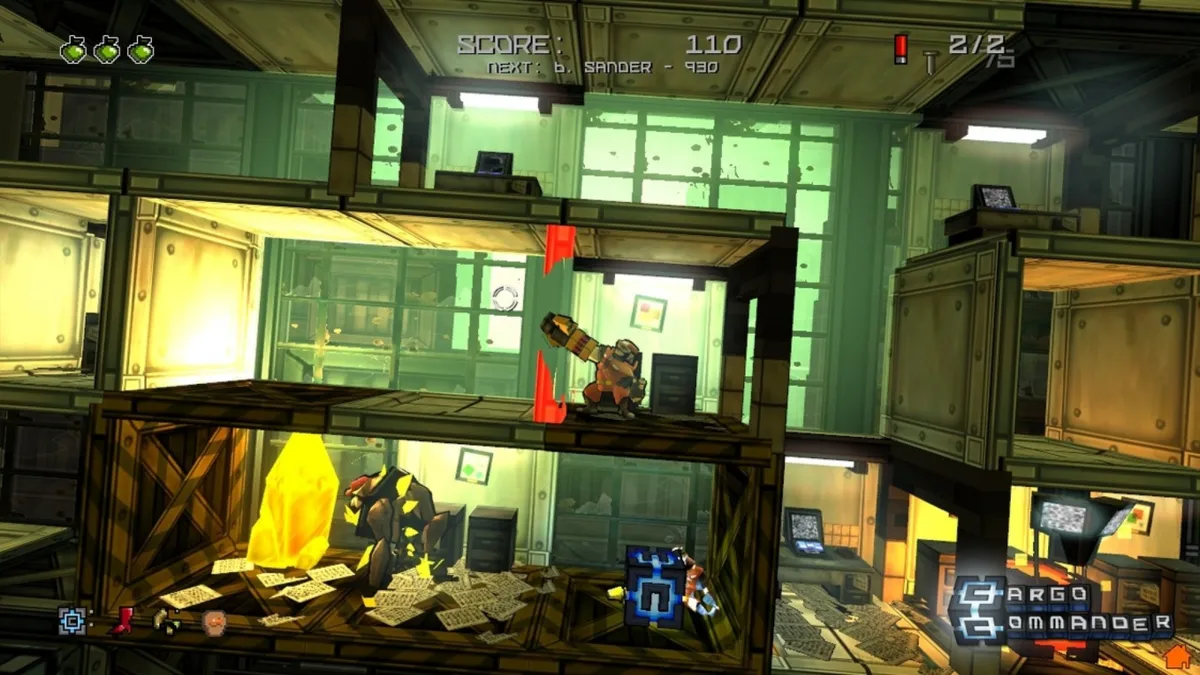
Cargo collection is the spine of progression: you collect over 80 different cargo types and, in the game's framing, earn your way back home doing it. That gives the salvage a long arc on top of the per-sector score chase. The cargo types are a documented breadth rather than a documented economy — the catalogue does not describe costs, rarity or recipes — so the useful takeaway is that every container cleared adds to a large, ongoing collection goal and to your standing in the promotion race.
There are two different play modes, Career and Journey, and the public description stops there. It does not say how their rules differ, so any walkthrough of mode-specific goals would be invention. What can be said is that both sit inside the same salvage loop and the same promotion contest, with one mode presumably oriented around the longer career framing. Serious Brew offers no further detail in the supplied material.
Upgradeable Tools and the Coffee Clause
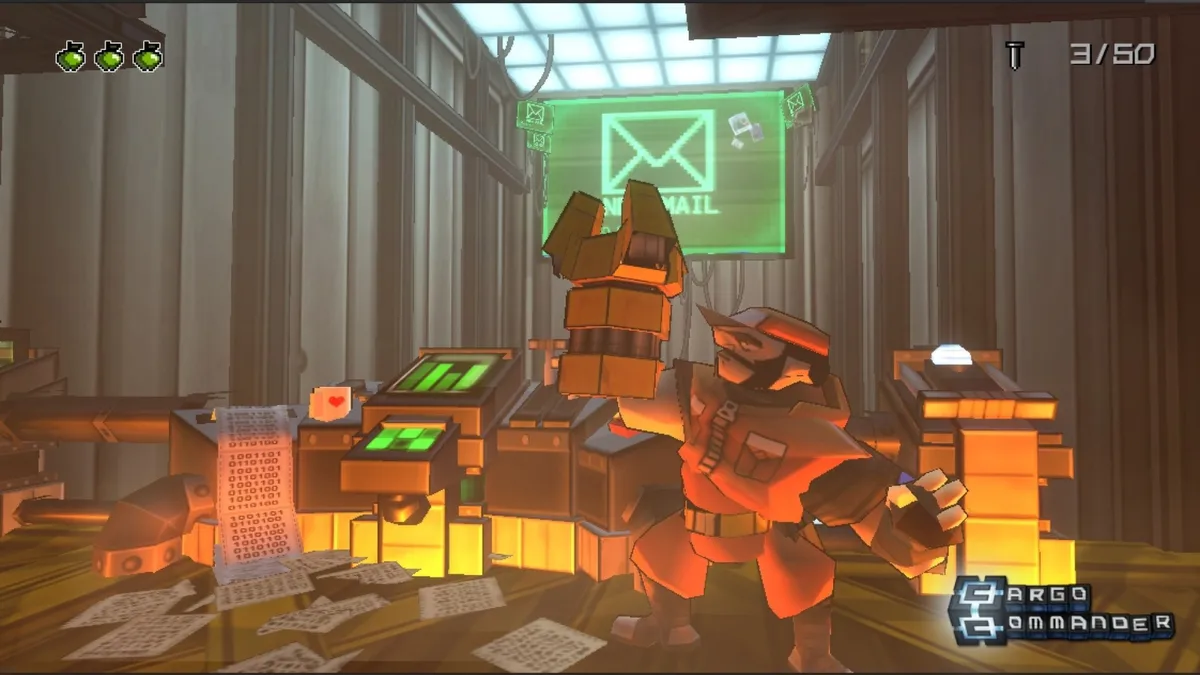
Weapons and tools are upgradeable, which is the only lever the description gives you for shaping a build. Because the tools map cleanly onto obstacles — Fistcannon to mutants, drill and explosives to terrain — upgrades touch both halves of a run. The catalogue does not list upgrade paths or effects, so treat upgrading as a supported promise of improvement rather than a known tree to optimise. The coffee cup, meanwhile, shares the opening billing with the Fistcannon and Platform Drill as the meanest in the sector; it is a flavour item in the copy, not a documented mechanic.
How to Approach a Sector
The documented rules support a few starting habits. First, read the sector before committing, because a name-generated layout is the thing you and your friends will share and score against, and the terrain can be cut rather than endured. Second, alternate your tools: mutants want the Fistcannon, structure wants the drill and explosives. Third, when you find a name worth sharing, share it — the value of a custom sector is partly in having friends put their runs on the same board for comparison.
Scroll sideways to see the full table →
| Field | Detail |
|---|---|
| Developer / Publisher | Serious Brew |
| Release year | 2012 |
| Platforms | Windows, macOS, Linux |
| Genres | Action, Adventure, Casual, Indie |
| Modes | Career, Journey |
| Signature systems | Fistcannon, Platform Drill, explosives, name-seeded sectors, per-sector online leaderboards |
| Cargo types | More than 80 |
Sources & further reading.
- Cargo Commander — official game profileRetrieved Oct 27, 2026
First published .