 THE GAME ARCHIVE
Shapes Against the Clock
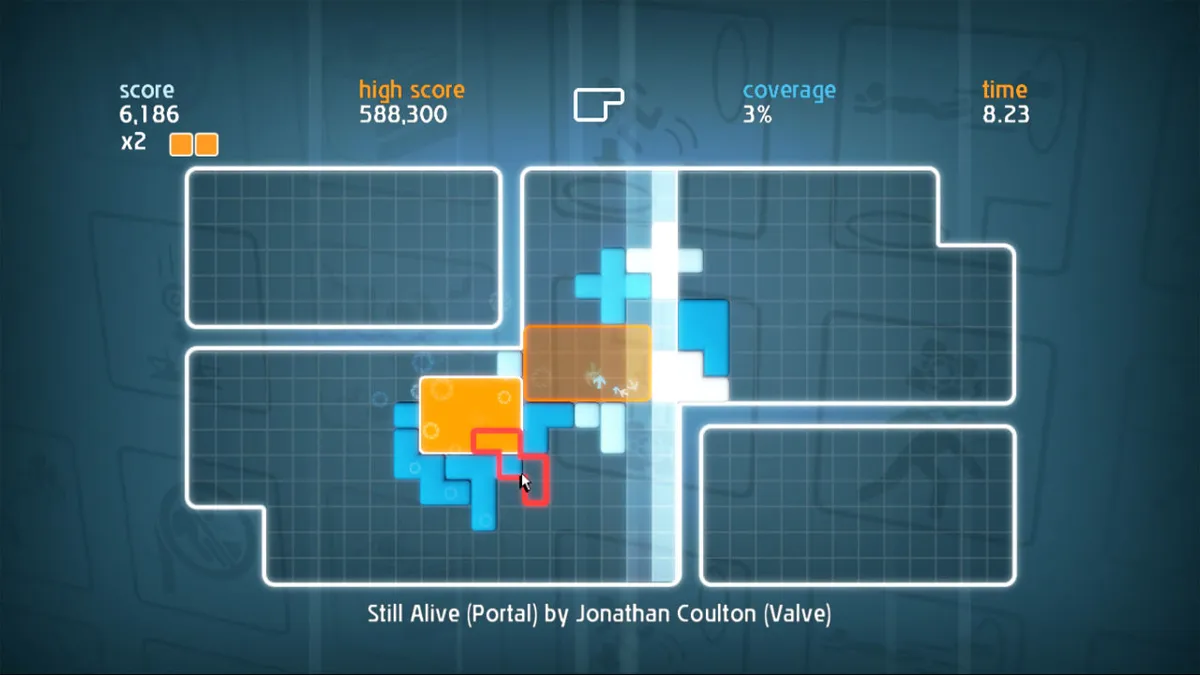
Chime is built around a grid that you try to cover with shapes while a clock counts down. You rotate pieces and place them onto the playing surface, aiming to arrange them into solid quads. Completing those quads fills sections of the grid, and the stated goal is to cover the whole playing surface before time runs out. The rules combine placement, rotation, and time pressure into the same loop: each shape you set down is a step toward covering the grid, and the countdown keeps the pace against you.
The same countdown structure frames the documented time-limited challenge: you must finish quads and fill the grid before the timer expires. Filling the grid also changes the track loop, while individual pieces play notes and completed quads trigger song samples. So placement serves two functions at once, advancing coverage of the surface and shaping the music by Moby and Paul Hartnoll. The clock stays the fixed constraint around both the puzzle and the remix behavior, tying together the actions the game asks of you.
Remix the Track by Playing
Placing a shape on the grid does more than chip away at the uncovered surface. Each piece you set down plays notes, so the act of building toward solid quads is also the act of sounding the track. The music comes from Moby and Paul Hartnoll, and the documented remix loop lets you intervene in it directly rather than hearing a fixed score play over the puzzle. Every placement is therefore a small musical event as well as a step toward coverage, and the game treats the two outcomes as the same input seen from different angles.
Completing quads adds a second layer to that interaction. Where a placed piece plays notes, a finished quad triggers song samples drawn from the featured artists, so the reward for closing a quad is audible rather than only visual. Filling the grid goes further still: it alters the track loop itself. The documented rules thus stack three musical responses onto the same clearing work, with pieces producing notes, completed quads firing samples, and grid-filling changing the loop the whole track runs on.
Six Levels, Each Its Own Mix
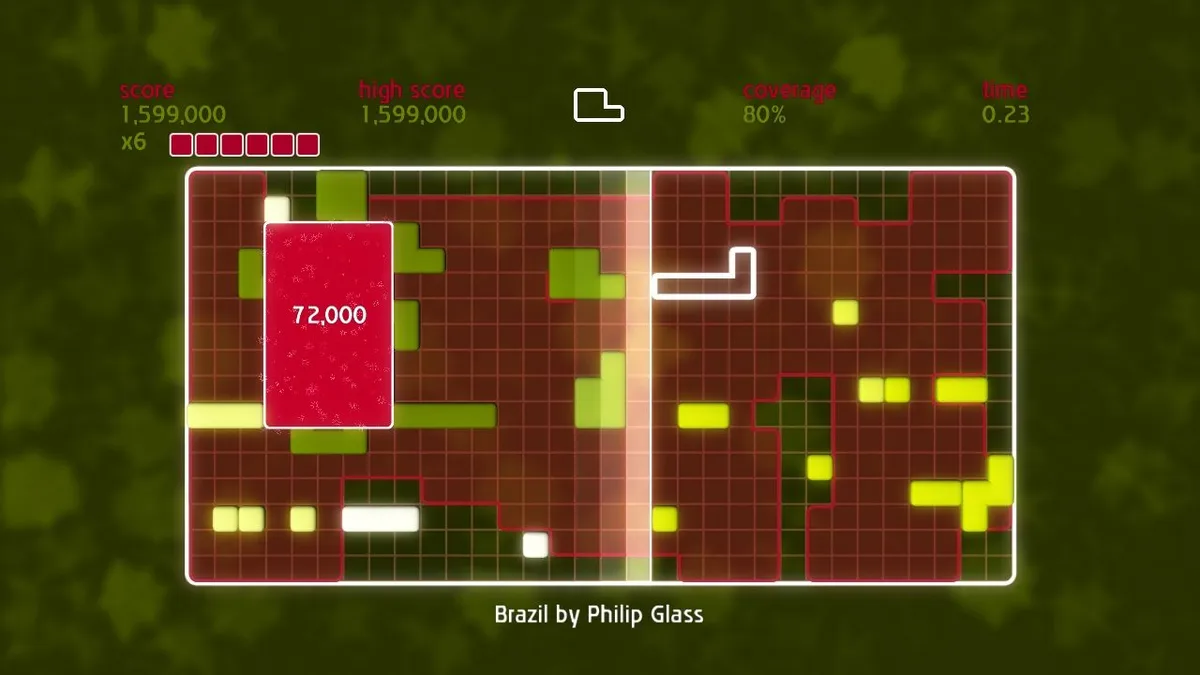
Chime divides its content into six distinct levels, and each one carries its own combination of music, grid layout, and set of shapes. The music is not shared across the game; every level has a separate track, and that track is tied to the grid and the pieces you place on it. Because the shape sets differ, the way you cover a grid changes from level to level, and the music changes with it. The sixth level is inspired by Portal and is titled Still Alive, giving the lineup a specific cultural reference alongside the original mixes.
Within Free-play mode, you can choose among three different difficulty levels or play purely to make music with no time pressure. That mode sits apart from the six-level structure, and the documented rules link it to the same grid-and-shape play while removing the countdown. The track loop still responds to filling the grid, pieces still play notes when placed, and completed quads still trigger song samples. The distinction is the absence of a clock, which lets the musical interactions proceed without the time limit that frames the main levels.
Cover, Reset, Replay
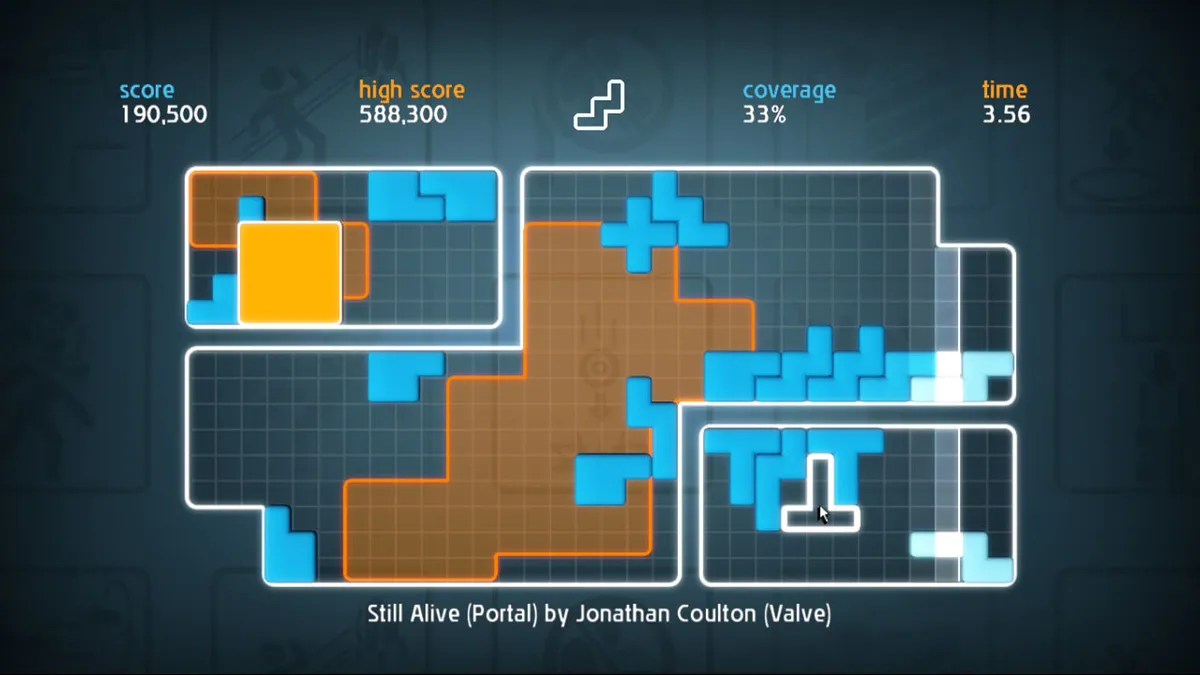
Reaching full coverage of the playing surface does not end the session; it resets the grid, and play continues from there. That reset opens the replay loop: once the board has been cleared to 100 percent, the surface is wiped and you keep placing shapes, now with the aim of beating your previous high score. The reset is therefore the hinge between one attempt and the next rather than a finish line. Coverage, the clock, and the musical responses to placement all remain in effect as the fresh grid loads and the next run begins.
Outside the six-level structure, free-play mode offers its own terms: you can pick one of three difficulty settings, or skip the settings entirely and play solely for the sake of making music with no time pressure. The same building actions carry over, since filling the grid alters the track loop, placed pieces play notes, and completed quads set off song samples. Choosing a difficulty or choosing pure music-making changes the framing, and in either case the countdown that governs the main levels is absent.
Sources & further reading.
- Chime — official game profile Retrieved Oct 20, 2026
First published .