 THE GAME ARCHIVE
The Slider Is the Steering Wheel
Democracy 2 is built around policy sliders that let you raise or lower taxes, adjust education policy, set workers' rights, and otherwise direct how the government runs. The same slider approach carries across the full spread of policy, from stem cell research and school prayer through state health care and unemployment benefits to tax shelters for the wealthy, the death penalty, military spending, and civil rights. With one mechanic repeated across so many areas, the interaction is simple to grasp: you move a control, and the government's stance on that policy shifts, so learning the tool is quick while fully balancing it is not.
Those slider adjustments take effect within a turn-based structure, so play proceeds in discrete steps rather than in real time. Between turns you can weigh the effects of each policy change before committing to the next one. A hover-based interface reveals the relationships between everything in the simulation when you place the mouse over an object, which means the connections behind a tax or education decision are visible during planning. Read together, the sliders set the government's direction, the turn-based pacing gives time to study each result, and the hover displays show what links to what.
Taxes In, Voters Satisfied
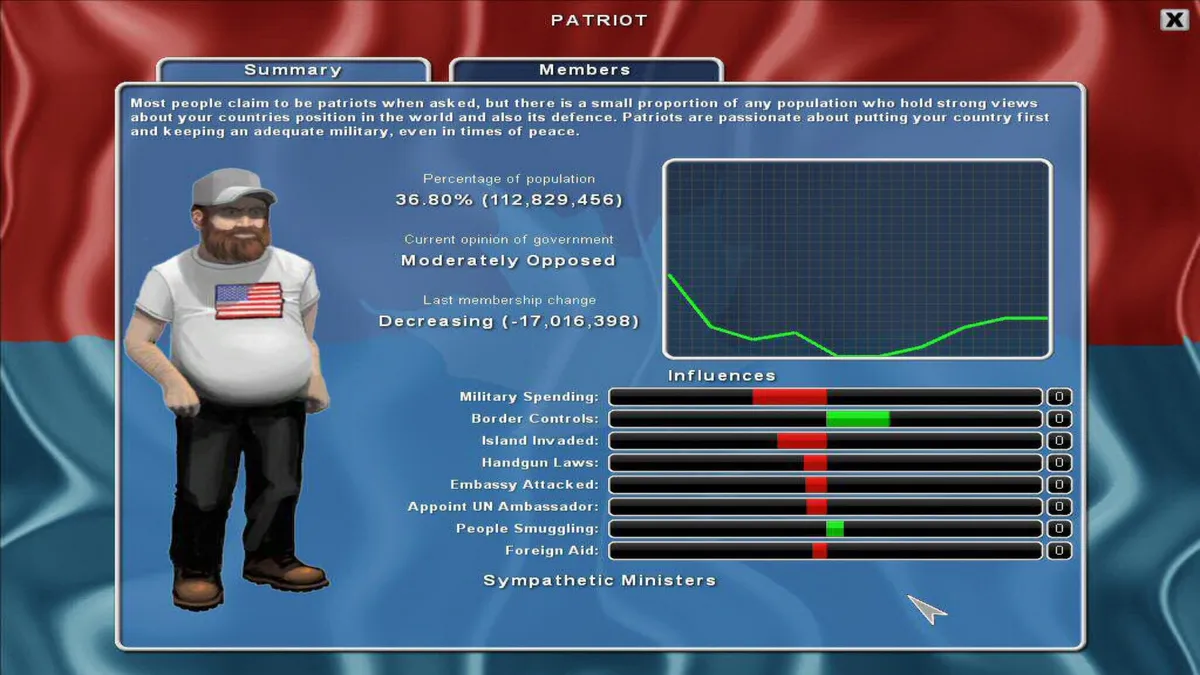
The tax slider sits at the center of a larger balancing act: as president or prime minister, your job is to weigh the income that taxes bring in against the demands of the voters. Because the same slider mechanic governs taxation, education policy, and workers' rights, a single adjustment in one area can be studied against the same kind of control elsewhere. The simulation models the motivations, loyalties, and desires of everyone in the country, so the money you collect and the policies you set are measured against the demands of the voters.
That balancing becomes concrete when the slider range stretches from stem cell research and school prayer through state health care and unemployment benefit payments, and across to tax shelters for the wealthy, the death penalty, military spending, and civil rights. Raising or lowering taxes is one axis of the same tool used to adjust education policy or workers' rights, which keeps the control scheme consistent while the policy target changes. The political direction you choose is then tested by pulling income from taxes while appeasing the patriots, liberals, or religious pressure groups whose loyalties the simulation tracks.
Crime, Liberties, and the Neighbors
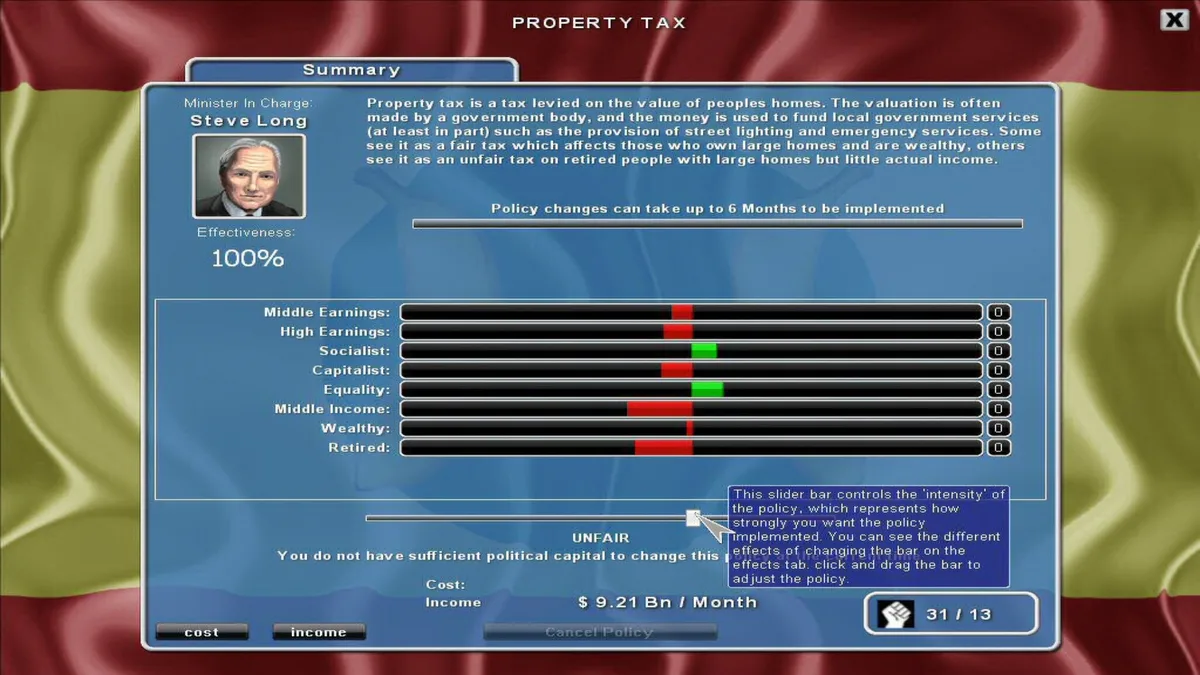
Crime and civil liberties meet in one of the game's balancing questions: can you keep crime under control without destroying the civil liberties of your citizens? Both concerns sit on the same policy-slider board, alongside the death penalty and civil rights, so the two pull against each other within the simulation rather than in separate menus. Because the simulation models the motivations, loyalties, and desires of everyone in the country, changes to crime policy and civil-liberties policy register against voter groups rather than existing in isolation. The patriots, liberals, and religious pressure groups each apply their own preferences when such decisions are made.
Beyond the borders, the game also asks whether you can keep good diplomatic relations with other nation states. That objective runs alongside the domestic shaping work, where the country's future is steered through decisions on political topics such as eco-friendly policies, capitalist utopias, and civil liberties. In practice the player acts as president or prime minister, balancing the need for income from taxes against the demands of the voters while deciding which factions to court, whether patriots, liberals, or religious pressure groups. Crime control, civil liberties, and foreign relations therefore all feed into the same governing role.
From Stem Cells to the Death Penalty
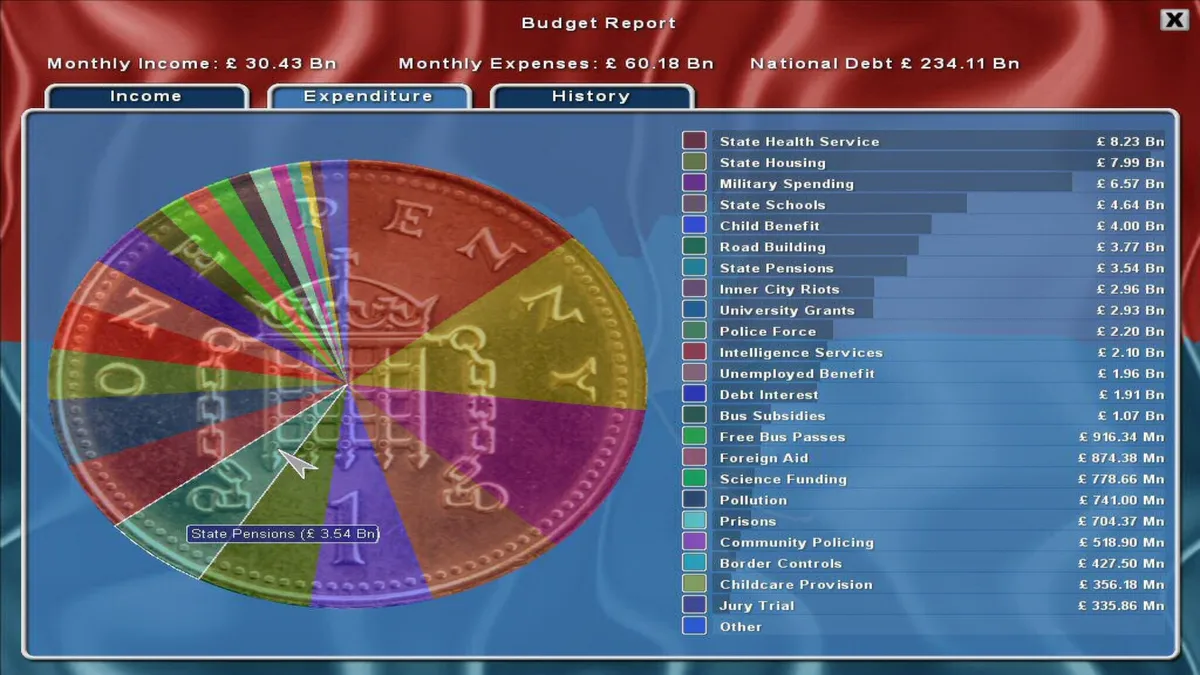
The policy board stretches from stem cell research and school prayer through state health care and unemployment benefit payments, then across to tax shelters for the wealthy, the death penalty, military spending, and civil rights. Each of these is a separate policy area you can pull toward more or less provision, so a single governing session can touch biomedical research and religious observance alongside welfare and defense. Because the topics sit together on one board, comparing a decision on health care spending with one on military spending is a matter of moving between sliders rather than switching modes.
Shaping the country also means answering the question of whether it becomes an eco-friendly green paradise or a capitalist utopia. Those directions are pursued through decisions on civil liberties and related political topics, with the same slider tool applied across the policy range. As president or prime minister, the work is to balance income from taxes against voter demands, and the factions in play, the patriots, liberals, and religious pressure groups, hold their own loyalties and desires. Each policy choice therefore lands against tracked groups rather than in isolation.
Sources & further reading.
- Democracy 2 — official game profileRetrieved Oct 27, 2026
First published .