 THE GAME ARCHIVE
Warrior, Wizard or Survivor: Starting Abilities and 96 Freely Chosen Skills
Divine Divinity begins character creation with a choice of warrior, wizard or survivor. Each has a unique starting ability, so the opening selection gives the character a distinct capability rather than merely a different label. That choice is not a permanent restriction on skill selection, however: the game separates the ability associated with your starting class from the skills you can choose as you develop.
Development draws on 96 freely selectable skills, regardless of the class you picked at the beginning. A warrior, wizard or survivor therefore has access to the same overall selection rather than a separate, class-exclusive list. This is the specific sense in which progression is classless: you choose a starting identity with its own ability, then shape the character through skill choices that are not confined by that identity.
Hack-and-Slash Combat: Enemy Variety, Battlefield Pauses and Health Potions
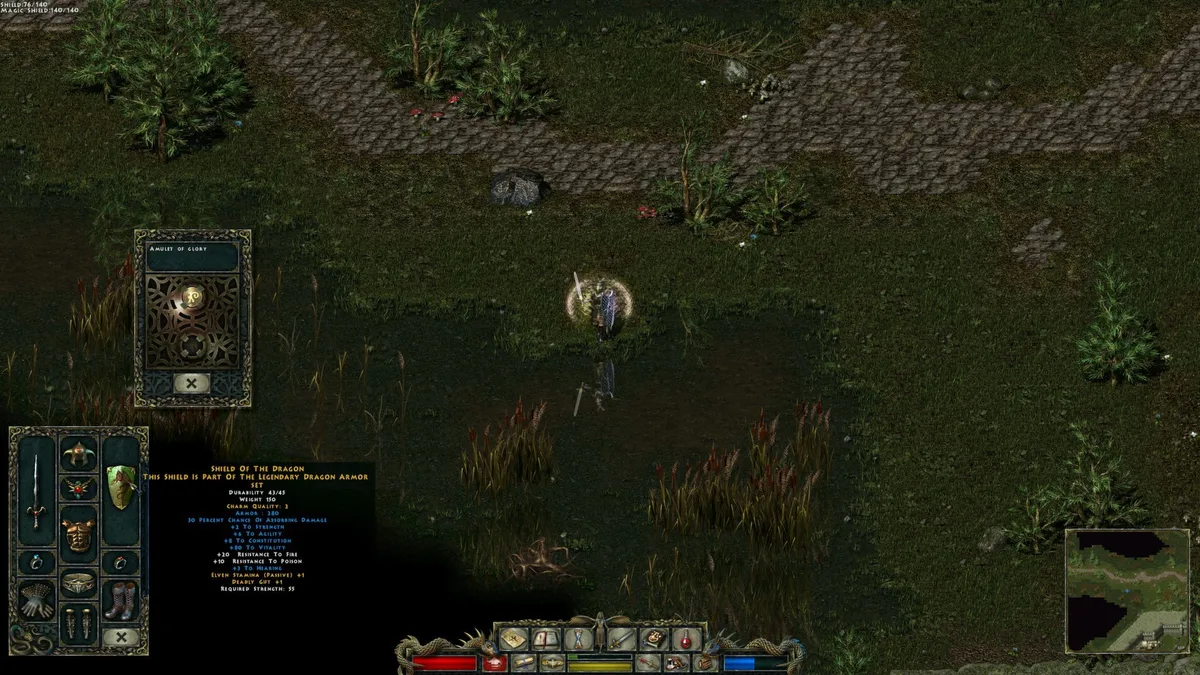
Divine Divinity pairs fast-paced hack-and-slash fighting with the option to pause at will. Combat spans dozens of different enemy types, but its pace does not require you to keep acting without a break. When a fight becomes hectic, you can stop the action and look over the battlefield. That pause is part of the combat system itself, giving you time to assess the situation before continuing the fight.
Pausing also lets you drink a health potion, so the interruption serves a concrete recovery function as well as providing time to survey the battlefield. You can halt a hectic encounter to attend to your health rather than having to consume the potion while combat continues around you. The two documented uses of pause work together: stop the fighting, examine the battlefield, and take a health potion if you need one.
Investigate, Trade and Combine: Making Potions and Poisoning Blades or Arrows
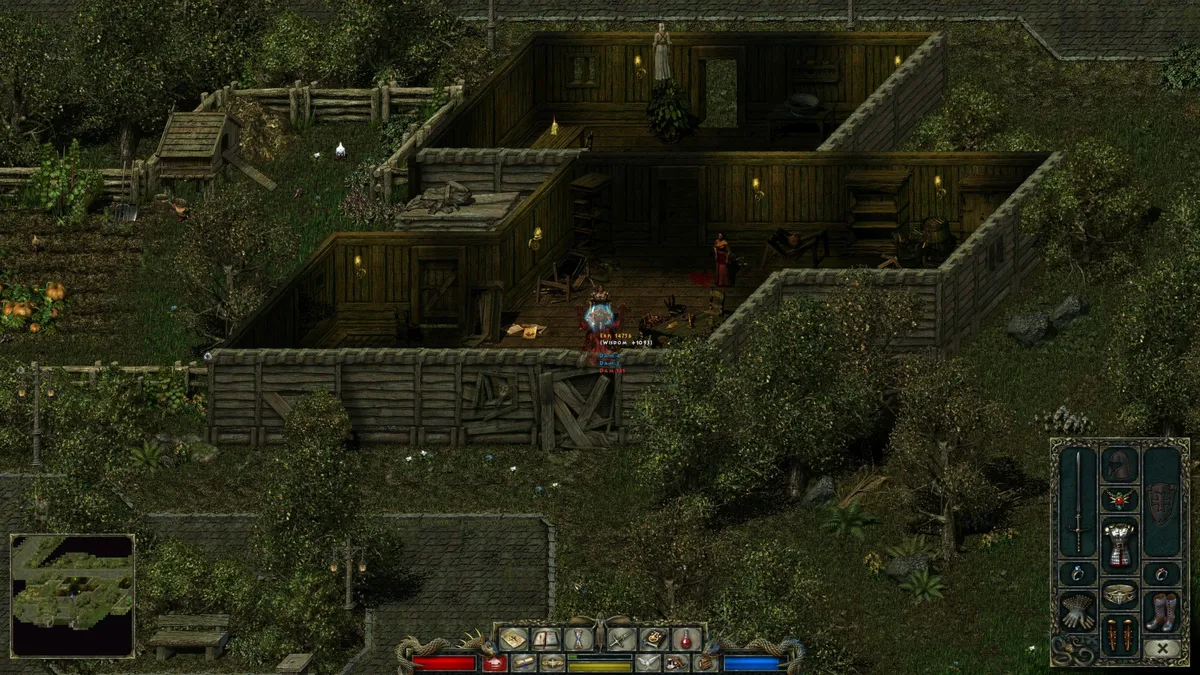
Divine Divinity lets you investigate objects, trade them, use them or combine them. Potion-making gives that last action a concrete purpose: collected empty flasks and colourful mushrooms can become potions. The flask is therefore more than an object to inspect or trade; it belongs to a combination that produces something usable. This connects collecting with preparation through a specific example, turning the mushrooms and containers you find into ingredients and equipment for making a finished item.
Poison offers another practical use for an acquired substance: you can coat a blade or apply it to arrow tips. Both a melee weapon and ammunition can therefore receive poison, rather than the substance being limited to one weapon type. Alongside potion-making, this provides a second concrete form of item preparation. The two examples use collected materials differently: flasks and mushrooms are combined to make potions, while poison is applied to the weapons or projectiles you intend to use against enemies.
Exploring Rivellon: Non-Linear Quests and the Mission to Unite Seven Races
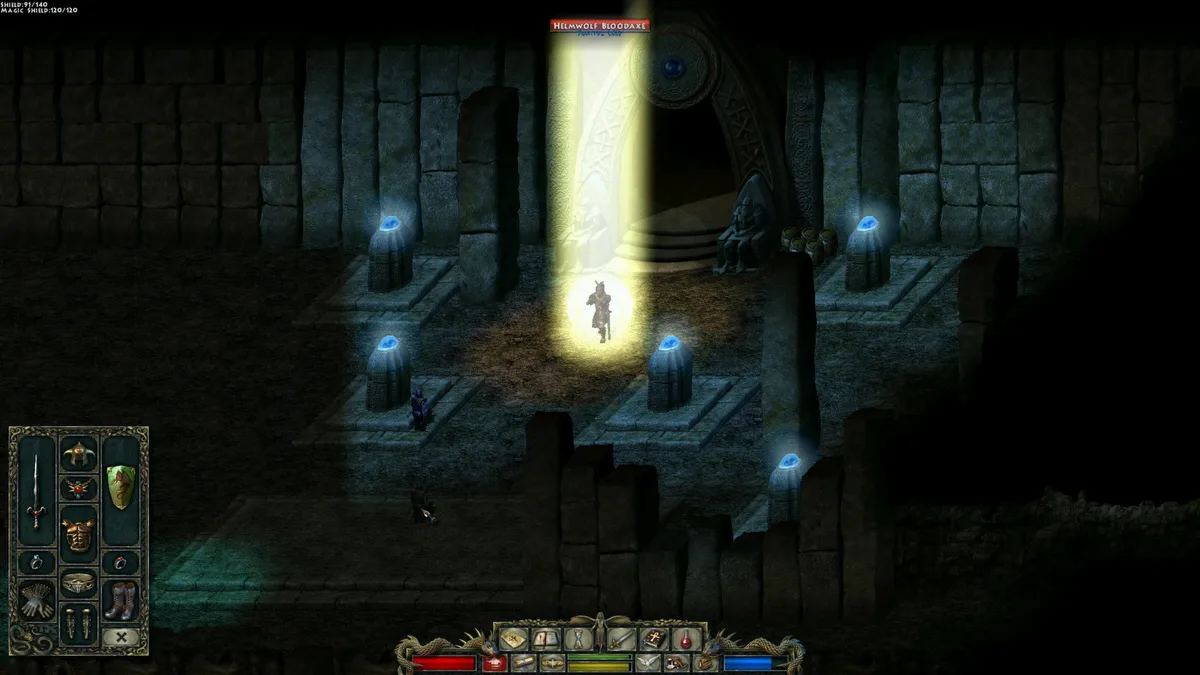
Rivellon gives your travels a specific purpose: as the prophesied Chosen One, you must bring its seven races together under the guidance of the wizard Zandalor. That union is the route to becoming the Divine One, with the ultimate aim of preventing the Lord of Chaos from being born. The threat belongs to a wider struggle against the Black Ring, an evil cult that harnesses the destructive powers of Chaos.
The journey through Rivellon combines that central mission with numerous non-linear quests and a large world to explore. Uniting the seven races supplies the overarching objective, while questing and exploration make up the broader adventure rather than reducing it to that single task. The official description puts the adventure at more than 100 hours, a stated scale for the whole game rather than a timetable for completing any particular quest or bringing one race into the union.
Sources & further reading.
- Divine Divinity — official game profileRetrieved Nov 8, 2026
First published .