 THE GAME ARCHIVE
Exploring on Land and Underwater: Movement, Jumps and Interaction
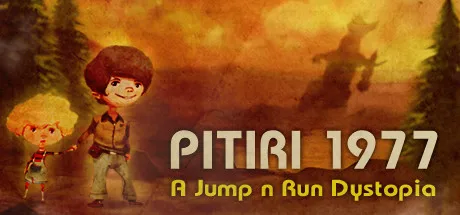
Pitiri 1977 places Eli’s search for his kidnapped brother in a twisted, 1970s science-fiction utopia. Its exploration platforming takes him across land and underwater, with the arrow keys controlling movement in both settings. The surroundings use hand-painted levels, characters and objects, while the adventure pairs its platforming with supernatural abilities and a physics engine. Within that setting, moving Eli is the basic action shared by terrestrial and submerged exploration: the documented movement controls use the same keys whether he is on land or beneath the water.
Jumping and interaction have separate keyboard inputs. Press D once to make Eli jump, or press it twice to perform a double jump. The distinction is the number of presses: a single press supplies the ordinary jump, while two presses call on the double jump. For interaction, press the Down Arrow key to activate an object or speak to someone. These commands give exploration three concrete actions alongside movement: jumping, activating objects and talking to characters. Down Arrow serves both kinds of interaction, rather than assigning conversation and object activation separate keys.
Rock, Burn and Even Flow: Bridges, Enemy Traps and Smoke-Assisted Flight
Rock makes Eli small and heavy, with uses both in caves and underwater. In this form, he can roll through caves and break through hanging bridges; beneath the water, he sinks faster. Even Flow supplies a different kind of movement: floating toward distant places or descending slowly through a spiky cave. The contrast is concrete rather than simply a difference in speed. Rock provides weight for breaking bridges and accelerating an underwater descent, while Even Flow lets Eli drift and slow his fall where the cave setting calls for it.
Burn works on the moving grass scattered throughout the game world. Setting that vegetation alight turns the burning bushes into traps for enemies, giving the ability a use tied to the surroundings rather than a described direct attack. The same fire also supports traversal when paired with Even Flow. While floating, Eli can rise a little on smoke from the burning grass. This combination extends floating beyond drifting across a gap or gliding downward: Burn supplies the smoke, and the float ability lets Eli use it for a modest upward lift.
Choosing Powers and Moving Faster with Speed of Light
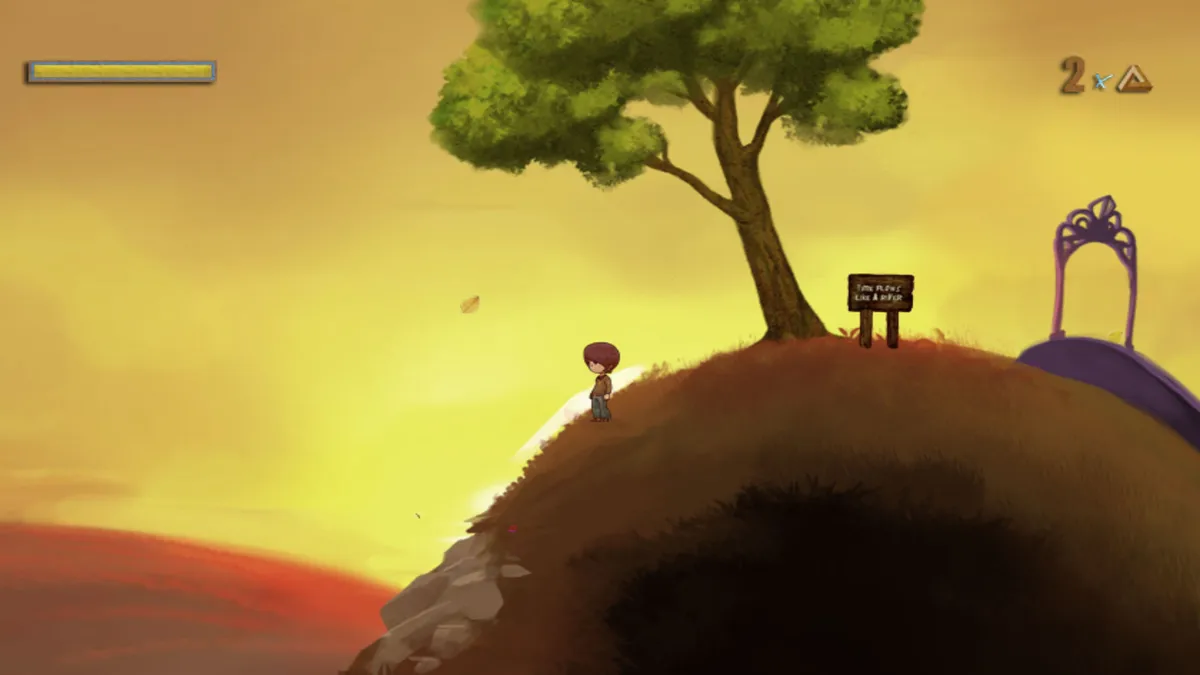
Eli’s abilities share a keyboard command: press S to choose and use a power. That makes S the starting point for selecting Speed of Light, while D supplies its special jump input once the mode is active. The distinction is between choosing the ability and performing the jump; holding D is the hyperjump command within Speed of Light mode, not the documented command for selecting it.
Speed of Light changes two aspects of traversal: Eli can run faster and jump higher. To perform the higher jump, hold D with the ability active. The manual calls this action a hyperjump, tying the increased jumping height to a held input in that particular mode. Faster running and the hyperjump are thus paired under one named ability, with the jump requiring its own action after the power has been chosen.
Energy, Eshers and Returning to Your Last Save
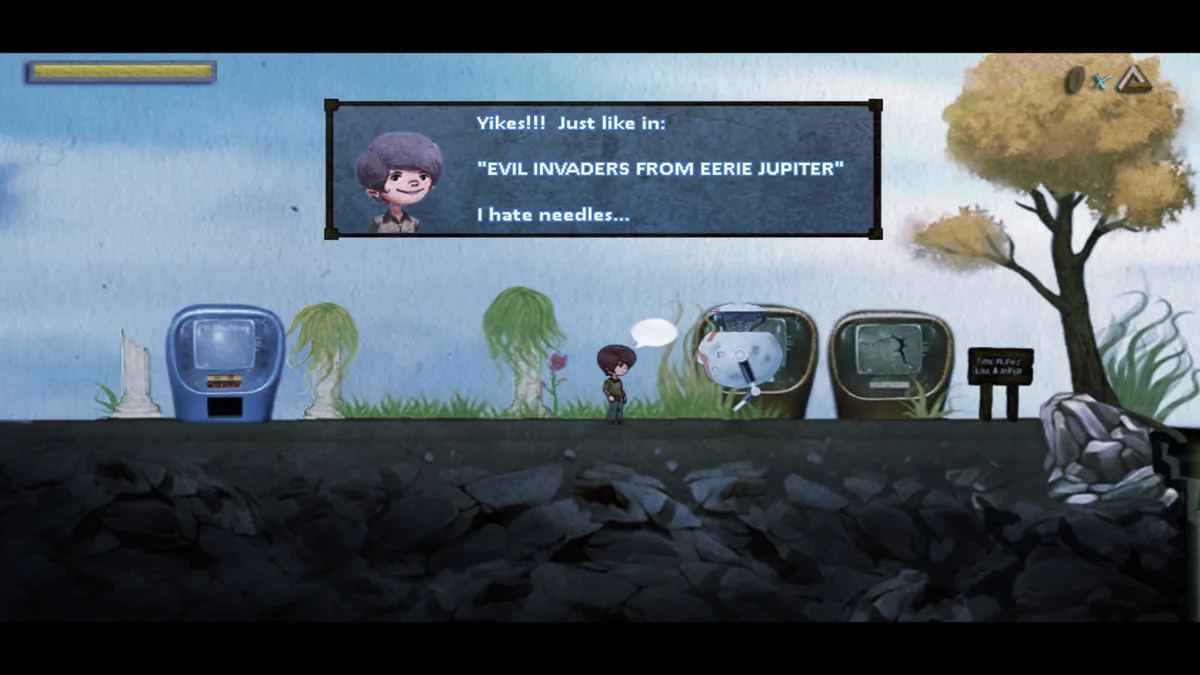
The Energy Bar measures Eli’s strength and how long he can use his abilities, tying the powers to a replenishing resource. It recharges over time, but waiting is not the only way to refill it: hold the Down Arrow key to recharge. This gives the key a distinct sustained-input function alongside its interaction command. For energy recovery, the important action is holding the key rather than simply pressing it. The bar therefore serves both as a strength indicator and as a measure of the duration available for ability use.
Eshers provide upgrades rather than simply replenishing energy. Each of these paradox upgrades makes Eli and his abilities a little stronger, and collecting a couple upgrades the Energy Bar itself. Recharging the bar and upgrading it are thus separate parts of the energy system: one restores the resource, while the other improves it. Progress also has a saved-position rule. The game offers opportunities to save from time to time, and continuing returns you to your last saved position. Starting a New Adventure deletes that saved game rather than preserving it alongside the new start.
Sources & further reading.
- Pitiri 1977 — official game profileRetrieved Nov 8, 2026
- Pitiri 1977 — official game profile — publisher-supplied gameplay manualRetrieved Nov 8, 2026
First published .