 THE GAME ARCHIVE
One Turn at a Time, One Big Sword
Each room in DROD: Gunthro and the Epic Blunder is a hand-crafted puzzle resolved through turn-based action in a top-down two-dimensional dungeon. You clear every monster using the Really Big Sword without letting any of them reach and kill you. The interface stays simple and the command set is small, so each turn is a discrete decision: where Gunthro steps, which direction he faces, and where the blade swings. Because monsters only move after your input, every room becomes a readable sequence of positions rather than a reflex test.
The equipment list is one weapon: the Really Big Sword, with no inventory management layered on top. That narrows the toolkit to positioning and timing, and it is why monster behavior and terrain matter so much. Each monster type follows its own deterministic movement pattern, and puzzle elements plus terrain types both help and hinder the solve. Combine those pieces and emergent behaviors surface, so two rooms using the same creatures can still demand different turn-by-turn sequences. Clearing out the monsters ends the room; letting one reach Gunthro restarts the logic problem.
Hand-Crafted Rooms and the Logic of the Solve
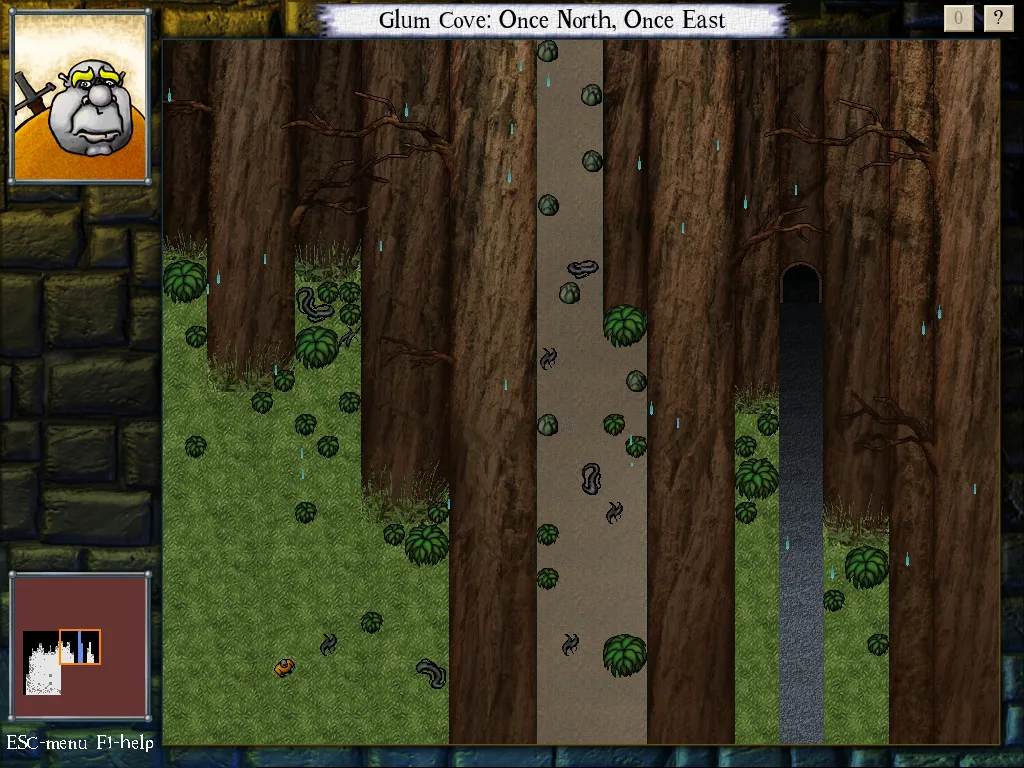
Rooms are authored puzzles rather than generated arenas, and the game opens with basic mechanics and fighting techniques before the difficulty ramps up. Each new room presents a fresh challenge with a logical solution, so progress rests on reading the layout rather than outlasting anything. Terrain types and puzzle elements both help and hinder the solve, which means the same sword swing can be correct in one room and fatal in the next. The documented design promise is a smooth learning curve, with later rooms organized around different combinations of those elements.
The solve itself is a logic problem expressed in turns. With a simple interface and only a handful of commands to master, each input moves Gunthro and resolves the sword, and then the monsters answer according to their deterministic movement patterns. Terrain and puzzle elements limit where you can stand and where a blade can reach, so the room's answer is a specific order of steps and facings. Emergent depth comes from combining those elements: the commands stay few, but the resulting positions change from room to room, and clearing every monster without being reached closes the puzzle.
Rock Golems, Wraithwings and Other Deterministic Terrors
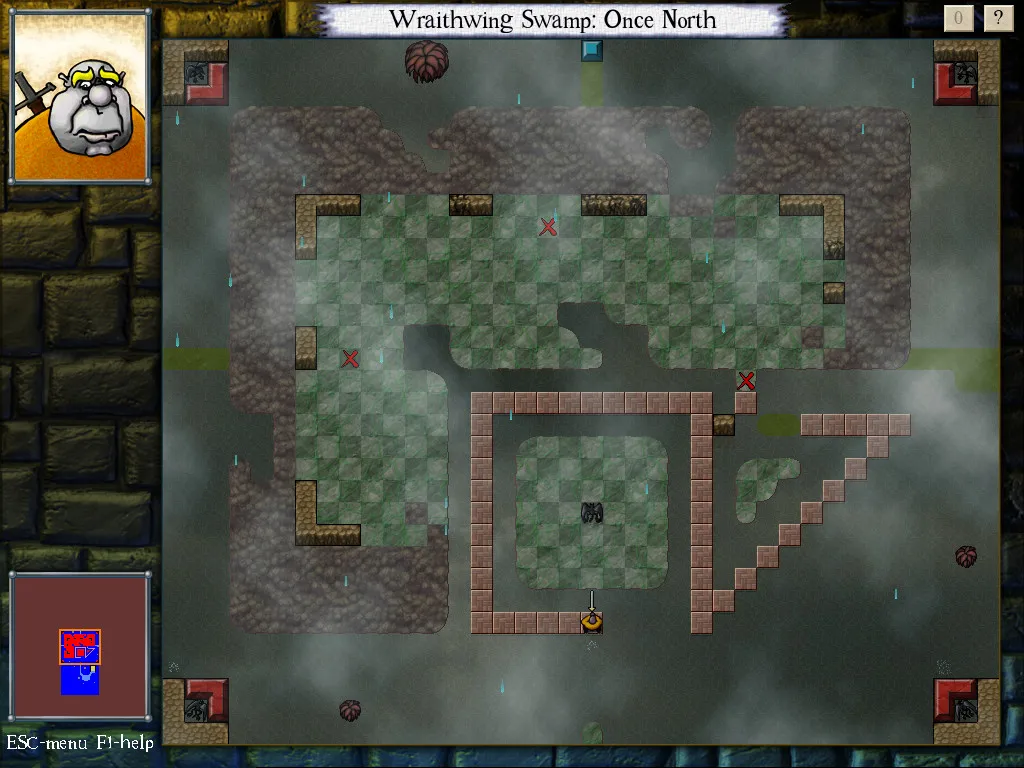
The monster roster spans rock golems, giant serpents, wraithwings and evil eyes, and each type carries a distinctive AI behavior with its own deterministic movement pattern. That variety is the room's real constraint: a rock golem and a wraithwing sharing a corridor do not answer a swing in the same way, so the strategies and tactics that conquer one creature differ from those needed for another. Because each creature commits its move only after Gunthro's step and facing resolve, a room reads as a chain of predictable positions rather than a reaction test.
Those movement patterns interact with terrain and puzzle elements that both help and hinder the solve, so the answer to a room is a specific order of steps, facings and sword swings. The objective stays fixed: clear out all the monsters with the Really Big Sword without letting any reach and kill Gunthro. Different creature tactics collide when several types occupy the same floorplan, and the same swing that removes a serpent can leave a golem positioned to close the gap. Clearing every monster ends the room; a failed sequence resets the logic problem rather than escalating it.
Secret Levels, User-Made Rooms and a Built-In Editor
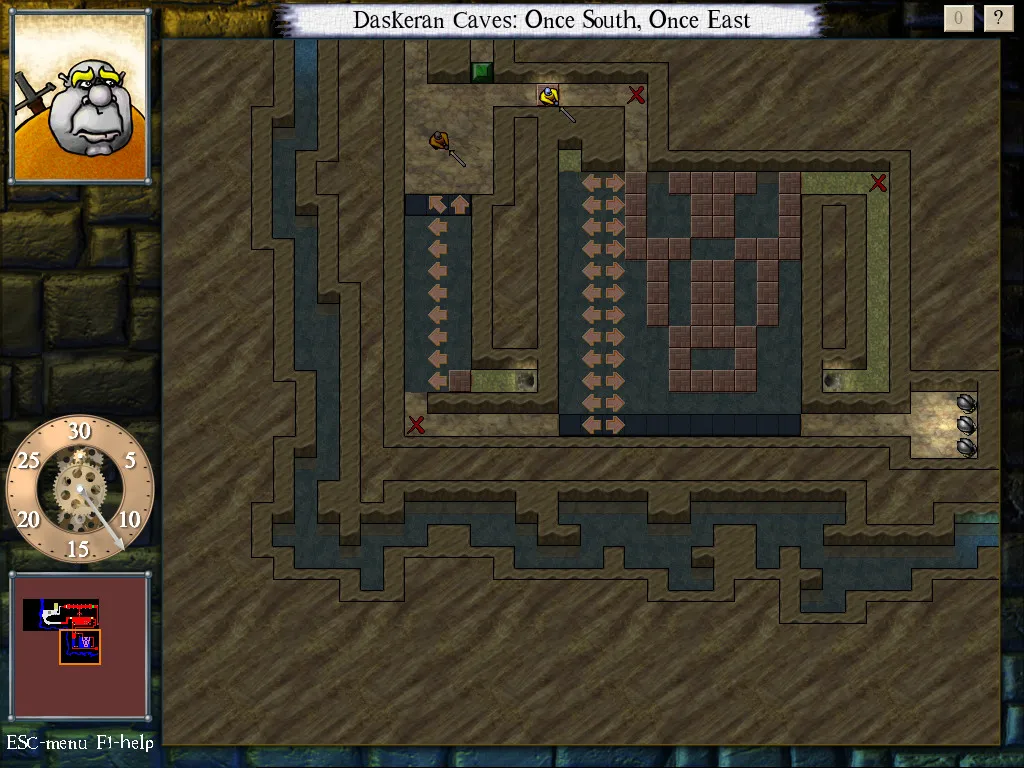
Beyond the campaign rooms, the game hides dozens of secret areas and optional challenge levels meant for the more curious and adventuresome player. These are uncovered through a variety of methods rather than sitting on the main path, so exploration itself becomes a puzzle to be solved with the same turn-based movement and sword handling used elsewhere. They are extra challenges layered onto the main progression, giving advanced players content past the initial learning curve without altering the core goal of clearing monsters without being reached.
The game also ships with a full-featured level and campaign editor built around a custom scripting engine, letting players author their own rooms. An active player community surrounds that tool, and over 25,000 user-made rooms are available for download, alongside an integrated online hints system for when a room stalls. The editing and sharing side sits outside the original combat loop, but it draws on the same puzzle-element and monster rules the campaign uses, so custom rooms can be built and distributed by the same community.
Sources & further reading.
- DROD: Gunthro and the Epic Blunder — official game profileRetrieved Nov 1, 2026
First published .