 THE GAME ARCHIVE

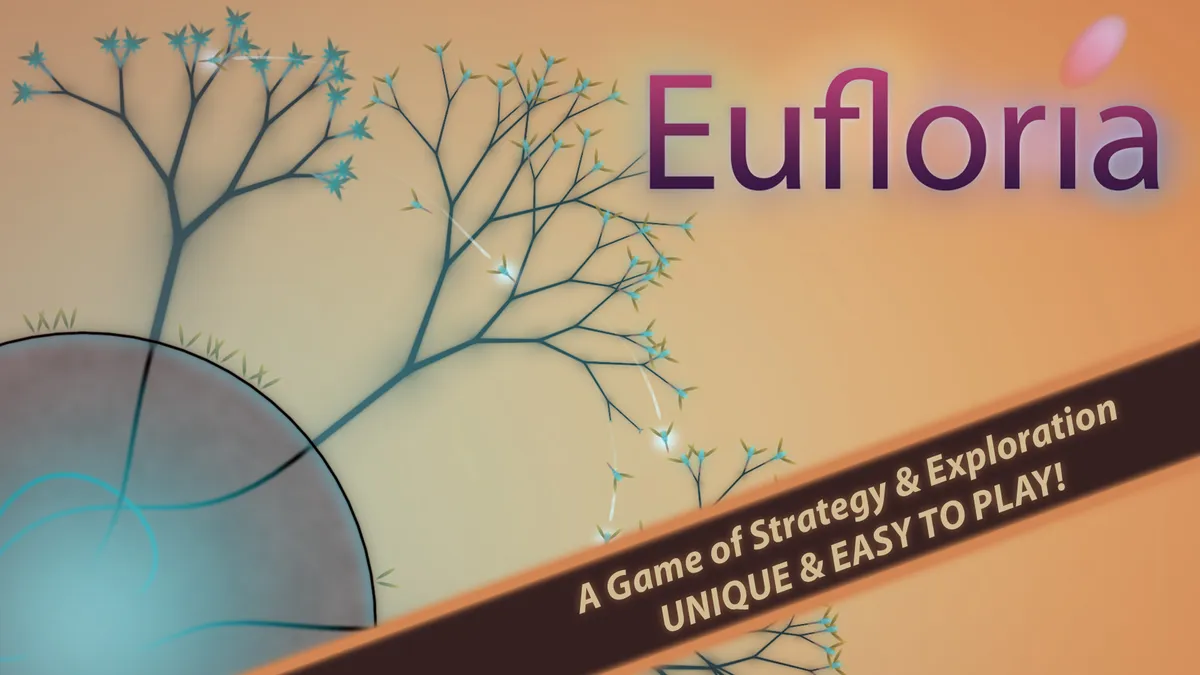
Eufloria HD is a strategy game in which the map is a field of asteroids and your army is a garden. You conquer asteroids in space, use the resources they yield to grow floral creatures, and expand an empire outward while several teams of AI opponents compete for the same resources. The official store description frames the loop in exactly those terms, and the publisher-supplied manual gives the design its nickname: intergalactic guerrilla gardening.
That framing matters because it tells you what kind of decisions you make. There are no space marines in sight at all, per the manual; instead all of the gameplay is based on growing strategic and colonising life forms on asteroids you conquer throughout the game. Every tactical choice therefore runs through two questions: which rock do I take, and what do I grow from it?
Taking Asteroids and Turning Them Into Capacity
The documented core rule is a two-step conversion. First, conquer asteroids in space; second, use their resources to grow floral creatures that do your bidding. Expansion and production are the same action seen from two angles. A captured asteroid is both a new source of the resources that feed growth and, implicitly, the place where your botanical force is cultivated. There is no separate recruitment building or training queue described in the supplied material. The asteroid itself is the engine that turns conquest into an army of plants.
That single mechanic carries a lot of strategy. Because resources come from captured rock rather than from a fixed home base, your economy travels with your front line. Every push to a new asteroid is an investment that, if it holds, pays back in growth capacity; a failed push costs you creatures you cannot easily replace. The manual's phrase for the whole exercise, intergalactic guerrilla gardening, fits that logic: you are not holding a static fortress but spreading living things across a contested landscape.
Growing Floral Creatures and Fighting Plant Against Plant
Your creatures are floral, and combat is plant against plant. The manual states that you engage in massive battles against enemy plant life. Read alongside the store description, this makes the resource loop and the combat loop inseparable: conquest grants resources, resources grow floral creatures, and those creatures clash with rival plants. The rules interlock cleanly, which is the appeal of the design; you are always managing one currency, not two.
The emotional register is unusually gentle for the genre. The manual describes the game as easy to learn and hard to master, addictive and approachable, and says its challenges are fun in a style that can be described as ambient gameplay, without being punished for small mistakes. That is a design promise, not just marketing copy: it means the interesting decisions are about where to concentrate growth and when to commit creatures, rather than about managing brittle micromanagement.
Competing With AI Teams for the Same Rock
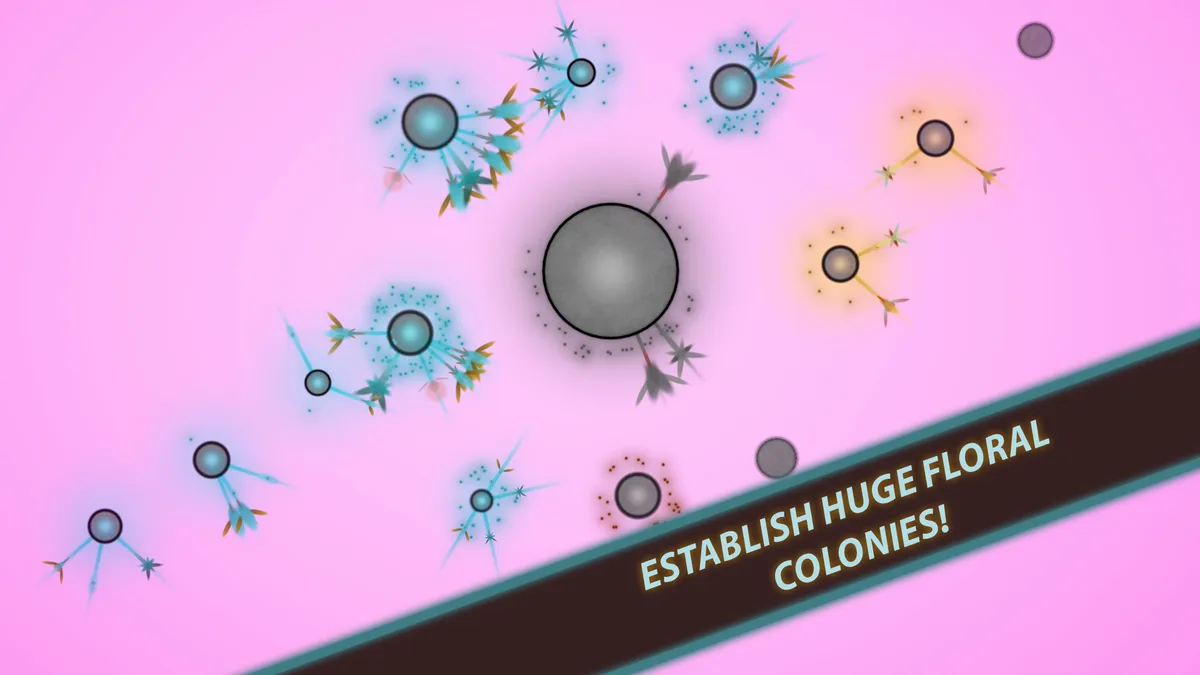
You are never alone in the asteroid field. The game pits you against several teams of AI opponents, all vying for the same resources, and the store description warns they can offer fierce opposition. That shared scarcity is what gives asteroid capture its bite. When you seize a rock, you do not only add a resource source to your side; you remove one an AI team could otherwise tap. A single asteroid counts twice, as new growing capacity for you and as capacity denied to a rival.
Because every faction grows its forces from conquered asteroids, the resource loop that builds your creatures also feeds the opposition's. This suggests a practical reading of the map: asteroids near an enemy's edge are worth contesting early, because leaving them alone lets that AI compound its growth. Conversely, a defensible asteroid deep in your territory is less about immediate battle and more about sustaining the creatures you send forward.
Story Mode, Skirmish, Relaxed and Dark Matter
The Steam product record lists several modes, and they shape how you meet the conquest loop. The headline is a 25-level Story Mode with many hours of gameplay, which gives the campaign a defined arc of asteroid fields to work through. Alongside it are Skirmish Levels that can be played over and over, Dark Matter Mode, billed as a stylish, more challenging way to play, and a Relaxed Mode offered as a more ambient experience which anyone can enjoy.
The mode split supports different player goals from the same rules. If you want to learn the conquest-and-growth rhythm without pressure, Relaxed Mode is the documented on-ramp, described as ambient and approachable. If you already know the rules and want a harder test, Dark Matter Mode is presented as the more challenging option. Skirmish is the repeatable shelf, suited to experimenting with openings after the campaign has taught you the map logic.
Procedural Levels and Replay Value
Variation is built into the design. The manual states that most of the content in the game is procedurally generated, so each play session is unique, and the store feature list adds that many levels are different every time. For a game whose whole loop is reading an asteroid map and deciding where to grow, that matters: rather than memorising one layout, you must re-assess which asteroids to take and which to contest as the field changes.
The repeatable structure, especially Skirmish and the procedurally generated levels, points at a game built for returning to the same core decisions with fresh geography. The manual also notes a modding history: the original Eufloria had a thriving modding community, and Eufloria HD, once released in final form, was to contain new modding options. That is context for replay value rather than a guarantee of scope.
The Floral Aesthetic and Ambient Sound
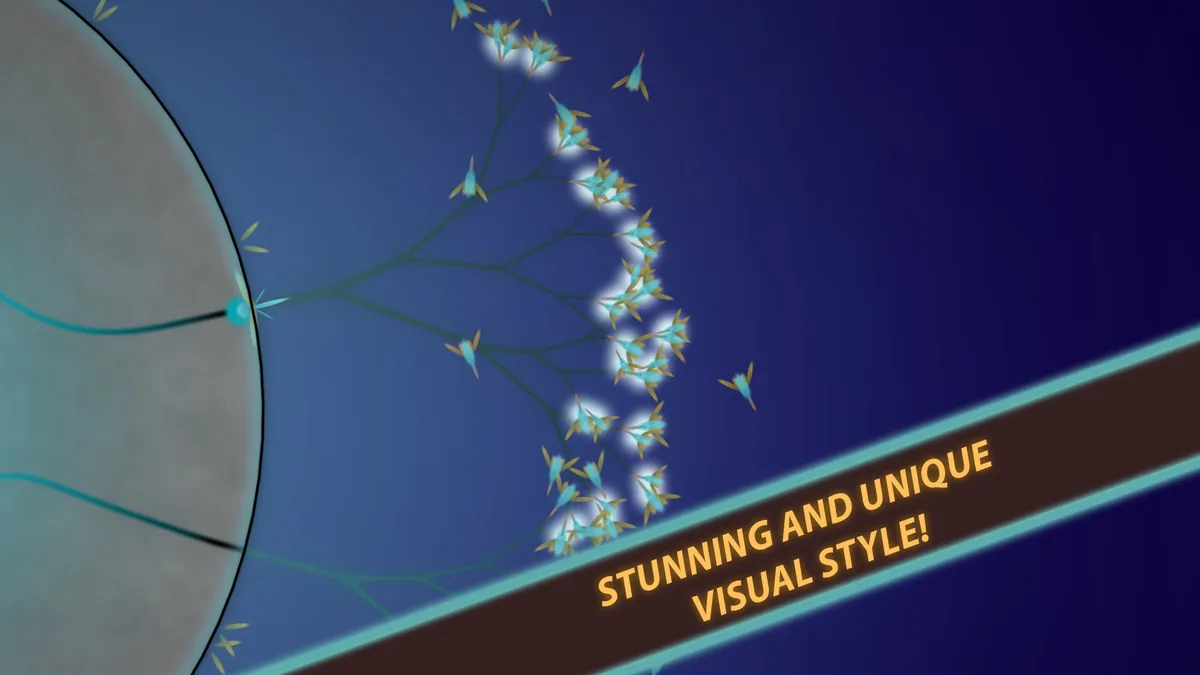
The look and sound reinforce the gentle framing. The manual describes the aesthetics as reminiscent of children's books like The Little Prince, and says the game is supported by an original ambient soundtrack by Brian Grainger (Milieu), offering no less than three hours of ambient music. The store feature list notes an original ambient soundtrack by Milieu. Combined with the ambient gameplay label, that places Eufloria HD in a calmer register than most strategy games while retaining the conquest-driven rules.
Edition Details and Platform Availability
Eufloria HD is listed in the Steam product record with a release year of 2014 on Windows, macOS, and Linux, with the store feature list noting that the HD version includes an official Linux and OSX build for the first time. The manual credits the original game to a two-man indie team, Rudolf Kremers (design) and Alex May (programming), with music and audio by Brian Grainger (Milieu), and says the HD version was co-developed with Alex Amsel and Mark Fitt of Tuna.
Starting Advice Drawn from the Documented Rules
Treat every asteroid as two decisions. First, does taking it raise the resource flow that grows my creatures? Second, does it deny a rival a source it needs? The rules support both readings, since resources feed growth and AI teams contend for the same resources. Early expansion should therefore lean toward claiming rock that is cheap to hold while denying resource sources an opponent could use.
Learning the rules under little pressure is easy to arrange: Relaxed Mode is billed as a more ambient experience which anyone can enjoy, so a learner can see how growth from asteroids translates into creatures sent against plants. Once that rhythm is clear, Skirmish Levels and Dark Matter Mode offer repeatable or more challenging tests of the same decision-making. Because the campaign is built as a 25-level Story Mode, working through it is the natural way to see the loop unfold before probing harder modes.
What holds Eufloria HD together is the cleanness of its core loop. You conquer asteroids in space, use their resources to grow floral creatures that do your bidding, and fight plant life grown by AI teams drawing on the same resources. The manual's intergalactic guerrilla gardening label is playful, but it is also accurate to the mechanics: your empire is a garden that must expand to survive, and every asteroid you leave to a rival is a resource source it can grow from.
Scroll sideways to see the full table →
| Item | Documented detail |
|---|---|
| Game | Eufloria HD |
| Release year (Steam record) | 2014 |
| Platforms | Windows, macOS, Linux |
| Developers (Steam record) | Rudolf Kremers & Alex May, Tuna |
| Publisher (Steam record) | Omni Systems |
| Genres | Indie, Strategy |
| Core loop | Conquer asteroids for resources; grow floral creatures from them; fight AI teams competing for the same resources |
| Modes | 25-level Story Mode; Relaxed Mode; Skirmish Levels; Dark Matter Mode |
| Levels | Many procedurally generated levels, different every time |
| Soundtrack | Original ambient soundtrack by Milieu (Brian Grainger) |
Scroll sideways to see the full table →
| Mode | Documented description |
|---|---|
| Story Mode | 25-level campaign with many hours of gameplay |
| Relaxed Mode | A more ambient experience which anyone can enjoy |
| Skirmish Levels | Playable over and over |
| Dark Matter Mode | A stylish, more challenging way to play |
Sources & further reading.
- Eufloria HD — official game profileRetrieved Oct 28, 2026
- Eufloria HD — official game profile — publisher-supplied gameplay manualRetrieved Oct 28, 2026
First published .