 THE GAME ARCHIVE
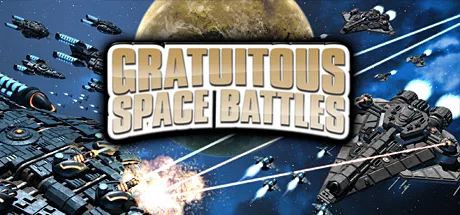
Gratuitous Space Battles is a strategy and management game and space-battle simulator from Positech Games, listed by Steam with a 2009 product date and released for Windows, macOS and Linux. The publisher manual frames the player as a Fleet Commander whose mission is to blow up the enemy spacefleet as totally as possible. The distinctive part is where the player's attention sits: the work happens before the shooting starts, in modular ship design, defensive layering and fleet deployment.
The publisher's store description calls it the first ever auto-battler, from way back in 2009, and frames it as cutting to the chase without backstory, resource-gathering or diplomacy. Steam classifies the game as Indie, Simulation and Strategy. That framing is useful for understanding the appeal: the decisions are concentrated in construction and positioning, and the battle is the test of those decisions.
Modular Hulls and the Balancing Act of Ship Design
Design begins from a basic empty hull received from the shipyard, which may carry minimal power production and certain bonuses. You supplement that shell with modules of your choosing, including engines, shields, armor, crew accommodation and weaponry. Hulls come in three sizes: fighters, frigates and cruisers, the last carrying the most gratuitous weaponry and gadgets at the cost of weighing a great deal. Modules are specific to ship type, so a fighter module cannot go on a frigate. They also come in two types: standard modules, shown by square icons and slots, and hardpoint modules, shown by hexagonal icons and slots.
Fitting out a hull is a balancing act across weight, speed, crew and power. Ship speed is the combined thrust of its engines measured against total weight, and turning speed is directly related to speed. Some modules have lighter and more expensive variants that may appeal when every bit of weight matters. Almost every ship needs one or more crew modules and some power-plant modules, and the design should not waste power supply or crew capability. A design that violates crew and power requirements cannot be saved, because the save button is disabled.
That rule shapes real choices. A large cruiser can absorb heavy weapons and thick defenses but pays in weight, which drags its speed down; lighter module variants are one way to claw some of that back at added cost. Empty sockets are legal, which can save weight or cost, but the manual treats a sparsely filled hull as generally wasteful because you have already paid for the hull. The design screen therefore teaches a budgeting habit early: every slot spent is a trade against speed, crew and power.
Stacking also has diminishing returns. Adding multiple shield modules reduces the efficiency of each shield module, and the current efficiency can be checked by hovering over a module's location on the ship. Visual duplication of turrets does not increase combat power. The practical lesson is that a hull crammed with the same defensive component does not scale linearly, so a designer weighing one strong shield against several weaker ones is making a genuine engineering decision rather than a cosmetic one.
Shields, Armor and Getting Through Both
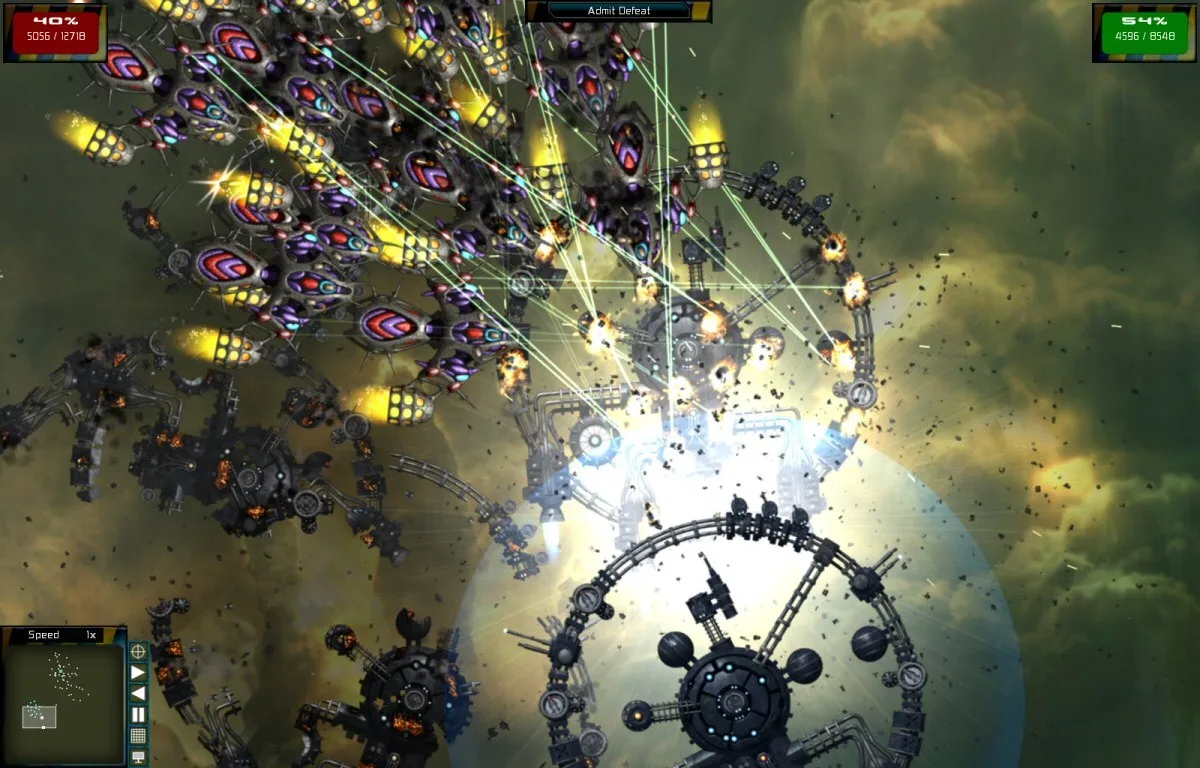
Defense is layered rather than a single barrier. Ships can carry shields, armor, both or neither. Damaged armor does not regenerate, although it can be repaired; shields regenerate but can be knocked out permanently. Weapons must have armor penetration higher than the target's average armor strength, or the shot bounces off and achieves nothing. Shields block damage until they are destabilized. A fleet can therefore split the job: one ship fires shield-damaging weapons, and once the shields are down, other ships fire armor-damaging weapons to break through to the hull.
Shield stability is a second, sneakier route past a shield. Special shield-destabilizing weapons such as the frigate disruptor bomb reduce shield stability, and once it reaches zero the shield flickers off entirely for a short period, leaving the ship briefly defenseless. This differs from simply battering a shield down. Stability failures are quickly fixed, whereas a shield knocked down to zero strength is down and out even if its generators are physically intact, and repairing the generator will not bring it back.
Shield modules operate independently, so a single generator can contribute its share while others are disabled, and one module can regenerate back to full strength after the others are lost, albeit at a fraction of the original protection. Once shields and armor are gone, hits damage individual modules, each of which has its own hitpoints representing the physical strength of that equipment. Repair modules restore damaged components but consume limited repair supplies, going effectively inactive once those supplies run out. These rules reward layered, redundant designs over a single perfect defense.
Fighter Runs, Tracking and Weapon Synergy
One close-range fighter tactic is to get fighters inside an enemy ship's shield bubble so their attacks effectively bypass the shields entirely. The target's armor remains in full force against those hits, so the run does not guarantee a breakthrough. The same proximity makes the fighters easy targets for a cruiser carrying dedicated anti-fighter defense lasers or missiles. The manual also suggests screening cruisers with a line of anti-fighter frigates so attacking fighters are destroyed before they reach range.
Weapon accuracy is judged against the target's current speed, compared with the weapon's tracking speed, not the target's maximum speed. A fast fighter squadron ordered to sit in formation next to a stationary cruiser gains no protection from its top speed. A fighter caught in a tractor beam can be slowed almost to a stop, which is why tractor beams paired with short-range blasters are a classic answer to enemy fighters. Broader guidance follows: higher tracking speed is better, and poor-tracking weapons need arrangements that hold targets still or close the distance.
Deployment, Orders and Fleet Limits
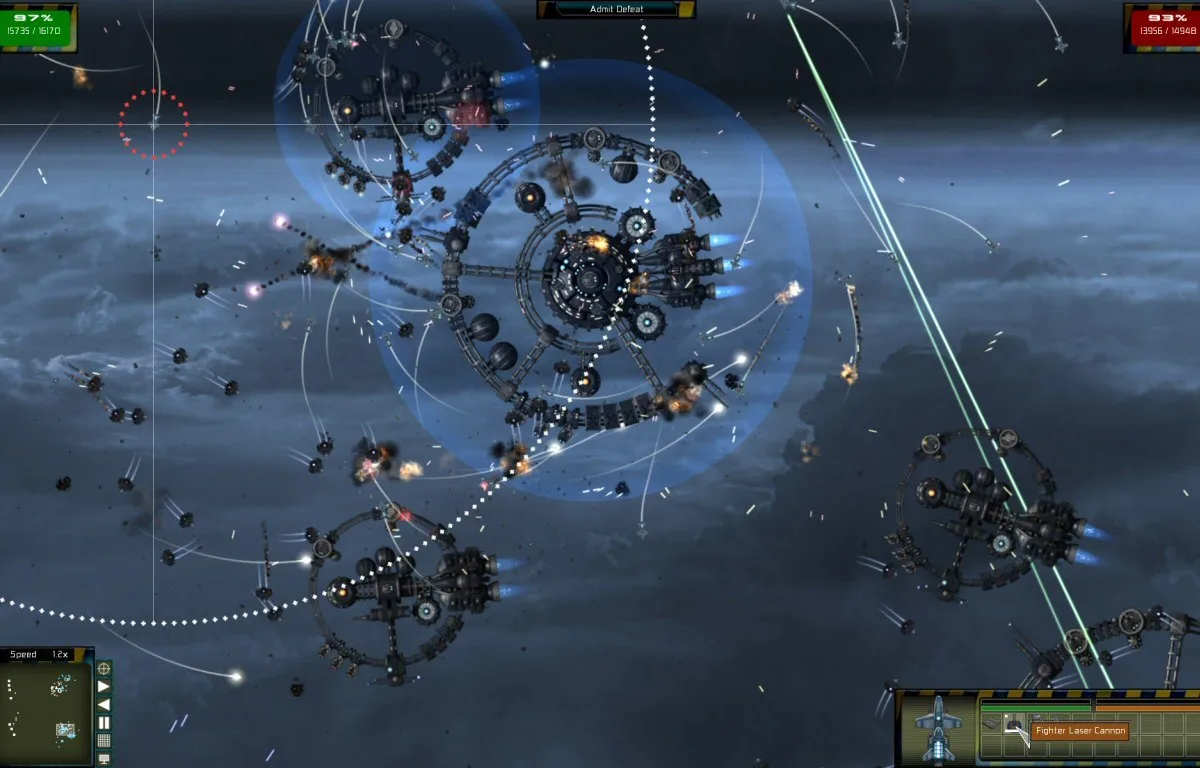
Deployment happens on the central map, where your fleet appears as green starship silhouettes and the enemy fleet as red ships. The highlighted area around your fleet is the deployment zone, and ships are dragged into position within it. Because cruisers move slowly and fighters move quickly, position matters as much as orders. A completed layout can be saved for later use, and a large number of different saved deployments can be kept for each mission. Group handling is supported by dragging a selection box, double-clicking a ship to select every ship sharing its design, or Ctrl-clicking ships to move them together.
Each ship may carry one order or many. Common orders include engaging a certain class of enemy ship, such as attacking fighters; others govern target selection, such as cooperating, and combat positioning. Because some orders contradict each other, any orders that do not make sense are automatically dropped. Practical fleet building therefore pairs an order set with a hull that can survive long enough to carry it out, and with a deployment slot that lets it reach the targets its orders name.
Fleet size is constrained by three factors: the number of available pilots, with each ship requiring one pilot whether it is a fighter, frigate or cruiser; a limited budget; and the amount of honor earnable from the battle. Every credit left unspent in the budget converts to honor if the battle is won, so frugality has a reward beyond simple economy. Victory normally means destroying the enemy fleet, but a fleet that drops below 10 percent on the score indicator automatically forfeits, and a stalemate goes to the fleet with the lower level of losses.
Progression, Modes and the Shape of the Campaign
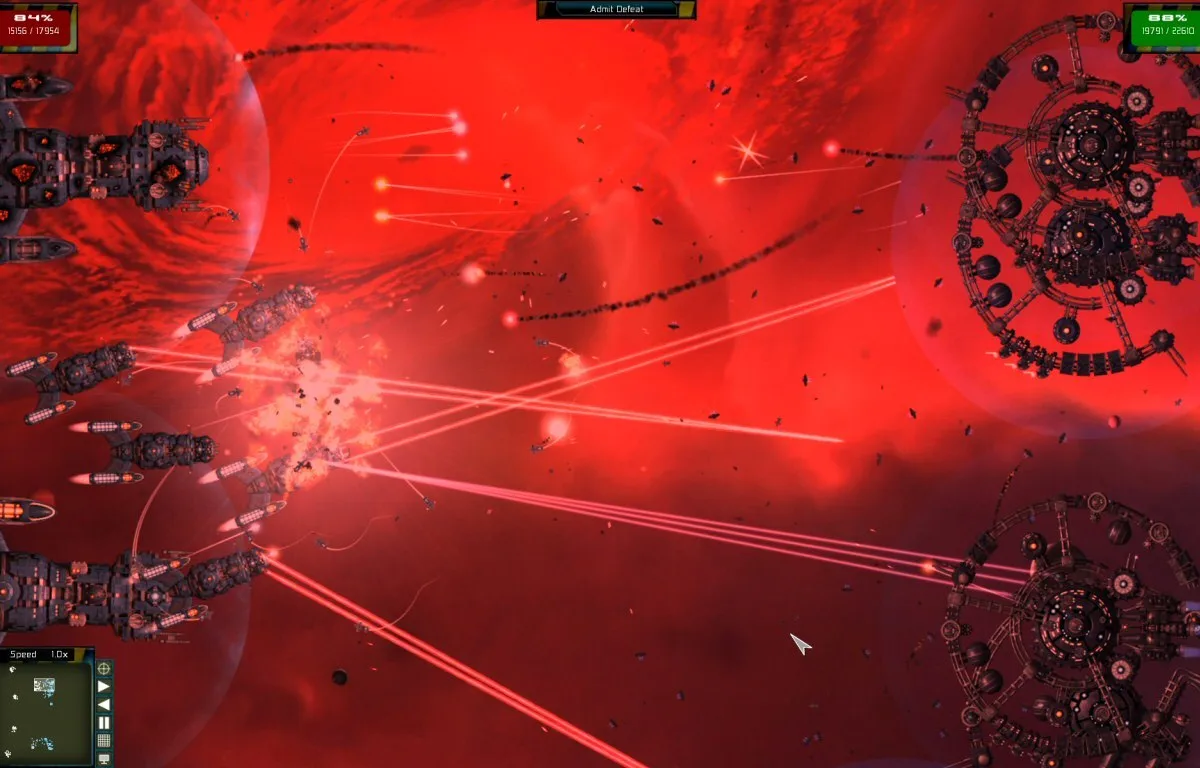
Most missions are skirmish missions, fought against a single fixed enemy fleet. Survival missions instead pit you against endless waves of enemies attacking from all directions, and each battle has spatial anomalies that change the rules you play under. Skirmish missions can be uploaded as challenges to other players, while survival missions are strictly single-player, though they allow high scores to be uploaded. Progression is built on unlocking four different player races and more than 120 spaceship modules across over 40 hulls, which gradually expands the design space each mission can draw from.
Source-Backed Starting Advice
A first useful habit is to fill the hull rather than leaving most sockets empty, since the hull is already paid for and empty slots mostly save weight or cost. Then verify crew and power before anything else, because an illegal design cannot be saved. Next, check whether the fleet can actually hurt what it will face: if armor penetration does not exceed the target's average armor, the shots bounce, and if shields are the obstacle, shield-destabilizing weapons can create the opening that armor-penetrating guns exploit.
Against fast fighters, prefer high tracking speed and consider pairing tractor beams with short-range blasters so that swarms can be slowed into a kill zone. When designing the defenses of a valuable cruiser, remember that one shield generator can be permanently knocked out while another keeps working, and that repair modules are a finite resource rather than an endless patch. On the budget side, save unspent credits for honor and revisit saved deployments rather than rebuilding positions from scratch for every attempt.
Scroll sideways to see the full table →
| Item | Detail |
|---|---|
| Title | Gratuitous Space Battles |
| Developer / Publisher | Positech Games |
| Steam product date | 2009 |
| Platforms | Windows, macOS, Linux |
| Genres | Indie, Simulation, Strategy |
| Hull sizes | Fighters, frigates, cruisers |
| Progression unlocks | 4 player races, over 40 hulls, over 120 modules |
| Mission types | Skirmish (fixed enemy fleet) and survival (endless waves) |
Sources & further reading.
- Gratuitous Space Battles — official game profile Retrieved Oct 19, 2026
- Gratuitous Space Battles — official game profile — publisher-supplied gameplay manual Retrieved Oct 19, 2026
First published .