 THE GAME ARCHIVE
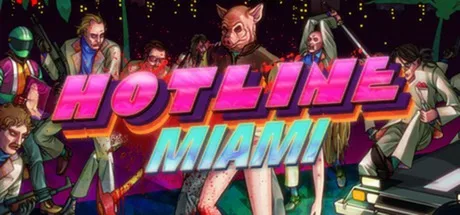
An Action Game Built on Violence and Improvisation
Hotline Miami is described by its publisher as a high-octane action game overflowing with raw brutality, hard-boiled gunplay and skull-crushing close combat. That phrase is the clearest picture of what the player actually does: the game is framed around two kinds of attack — firearms and physical strikes — both delivered with an explicit emphasis on violence. The combat is not framed as one option among many; it is the core of the experience, and the publisher sets it against a brutally unforgiving challenge and an unrelenting pace.
The setting is an alternative 1989 Miami, and the player assumes the role of a mysterious antihero on a murderous rampage against the shady underworld. The assignments arrive at the behest of voices on an answering machine. Where many action games frame violence as a means to a heroic end, the store text gives the killing a more unsettled context: the character is soon struggling to get a grip on what is going on and why he is prone to these acts of violence. The answering-machine orders and the character's confusion run alongside the combat rather than replacing it.
It is also an independent game: Dennaton Games is the developer, Devolver Digital is the publisher, and the game was released in 2012 on Windows, macOS and Linux. These facts matter for what follows because they describe the product the store text is selling — the original game, not a later port or remake. The publisher's own wording is the evidence base for this feature, so every claim about mechanics, enemies, movement and presentation comes from that description rather than from an independent play test.
Gunplay and Close Combat: The Two Halves of a Kill
The combat splits into two documented halves. Hard-boiled gunplay supplies the ranged option, while skull-crushing close combat handles enemies at physical range. Because the store text presents both as part of the same brutal action, the apparent choice is between firing at a distance and closing in to strike. The rules tighten that choice with a single deadly standard: the action is unrelenting and every shot is deadly. In practice, that means a single exchange can decide an encounter — a shot either ends the target or puts the player in danger, whether the antihero fires from a distance or moves in for a physical strike.
Survival depends on quick and decisive moves because the antihero is constantly outnumbered by vicious enemies. Those two constraints interact with the gun-versus-melee choice. Each move must be chosen quickly, and the game is described as a brutally unforgiving challenge. The documented loop stays concrete: pick between gunfire and close strikes, keep movement quick and deliberate, and try to survive long enough to unveil the sinister forces driving the bloodshed.
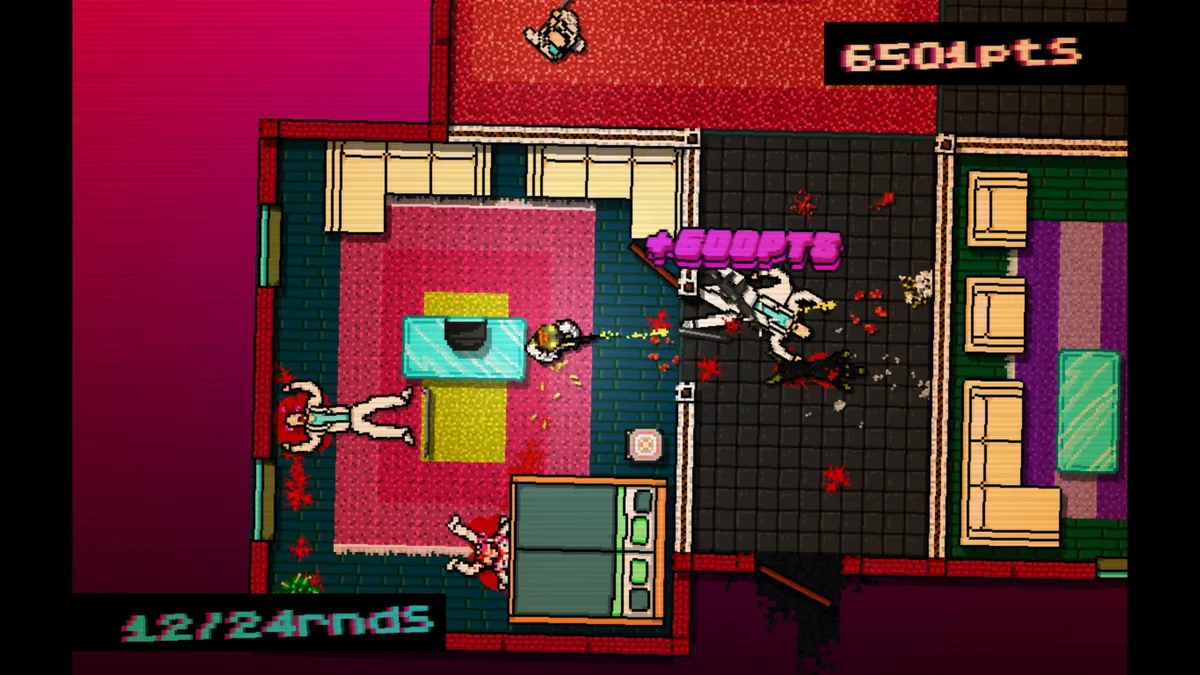
Outnumbered: Reading a Room Before You Move
The phrase 'seemingly impossible situations' describes the encounter design as the store text frames it. The player constantly finds themselves outnumbered by vicious enemies, and the documented response is to rely on wits to choreograph a way through. That choreography is a planning act: instead of meeting the enemy group head-on, the player shapes a route through the space. The numerical disadvantage is the condition that makes planning necessary — the enemies have the numbers, so the antihero cannot simply trade blows in the open.
Planning and speed are bound together by the movement rule. Quick and decisive moves are what the text gives as the condition for survival, and the action is unrelenting while every shot is deadly. A route worked out in advance still has to be carried out quickly, because a late decision in a crowded situation can end the attempt. The two skills are therefore not alternatives. The choreography supplies the order of actions, and the requirement for quick, decisive movement sets how fast that order must be executed.
For a player starting out, that combination suggests a simple discipline: think through the situation before committing, then act without hesitation once the route is chosen. The store text does not document specific rooms, enemy behaviours or routes, so this is guidance drawn from its stated rules rather than a walkthrough. What the rules do make clear is that neither pure caution nor pure speed is enough on its own — the text pairs wits with quick, decisive movement as the way through outnumbering enemies.
Unrelenting Pace, Deadly Shots and an Unforgiving Challenge
The store text identifies several rules that together set the difficulty. The action is unrelenting, every shot is deadly, and each move must be quick and decisive if the player hopes to survive. Those rules cut against hesitation, because unrelenting action leaves little room for a slow decision. The publisher also calls the overall test a brutally unforgiving challenge. The player is pushed to the limits, and the documented tension is between the need to plan a way through and the need to carry it out at speed.
That tension gives the two combat styles a shared decision: fire a deadly shot or close in for a physical strike, then move. Because every shot is deadly, the danger is not only in being hit but in the speed at which an encounter can resolve. The text describes the character as constantly outnumbered, so the room itself is the pressure. Survival is therefore framed as a matter of reading the situation and acting on it decisively, rather than of endurance or attrition.
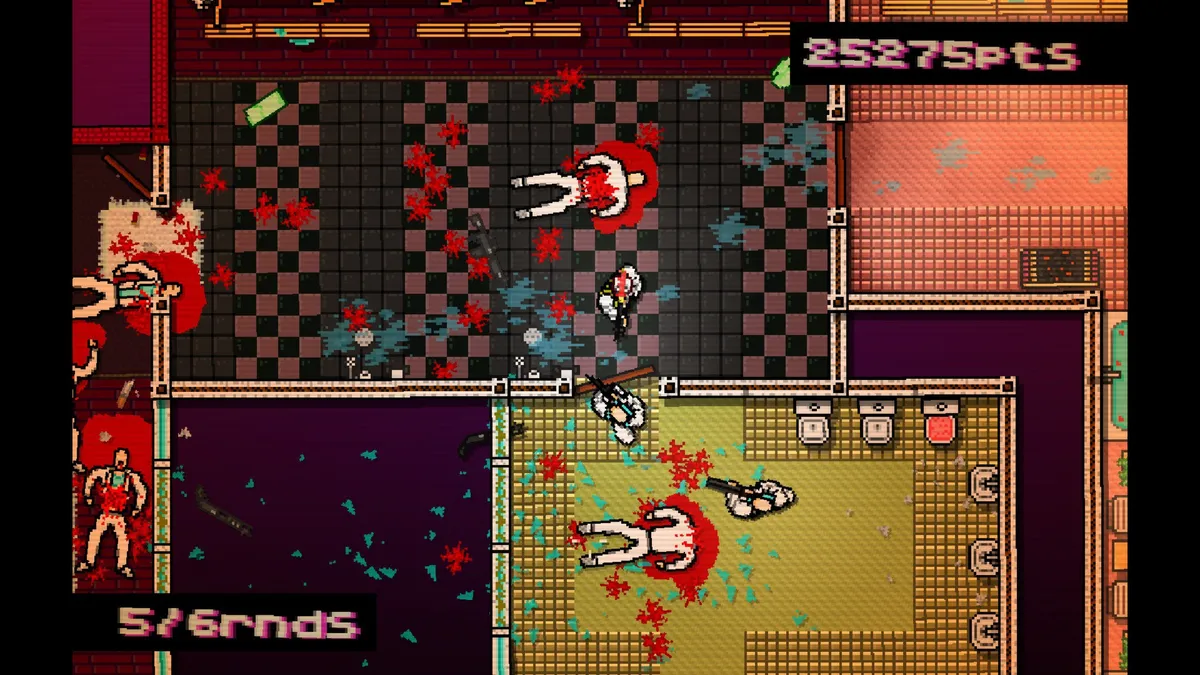
Missions, Story and the Question Behind the Violence
The mission structure is simple as the store text tells it. Voices on the answering machine give the antihero his assignments, and he carries them out against the shady underworld in an alternative 1989 Miami. While working, the character is soon struggling to get a grip on what is going on and why he is prone to these acts of violence. The narrative and the combat are presented together: the killing is a rampage, and the explanation for it is uncertain.
The documented progression is tied to survival. The player hopes to survive and unveil the sinister forces driving the bloodshed. That stated goal gives the missions a direction beyond the immediate fight: staying alive is what allows the larger plot to advance. The store text does not describe a chapter list, upgrade system or alternate modes, so the progression it documents is this narrative one — surviving encounters in order to uncover who is behind the violence.
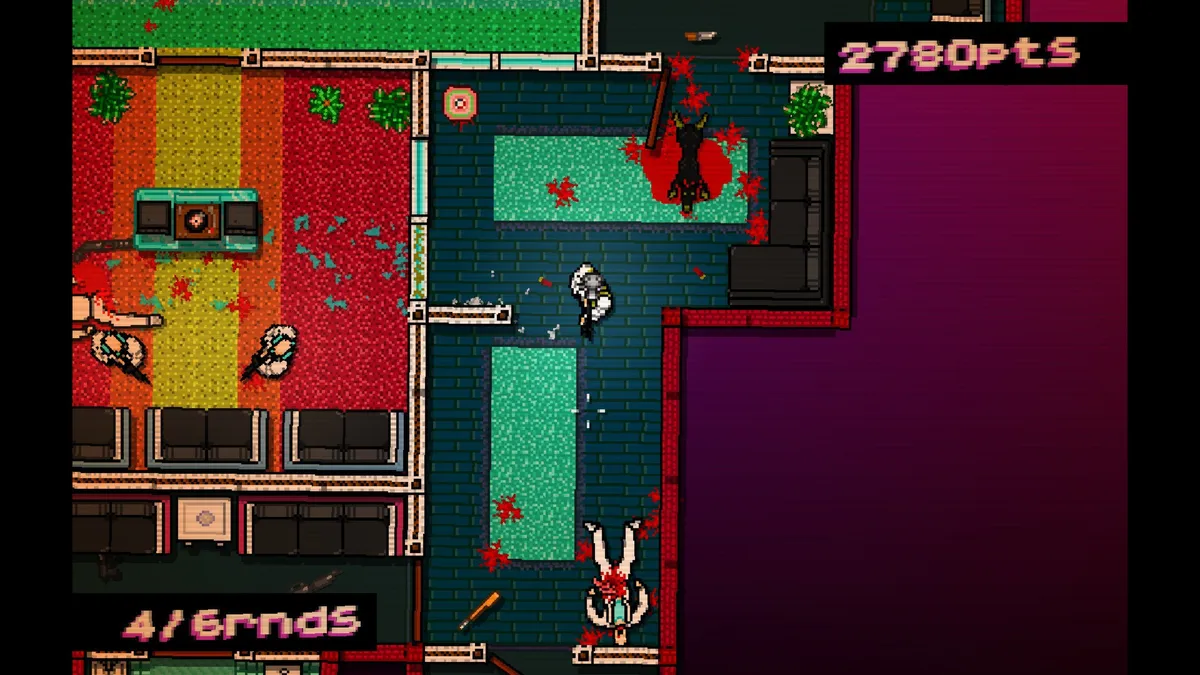
Visual Style, Soundtrack and Surreal Turns
Presentation is part of the game's documented identity rather than decoration. The store text names three formal elements alongside the combat: an unmistakable visual style, a driving soundtrack, and a surreal chain of events. The visual style and soundtrack are what frame the quick decisions and deadly shots in the room, and the surreal chain of events is what ties the violence to a larger question. The game is described as having you question your own thirst for blood while pushing you to the limits with a brutally unforgiving challenge. The question and the challenge are placed together deliberately: the style and music carry the pace, and the surreal thread carries the doubt.
That combination is the game's most distinctive claim in the store text. The bloodshed is not presented as a straightforward job: the surreal chain of events is meant to disturb the player's relation to the killing, while the action stays unrelenting and unforgiving. The two effects sit beside each other — fast, deadly combat, and a narrative that asks why the player is drawn to it. The documented result is a story line that pushes the player to examine the appetite behind each lethal shot and skull-crushing strike, not only the quick decisions needed to survive the outnumbering enemies.
The store text does not describe the visual style in more detail than that phrase, nor does it name the soundtrack. The safe conclusion is that both are presented as key parts of the game's character, not as incidental presentation. The same is true of the surreal chain of events: its content is not spelled out, only its intended effect on the player. The summary above is therefore confined to what the publisher states — the style is unmistakable, the soundtrack is driving, the events are surreal, and they are meant to raise a question about blood.
Starting Guidance from the Documented Rules
Because the store text describes rules rather than levels, starting guidance has to follow those rules. Read the situation before committing: the enemy outnumbers the player and the situation is described as seemingly impossible, so wits and choreography come first. Then act quickly and decisively, because every move must be quick and decisive and the action is unrelenting. Treat each exchange as potentially decisive: every shot is deadly, and combat is split between gunplay at range and close combat up close. The documented materials do not specify controls, so no button or key guidance is given here.
What the rules do not support is a fixed tactic such as holding position or charging in. The store text never states that either approach works or fails. It states only that the antihero is outnumbered, that every shot is deadly, and that moves must be quick and decisive. A new player can therefore rely on the stated loop: choose between gunfire and close strikes, keep the pace high, and treat survival as the route to uncovering the forces behind the bloodshed.
Scroll sideways to see the full table →
| Field | Documented value |
|---|---|
| Title | Hotline Miami |
| Release year | 2012 |
| Developer | Dennaton Games |
| Publisher | Devolver Digital |
| Platforms | Windows, macOS, Linux |
| Genres | Action, Indie |
| Setting | Alternative 1989 Miami |
| Combat | Hard-boiled gunplay and skull-crushing close combat |
| Documented challenge | Brutally unforgiving, with outnumbering vicious enemies |
Sources & further reading.
- Hotline Miami — official game profileRetrieved Oct 27, 2026
First published .