 THE GAME ARCHIVE
A Build-and-Collapse Multiplayer Sandbox
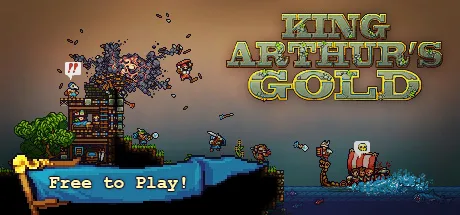
King Arthur's Gold is a multiplayer medieval build-and-kill game built around destructible environments. The official store description opens with a direct pitch: build castles, traps and siege machines with other players, then undermine an opposing castle and collapse it with 2D physics and destruction. Those two halves of the loop are inseparable. Every wall a team raises is a wall the other team can tunnel under, blow apart or crush, and every assault begins with someone deciding what to construct and what to tear down. Defending is an act of construction; attacking is an act of demolition. The official game profile, from developer and publisher Transhuman Design, lists the game as Action, Indie and Free To Play for Windows and Linux.
The Core Loop: Build Defenses, Then Break the Enemy's
The documented goals split cleanly into a building phase and a destruction phase. On the building side, the profile names freeform construction of defenses and the placement of castles and traps. On the destruction side, the stated objective is to destroy enemy castles with physics and explosives. Because the profile describes a single game rather than separate modes for each activity, the implication is that the same match contains both jobs at once: one team erecting a fort while the other works out how to bring it down. That makes construction a tactical commitment rather than a cosmetic hobby, since the shape of a defense determines where the attackers will probe.
Traps sit between those two jobs. A trap is a defensive structure the game lets players build, and its value depends on an attacker choosing to enter the space it guards. Because the destruction model rewards undermining and collapse rather than a simple frontal attack, a defender cannot rely on traps alone; they are one layer within a fortification that also needs mass, position and access denial. The practical decision facing a builder is how much of a team's effort to spend on passive hardening versus how much to keep in reserve for mobile counterattacks.
Siege Machines, Explosives and 2D Collapse
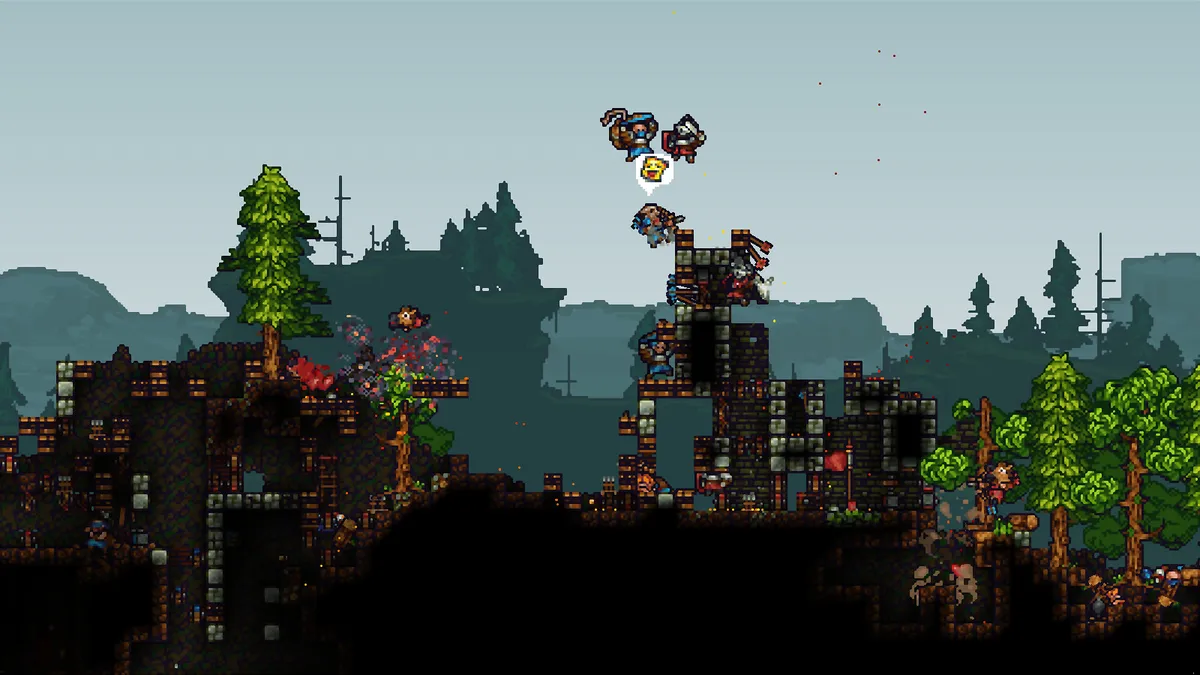
Attacking hardware is built and driven by teams. The profile lists driving siege machines with your teammates as one of the things players do, which places these engines among the shared activities of a match rather than a solo action. The profile also names explosives alongside physics as the means of destroying enemy castles. Read together, the offensive toolkit offers two distinct approaches: a machine driven by cooperating players, and planted or thrown explosives that open a breach directly. Both serve the same objective, and both are documented in the same short list of core actions.
The destruction model is explicitly two-dimensional and physics-based. The profile's promise is that players undermine an opponent's castle and collapse it with 2D physics and destruction. That wording matters because it tells you what kind of structure a castle is in this game: something whose stability can be attacked from underneath. A team that only chips at the face of a wall is working harder than a team that removes what holds it up. The same logic rewards defenders who think about foundations and load-bearing mass, since a fortification whose support can be tunnelled out is only as strong as the ground beneath it.
Tunnels, Ships, Flight and a Living World
Movement is broader than a straight push at the walls. The profile promises the freedom to run, board ships, dig tunnels or fly in the air. Each option maps onto a different tactical answer. Running is the default; boarding ships addresses water; digging tunnels connects directly to the undermine-and-collapse objective, since a tunnel is how a team gets beneath a castle to take out its support. Flight adds a vertical route that bypasses ground-level obstruction. The profile does not spell out the detailed rules of each, but the list itself is a menu of approaches an attacking team can choose from when a direct assault stalls.
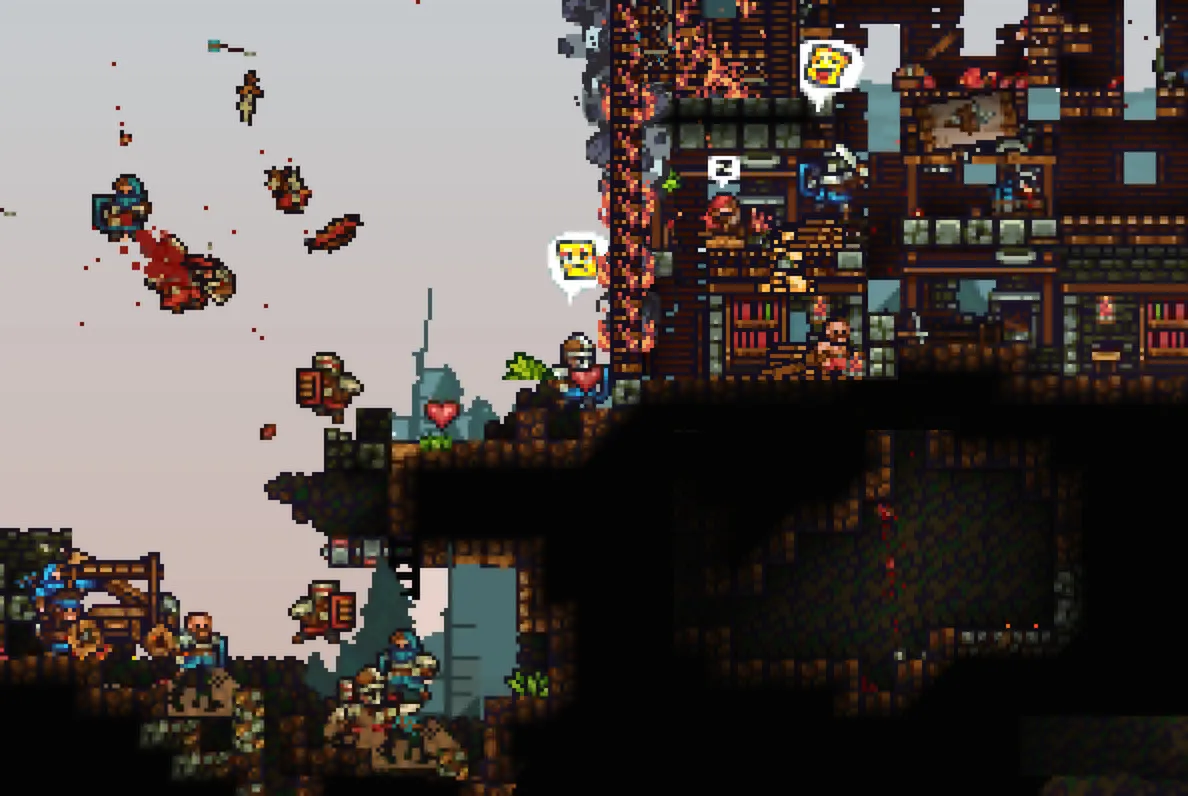
The environment is itself a weapon. The profile lists using the environment to burn or drown enemies, which turns fire and water from scenery into tools for a team that can position opponents into them. The world is also described as a living animal and plant world that players interact with, so wildlife and vegetation are part of the battlefield alongside castles, tunnels and ships. Taken together, these details suggest a game where terrain is never neutral: the ground can be dug, the water can kill, and the creatures and plants on the map are things to account for rather than ignore.
Thirty-Two Humans and Three Modes
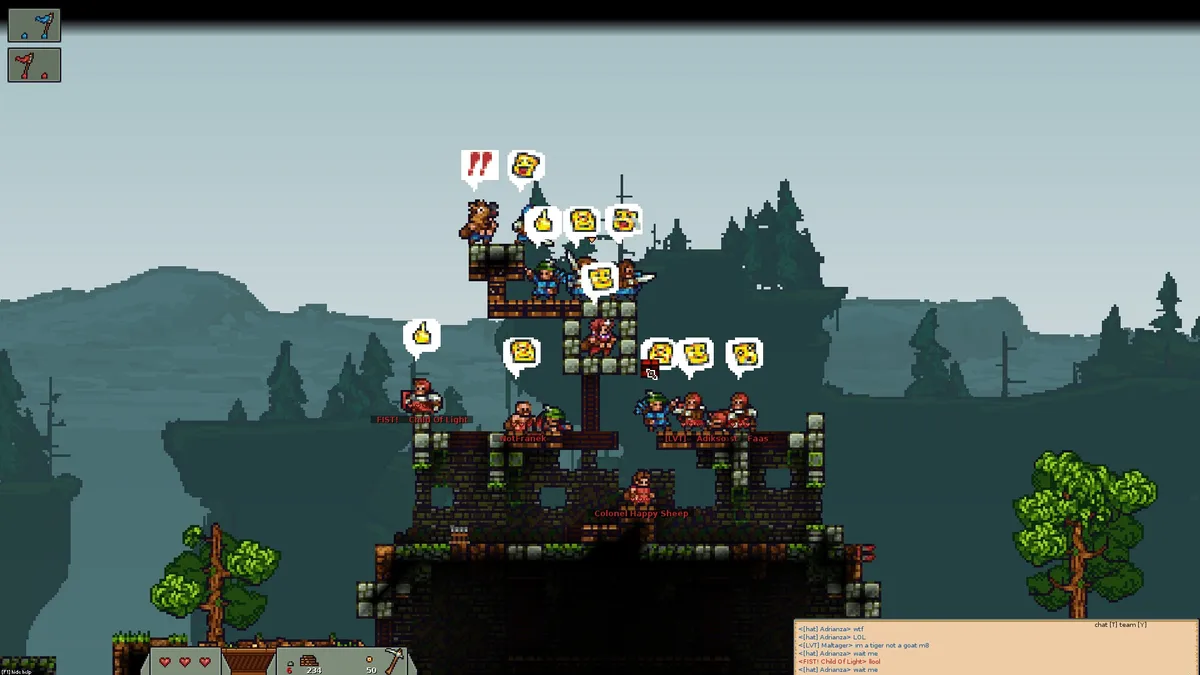
The headline multiplayer number is 32. The profile asks players to fight with 32 unpredictable humans in multiplayer, and the word unpredictable is doing real work: human opponents in a freeform building and physics-collapse game will not attack the same way twice. A team that has spent its time hardening one approach may find an opponent coming by tunnel, by ship or through the air instead. Coordinating siege machines with teammates across a match of this size means the assault is as much a communication problem as a construction one.
Outside the headline multiplayer format, the profile lists singleplayer, cooperative and competitive modes. Those three labels describe how players are arranged rather than a separate set of mechanics; the building, destruction, siege and terrain tools are the documented substance of the game, and the modes are the containers they come in. Cooperative play groups players toward a shared effort, competitive play pits them against each other, and singleplayer gives one player the same loop without human opposition. The profile does not detail mode-specific rules, so the exact scenarios and objectives within each mode are outside what the source establishes.
How to Approach Your First Sieges
- Play to the stated objective, not to a kill count: the documented goal is to destroy enemy castles with physics and explosives. When defending, harden the ground as well as the walls; the collapse model rewards attackers who undermine, so a fortification that can be tunneled out from below is already in trouble. Spend traps where they will actually be triggered, rather than scattering them across ground no attacker needs to cross. On offense, treat tunneling as a primary route: digging tunnels is listed as one of the core things players can do and connects directly to the undermining objective. Coordinate with teammates before committing to a siege machine, since these are driven with teammates. Use the environment deliberately: burning or drowning enemies is listed as a playstyle the game supports, not scenery.
None of these suggestions substitutes for learning the game's actual controls, build costs or class systems, which the store description does not describe. The advice is derived directly from the documented rules above and should be read as a reading of those rules rather than tested strategies.
Customization, Mods and Design Character
Players can customize their fighters with 60+ unique heads, according to the profile, giving a large set of cosmetic choices within the same 2D battlefields. The profile also names community-created mods and scripts as the basis for creating your own adventure, so player-authored content sits alongside the built-in modes. The design lineage the description claims is a blend of the cooperative aspects of Lost Vikings with the full destructibility of Worms and the visual style and action of Metal Slug, with the game credited to the creators of Soldat. Those self-described comparisons are part of the source's framing rather than a feature checklist, but they position King Arthur's Gold as a 2D action game where the environment, not just the enemies, is the thing to fight.
The practical picture that emerges is a free-to-play 2D sandbox where the interesting decisions are spatial rather than statistical. Where does the wall go, which ground needs protecting, whether to spend the team's effort on a siege engine or a tunnel, and when to push the attack through terrain rather than against a defended face: those are the choices the documented mechanics reward. Players who treat the castle as a static obstacle will find themselves outplayed by those who treat it as a problem in physics.
Scroll sideways to see the full table →
| Fact | Detail |
|---|---|
| Developer / publisher | Transhuman Design |
| Platforms | Windows, Linux |
| Genres | Action, Indie, Free To Play |
| Release year | 2013 |
| Multiplayer ceiling | 32 players |
| Modes listed | Singleplayer, cooperative, competitive |
| Cosmetic option | 60+ unique heads |
Sources & further reading.
- King Arthur's Gold — official game profileRetrieved Oct 27, 2026
First published .