 THE GAME ARCHIVE
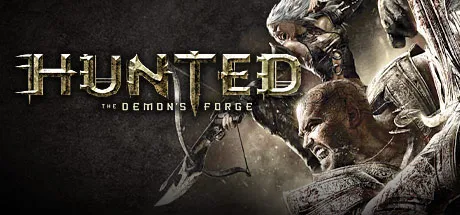
Hunted: The Demon's Forge is a two-character action adventure in which every fight is negotiated through the division of labor between a sword fighter and an archer. Caddoc is a master swordsman built for close quarters; E'lara is a ranged weapon expert. The pair descends into Kala Moor wielding deadly weapons, powerful spells and cover tactics against wave after wave of enemies, and the design assumes the two heroes complement rather than duplicate each other. The cooperative frame is central: you and a partner control the two characters, so the choice of who fights where shapes each encounter.
The publisher profile and manual also document how co-op is arranged. Hunted can be played cooperatively with a friend either online or via LAN, and a single-player campaign with two save slots lets one player keep separate sets of heroes. Those modes sit underneath a combat layer of cover, spells and melee pressure, so the two-hero setup is not a cosmetic pairing but the frame in which blocking, charging, healing and dungeon-building all operate.
Two Heroes, Two Fighting Styles
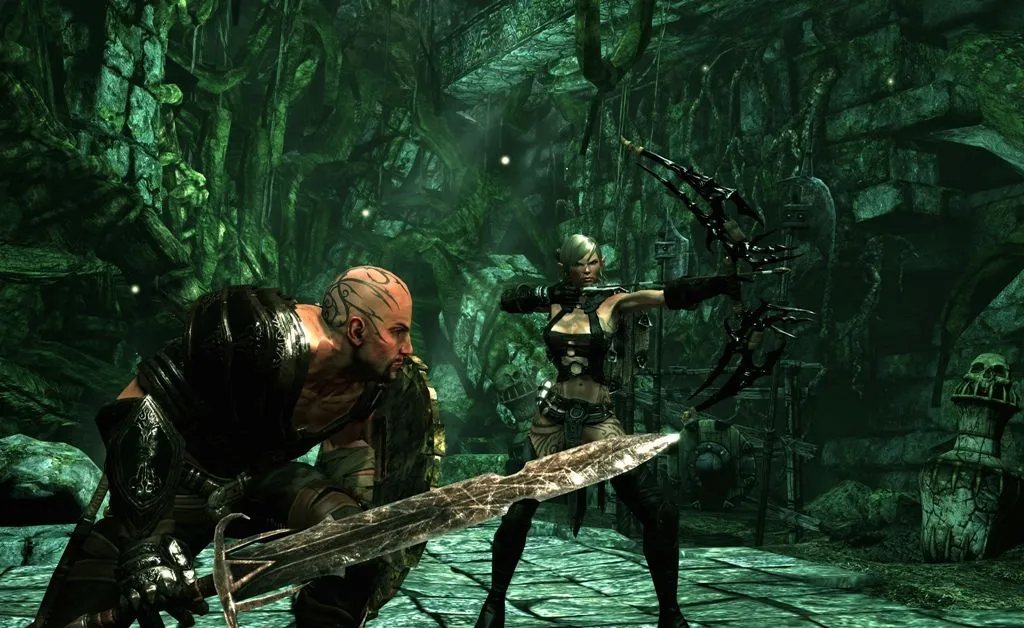
The manual is explicit that both characters can attack with either a melee weapon or a bow, but their strengths diverge sharply. Caddoc excels in close quarters and E'lara is most dangerous from a distance, which means a party that keeps them in their lanes covers more ground than two heroes fighting the same way. Cover tactics reinforce that split: from cover the pair can engage at range with bows and spells, or use the position as a base before pushing into melee. The practical decision in most fights is where each hero stands and which threat they answer.
Shields, the Heavy Attack Meter and Cover Tactics
Caddoc's defense feeds his offense through the heavy attack meter. Successful blocks and chained attacks fill the meter, and the stored charge can be spent on devastating attacks delivered face-to-face with a foe. The control layout gives light melee attacks and heavy melee attacks their own dedicated inputs, so a player manages a small rhythm: guard, chain light attacks to build meter, then convert it into a heavy strike when an enemy is within reach. The catch is durability. Shields block enemy attacks but degrade over time and must be replaced, so the block-and-chain loop is a finite resource rather than a permanent stance.
Armor found in the environment reduces the damage of incoming attacks, which changes how much punishment a hero can absorb while rotating between cover and close quarters. Taken together, the systems pose a clear tactical question each encounter: hold position with the shield and build the heavy attack meter for a close-in finisher, or take cover and thin the enemy horde from a distance first. The choice is not permanent, since the pair can transition between the two approaches as a fight unfolds.
Healing and Partner Revival
Health potions are mapped to a dedicated input, letting a hero manage gradual damage on their own. When all health is depleted, however, a character does not simply drop out of the fight: Caddoc and E'lara fall to the ground in an injured state, and their uninjured partner has a short window to throw a regen vial and bring them back into the game. Recovery therefore becomes a partner action. The surviving hero must stay mobile and in range of their ally, which puts pressure on the very cover-and-melee decisions that keep them alive.
If both characters fall, the manual states the game is over and players have the opportunity to start at their last checkpoint. That makes the partner revive the main safety net rather than a fully forgiving one: potions manage attrition, regen vials rescue one fallen hero, and a simultaneous collapse ends the attempt. The lesson is to keep both heroes' health in view, not just the one being controlled at that moment.
Battle Charge, Spell Link and Dragon Tears
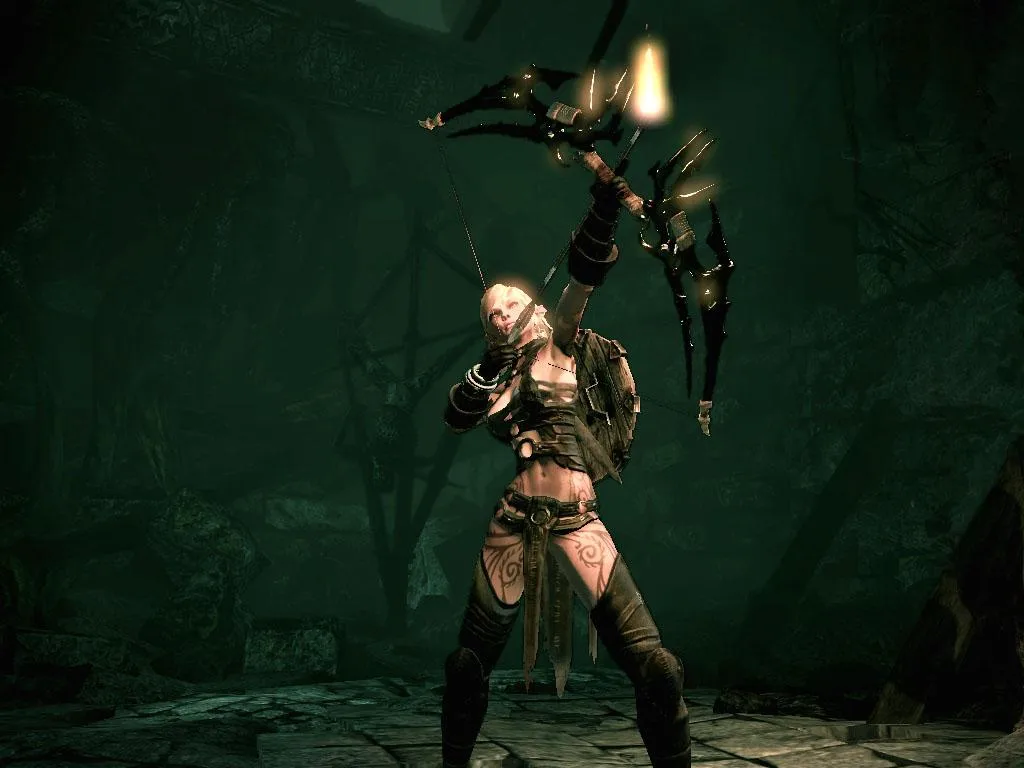
Dragon Tears are the collection gate for the pair's cooperative spellcasting. Finding them unlocks new abilities, and once enough are gathered Caddoc and E'lara gain access to Battle Charge: by holding down the magic button, a hero infuses their partner with the power of a spell, making the ally twice as powerful. The same magic button drives mapped active skills such as Dragon's Breath, Sigil of Pain and Brimstone, so holding it shifts from casting those abilities into the Battle Charge action. A charge therefore costs one hero their own spell output in exchange for an amplified partner.
Collecting even more Dragon Tears unlocks Spell Link. To perform one, both characters must simultaneously Battle Charge each other: if both hold the magic button at the same time, a magic tether forms between them that destroys anything in its path. The timing requirement is what separates it from a single Battle Charge. One player holding the button buffs a partner; both players holding it at once produces the area-clearing tether. Dragon Tear collection thus converts into either a personal power boost or a coordinated destructive line, depending on how well the two players synchronize.
Secrets, Gold and Crystal Upgrades in the Adventure
Adventure exploration feeds several separate systems. Players can discover secret areas while playing, and some of these are gated behind puzzles that unlock gold, weapons and other bonuses when solved. New weapons turn up by breaking weapon racks and by searching the environment directly. Gold has its own destination: anything collected during the Adventure unlocks content in The Crucible, the dungeon-building mode, so time spent looting in story areas carries over into custom dungeon work rather than staying confined to the campaign.
Skill progression runs through crystals and the Seraphine portals. Exchanging crystals at those portals upgrades a hero's skills and spells, and crystal shards scattered through the environment can be pieced together into full crystals before being spent. Dragon Tears follow a different track: finding them unlocks new abilities, tying collection in the Adventure to the Battle Charge and Spell Link options above. A related environmental object, the Deathstone, lets players speak with the dead, who supply story information and hints pointing toward secret treasures.
The Crucible: Building and Sharing Custom Dungeons
The Crucible is the dungeon-building mode in which gold gathered during the Adventure unlocks creatures, maps and weapons for assembling and sharing custom experiences. Its menu splits the work into Create for a new dungeon, Browse Maps for previously made maps to play or edit, Join to enter another player's Crucible dungeon, and Unlockables to view content bought with gold. Builders lay rooms on a grid, piecing them together room by room, or randomize a dungeon and begin playing immediately. Each room can then be adjusted to the creator's preferences.
Gold links the two halves of the game because the same currency is earned in both the Adventure and Crucible maps and spent on Crucible unlockables. Secret areas found while playing may sit behind puzzles, and solving them yields gold, weapons and other bonuses that feed the same pool used to buy dungeon pieces. Content unlocked that way is then available when creating and sharing custom experiences, so exploration in story areas and construction in the editor draw on one shared resource rather than separate stores.
Getting Started: Practical Priorities
On the evidence of the documented rules, a co-op pair gets the most out of the systems by playing to the heroes' split. Keep E'lara working from distance and cover while Caddoc closes, then let Caddoc's shield blocks and chained attacks build the heavy attack meter for a face-to-face finisher. Watch shield condition, since degraded shields must be replaced. Keep both heroes' health in view so a single fall can be answered with a regen vial before a second collapse ends the run, and gather Dragon Tears early so Battle Charge comes online; once both players are comfortable, save the simultaneous double charge for moments when a Spell Link tether will clear a crowded path.
Scroll sideways to see the full table →
| Detail | Documented value |
|---|---|
| Title | Hunted: The Demon's Forge™ |
| Release year | 2011 |
| Platform | Windows |
| Developer | inXile Entertainment |
| Publisher | Bethesda Softworks |
| Genres | Action, Adventure |
| Co-op modes | Online and LAN cooperative play; single-player campaign with two save slots |
| Currency | Gold earned in Adventure and Crucible maps unlocks Crucible content |
Sources & further reading.
- Hunted: The Demon’s Forge™ — official game profile Retrieved Oct 19, 2026
- Hunted: The Demon’s Forge™ — official game profile — publisher-supplied gameplay manual Retrieved Oct 19, 2026
First published .