 THE GAME ARCHIVE
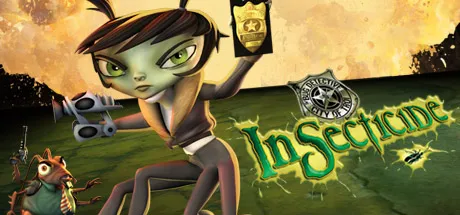
A rookie detective in a bug-infested noir city
Insecticide Part 1 puts the player behind hot shot rookie Detective Chrys Liszt and asks one thing of her: solve a crime of epic proportions. The case plays out as a single-player investigation in a futuristic city overrun by mutant insects and eaten through with corruption, so the bug hunt and the corruption story are the same job. According to the official store description, the design leans on four documented pillars at once: action-based platforming, weapons-based combat, puzzle-solving, and a detective layer of clue collection and interviews.
The store page's genre tags — Action and Adventure — describe the split accurately enough: one half of the game is movement and fighting in real time, the other half is deduction. What distinguishes Insecticide Part 1 from a plain noir adventure is that the investigation and the confrontation share one set of tools. The player confronts suspects using old-fashioned street smarts, unique insect abilities and an arsenal of ingenious bug weapons, so Chrys's traits and hardware matter in a face-off as much as her reasoning does.
The core loop: move, fight, deduce
Play runs in real time from a 3D third-person view, and that framing is the structural decision that ties the whole design together: it supports action-based platforming through the environment and weapons-based combat against the threats the player meets, all inside the same continuous space. There is no documented mode switch between exploration and fighting, so the player is always reading the same 3D world for both traversal and approaching enemies. Movement and combat are not separate screens; they are two ways of using one street plan.
The documented loop is a chain: travel the level through platforming, clear hostile encounters with specialized bug weaponry and insect abilities, and advance the mystery by collecting clues and solving puzzles. Combat is not a minigame bolted onto the investigation — it is one stage of the same mystery-solving sequence. The practical decision for the player is how to press forward when a route demands both movement skill and readiness to fight, since the platforming and the shooting share the same environment.
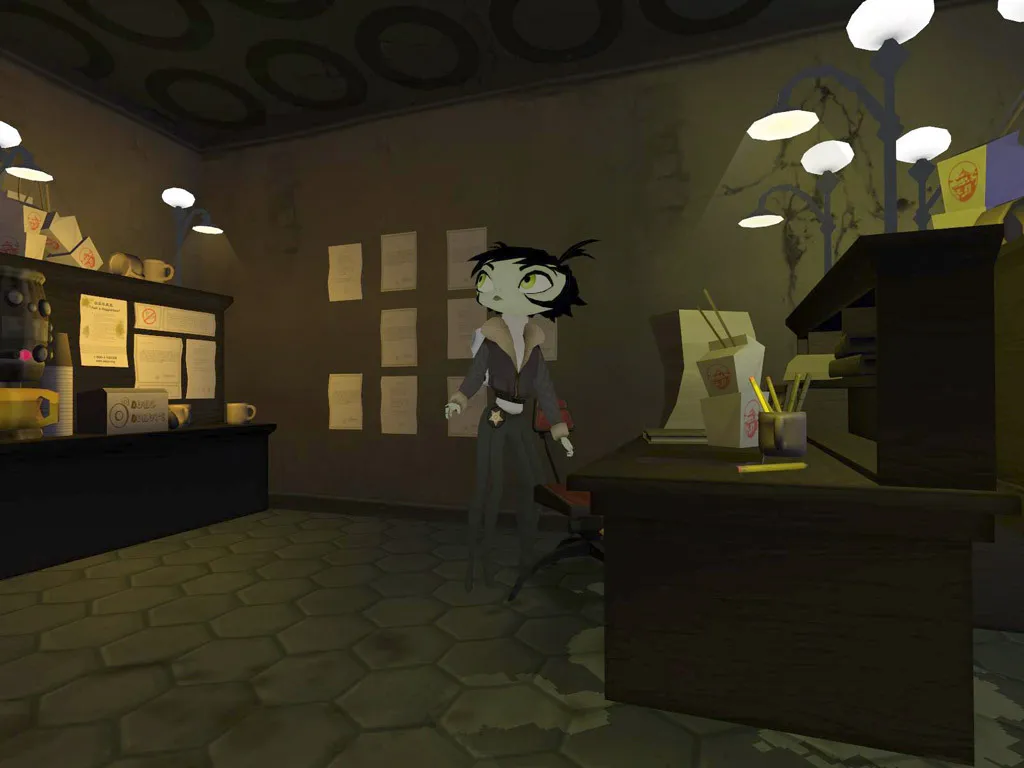
Bug weapons, insect abilities and the confrontation kit
Confronting suspects is framed as the destination of the bug hunt, and the store description lists three things the player brings to it: old-fashioned street smarts, unique insect abilities and an arsenal of ingenious bug weapons. Read those as the documented toolkit rather than decoration. The weapons supply the firepower side; the abilities are their own gameplay mechanic, a set of traits Chrys can call on; street smarts covers the reasoning that ties an encounter together. Because the same three are named for the investigation as a whole, the player is never entirely doing detective work without also carrying the physical kit into the room.
The store description draws a clear line between what the abilities do and what they don't. Specialized bug weaponry and unique insect abilities belong to weapons-based combat and to confronting suspects; puzzles are listed separately, as a puzzle-and-crime-solving layer that sits alongside the detective skills. So the documented division of labor is: fight and face down suspects with the bug arsenal and abilities, and work the investigation with street smarts, clues and questioning. The two halves are named in the same breath, but the source never says an ability solves a puzzle, so the plan should assume separate uses until play shows otherwise.
Clues, interrogations and good cop/bad cop
The questioning layer has three documented actions: interrogate suspects, interview witnesses, and play good cop/bad cop to get the information needed. Those are the player's detective skills in use, and they sit inside a case brimming with twists, turns and double-crossings. The implication for play is that information matters as much as evidence: witnesses and suspects supply leads and the good cop/bad cop tactic is a distinct lever for extracting them, so the player should treat questioning as its own verb rather than as a cutscene that plays itself.
Between interviews, progress comes from collecting clues and solving puzzles to uncover the city's corruption mystery. The store description presents clue collection as the engine of the story: each clue reveals a deeper layer of the mystery, and the plot is built to reward that layering. Practically, the player should treat every clue as both a story beat and a step forward, since the documented progression routes through investigation rather than through a combat tally.
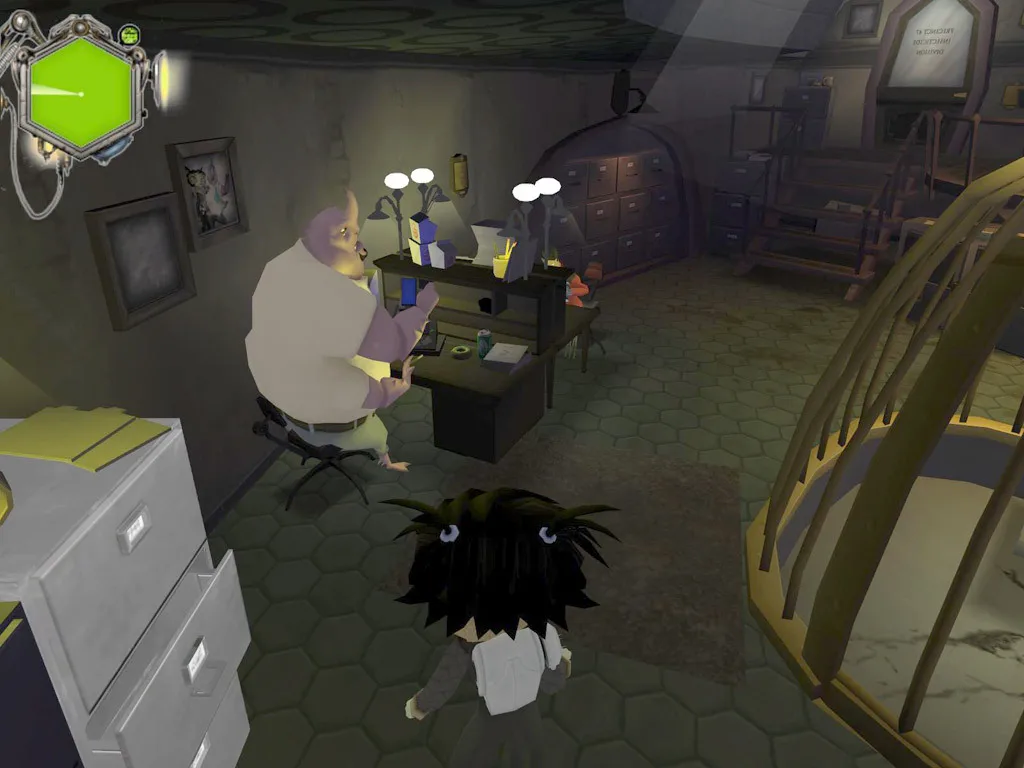
What progression looks like across the case
The documented progression is narrative rather than numeric. The player advances by gathering clues and solving puzzles, and each find reveals a deeper part of the mystery. There is no supported skill tree, currency, level-up system or scoring scheme in the supplied material, so the honest description of getting better at the game is this: you accumulate evidence and answers, and the case opens up as a result. That makes curiosity a mechanic — the player who follows every thread sees more of the story than the one who rushes the confrontation.
The cast carries that progression. Nearly 30 unique characters are woven into an addictive plotline, and the story is built to twist through turns and double-crossings. In play, that means the investigation keeps meeting new figures: fresh suspects, fresh witnesses, fresh pieces of the corruption case. The single-player structure keeps all of that in one continuous narrative rather than in selectable side modes, which is why following the cast and following the clues amount to the same activity.
Starting guidance for a new detective
The documented rules suggest a few habits. First, remember that confronting suspects is the culmination of the bug hunt, not the start of it: gather clues and work the puzzles before pressing a face-off, because the toolkit — street smarts, insect abilities and bug weapons — is described as what you bring to the confrontation once you have the case in hand. Second, keep the toolkit categories straight: the abilities and weapons are documented for combat and confrontations, while clue collection and puzzle-solving are the investigation path. Third, rotate your questioning tactics — interrogations, witness interviews and good cop/bad cop are all named means of getting information; treat them as separate levers rather than one generic talk option.
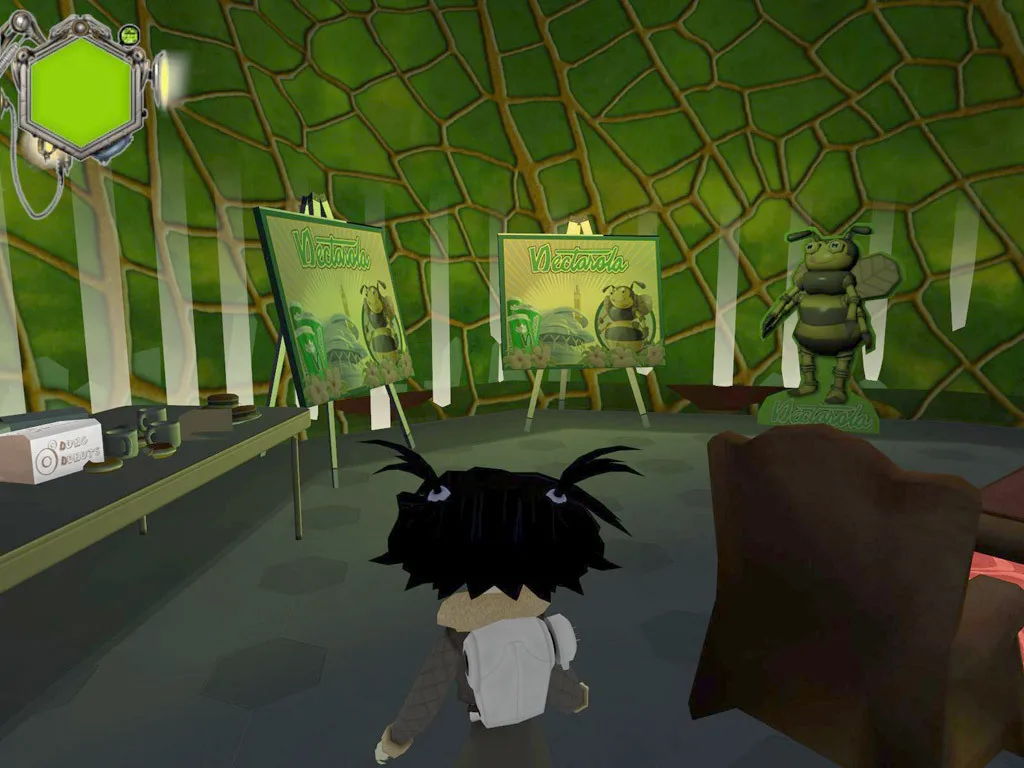
Film noir locations and mutant insects
The visual identity pairs film noir locations with a futuristic world where mutant insects have spread through the streets. That combination shapes the detective atmosphere: shadowed, tradition-minded locations where the cast is not human, and a corruption story that borrows from the best detective flicks. The noir framing is not just scenery; it matches the plot's turns and double-crossings, and it explains why the game's clue-gathering and good cop/bad cop routines read as an old-fashioned case rather than a science-fiction bug hunt.
Windows edition and current access
Insecticide Part 1 is listed on Steam as a Windows title from developer Crackpot Entertainment and publisher Missing Link Games, with a catalog release year of 2008. The Steam page is the official store listing referenced here, so that is the access point for the game as currently offered. No port, remake, remaster or packaged-edition differences are documented in the supplied material, so this profile describes only the Windows release.
Scroll sideways to see the full table →
| Field | Detail |
|---|---|
| Title | Insecticide Part 1 |
| Platform | Windows |
| Developer | Crackpot Entertainment |
| Publisher | Missing Link Games |
| Genres | Action, Adventure |
| Catalog release year | 2008 |
| Perspective | Real-time 3D third-person |
| Combat toolkit | Bug weapons, insect abilities |
| Detective actions | Interrogate suspects, interview witnesses, good cop/bad cop |
| Progression | Clue collection and puzzle solving |
Sources & further reading.
- Insecticide Part 1 — official game profile Retrieved Oct 20, 2026
First published .