 THE GAME ARCHIVE
A Ten-Mode Tournament Built for Online Squads
Unreal Tournament 2004: Editor's Choice Edition is a multiplayer first-person shooter for Windows, developed and published by Epic Games, Inc. Its structure is the first thing a new player meets: ten game modes, split between team-based play and "every man for himself" competition, presented as gladiatorial combat carried by cutting-edge technology. Each mode answers a different question about how a fight should be organized—who shares a side, what must be captured, and what must be destroyed.
The documented scale of online play is up to 32 other players in a single match, which makes the choice of mode a choice about how that crowd is arranged. A team mode turns the same population into cooperating squads; a free-for-all mode turns every one of those players into a separate opponent. The ten-mode roster therefore functions as the game's main menu of rules, setting the terms of each fight before anyone fires a shot.
Two Philosophies: Working as a Squad or Standing Alone
The split between team-based and every-man-for-himself modes defines how a player relates to everyone else in the arena. In a team mode, combatants share a side and coordinate against an opposing group; in the free-for-all variety, each player stands alone against the entire field. The same ten-mode structure governs combat whether the fighting happens in detailed indoor arenas or vast outdoor environments, so the philosophy of the mode—cooperation or self-reliance—follows the match wherever it is played.
The practical consequence is that a player's first decision in any session is philosophical before it is tactical. Choosing a team mode commits the player to shared objectives and to allies who can be relied upon to hold a position; choosing a free-for-all mode removes that safety net, leaving every other combatant as a threat. With up to 32 other players online, that difference is felt at full-arena scale, because the same crowd becomes either a squad or a mob depending on which half of the roster is selected.
Assault: Attacking and Defending Fortified Bases
Assault is the mode where teams face off to defend and attack fortified bases, and it belongs to the team-based half of the roster. Attackers must push into a prepared position; defenders must hold it. The documented settings for these bases give the mode its character: a fast-moving train barreling across an arid alien desert and a Skaarj mother ship poised to attack the human home world. Those examples show that Assault positions are not generic—each is a place with its own layout and its own reason to be defended.
Because Assault is a team mode, the unit of play is the squad rather than the individual: attackers coordinate to break through to an objective, and defenders coordinate to close the routes that lead there. The important player decision is role assignment before the fight begins, since the same base can be approached only by committing bodies to the attack or the defense. Assault's fortified positions also draw on the game's vehicle pool, which the documentation lists as playing a critical role in both Assault and Onslaught.
Onslaught: Strategic Points, Power Cores, and Vehicle Combat
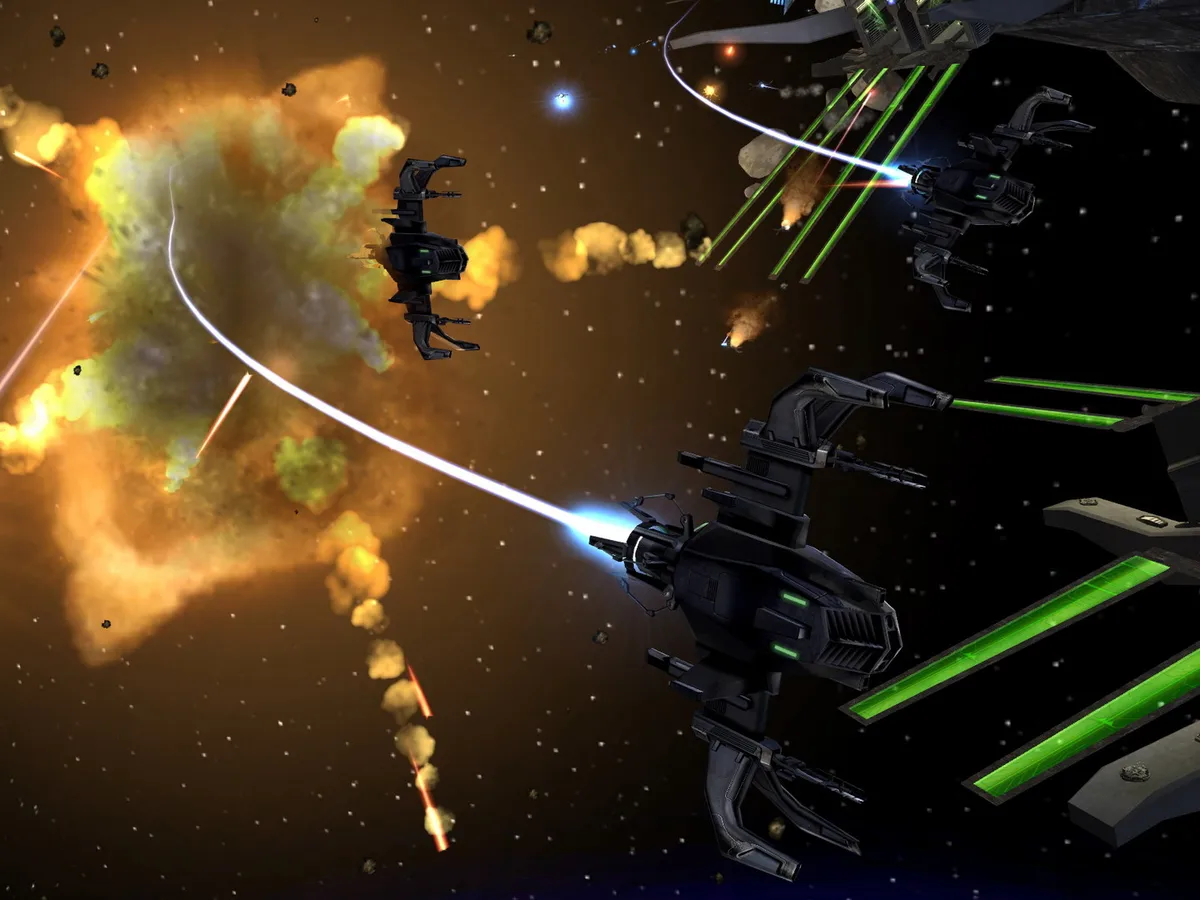
Onslaught pits opposing teams against each other with a chain of objectives rather than a single contested point. Teams compete to capture and hold strategic points, and those held points are the means by which a side can attack and destroy the enemy power core. The mode takes place in massive outdoor environments, which is where vehicular combat comes into its own: flying and driving machines carry combatants to the frontline, and gigantic mobile battle stations serve as platforms from which to launch devastating attacks.
The rule is simple to state and meaningful to play: hold the points, then strike the core. That sequence forces teams to make a standing decision about how much force to leave behind on captured points and how much to commit to the push. Because Onslaught unfolds in massive outdoor environments with vehicles ranging from single-seat fighters to five-person behemoths, the geometry of that push is set by the machines a squad takes forward and by how many crew each machine carries.
Vehicles on Land, in the Air, and in Space
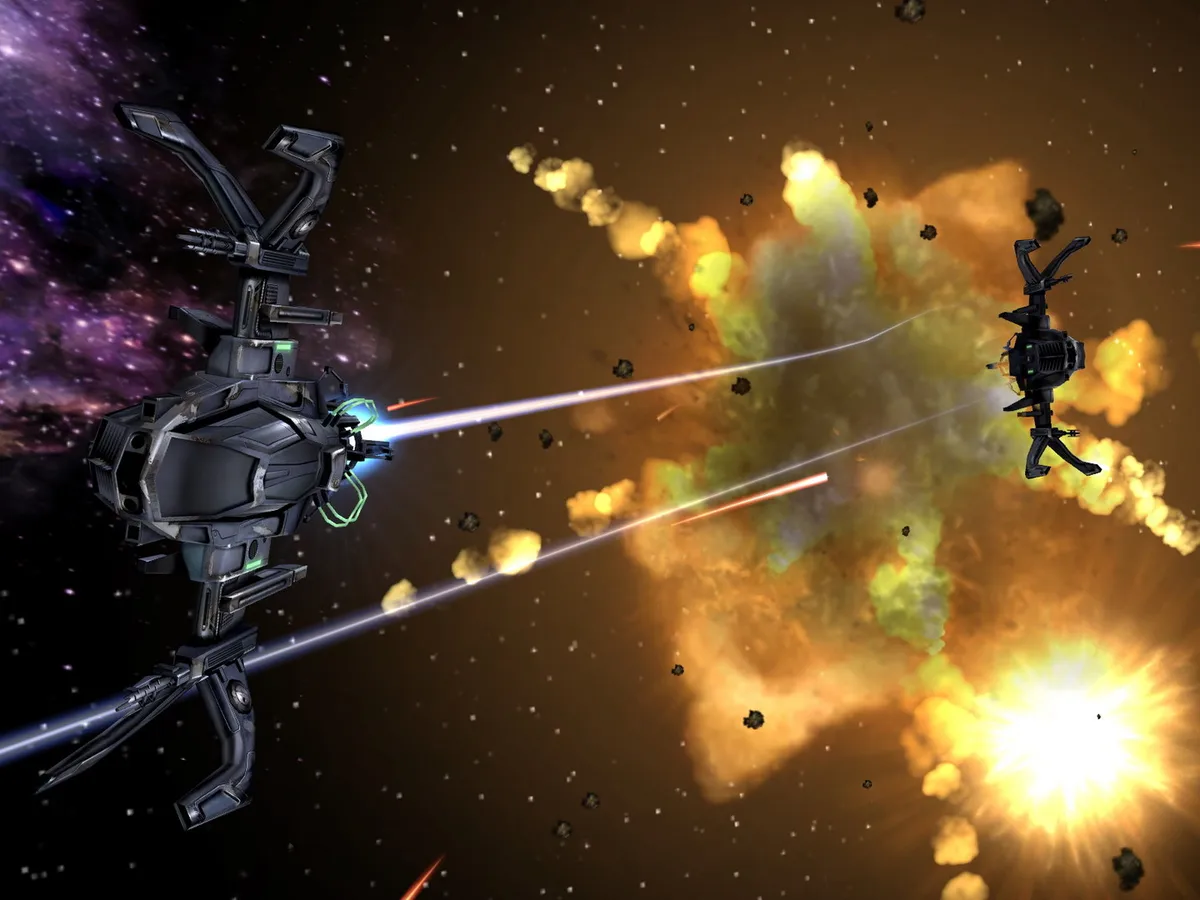
The vehicle roster spans land-, air-, and space-based machines, and the documentation is explicit that these play critical roles in a successful combat strategy in Assault and Onslaught rather than serving as decoration. Flying and driving machines take combatants to the frontline; gigantic mobile battle stations provide the platform from which devastating attacks are launched. Crew size is a genuine tactical variable, ranging from single-seat fighters to five-person behemoths—a lone fast craft for a scouting run, or a heavily manned machine for a coordinated assault.
Read alongside the mode rules, the vehicle system turns movement itself into an objective decision. In Onslaught, reaching and holding strategic points depends on getting a squad to the frontline; the choice between a single-seat fighter and a five-person behemoth is a choice about speed and about how many players ride together toward a point. In Assault, the same machines must navigate toward or around fortified bases. Either way, the machine carries the strategy, because the vehicle determines who arrives and in what numbers.
New Weapons: Spider Mines, AVRiL Rockets, and Sticky Grenades
The armaments of Unreal Tournament 2003 return for the experienced player to wield against new contestants, and they are joined by three new implements. The Mine layer disperses spider-like bombs that chase and harass any enemy who comes within range. The anti-vehicle rocket launcher, or AVRiL, deals out massive rockets tuned to seek and destroy enemy mechanized units. The Grenade Launcher launches timed explosives that bounce on the ground and stick to enemies and enemy vehicles, and those lodged charges are triggered by the weapon's altfire command. A redesigned and upgraded Sniper Rifle, returning from the original Unreal Tournament, completes the additions.
The documented rules create layered interactions that shape moment-to-moment decisions. Spider bombs pressure an enemy who strays into their range, which makes territory something a player can seed and defend passively. AVRiL rockets lock onto mechanized units, giving infantry an answer to vehicles. Grenades stick to a target and wait for the altfire trigger, so placement matters as much as the throw—a charge planted on a vehicle is a delayed threat the target may not be able to shed. Against a field that mixes vehicles with foot soldiers, choosing which tool to bring is a reading of the enemy's formation.
Four New Teams and Thirty-Two New Characters
The Edition introduces 32 new characters spread across four new teams, and two of those teams have named leadership: the human Thunder Crash, led by Tournament hero Malcolm, and the Robotic Corrupt, led by an upgraded Xan Kriegor. The Iron Skull is a team of merciless Skaarj warriors, and the Hellions are reckless human mercenaries and pirates who delight in the thrill of the kill. The roster therefore supplies new faces on the human and robotic sides alike, with a Skaarj unit and a pirate crew rounding out the four squads.
The team identities matter because the game is built on the split between team and free-for-all modes. Whether players share a side or fight alone against everyone else, these four squads provide the distinct contestants who populate the arena—Thunder Crash and the Corrupt carry recognizable figureheads, while the Iron Skull and the Hellions bring their own documented fighting character. A player who picks a team is choosing an allegiance with a face attached, not merely a color scheme.
More Than 95 Maps Across Indoor, Outdoor, and Space Arenas
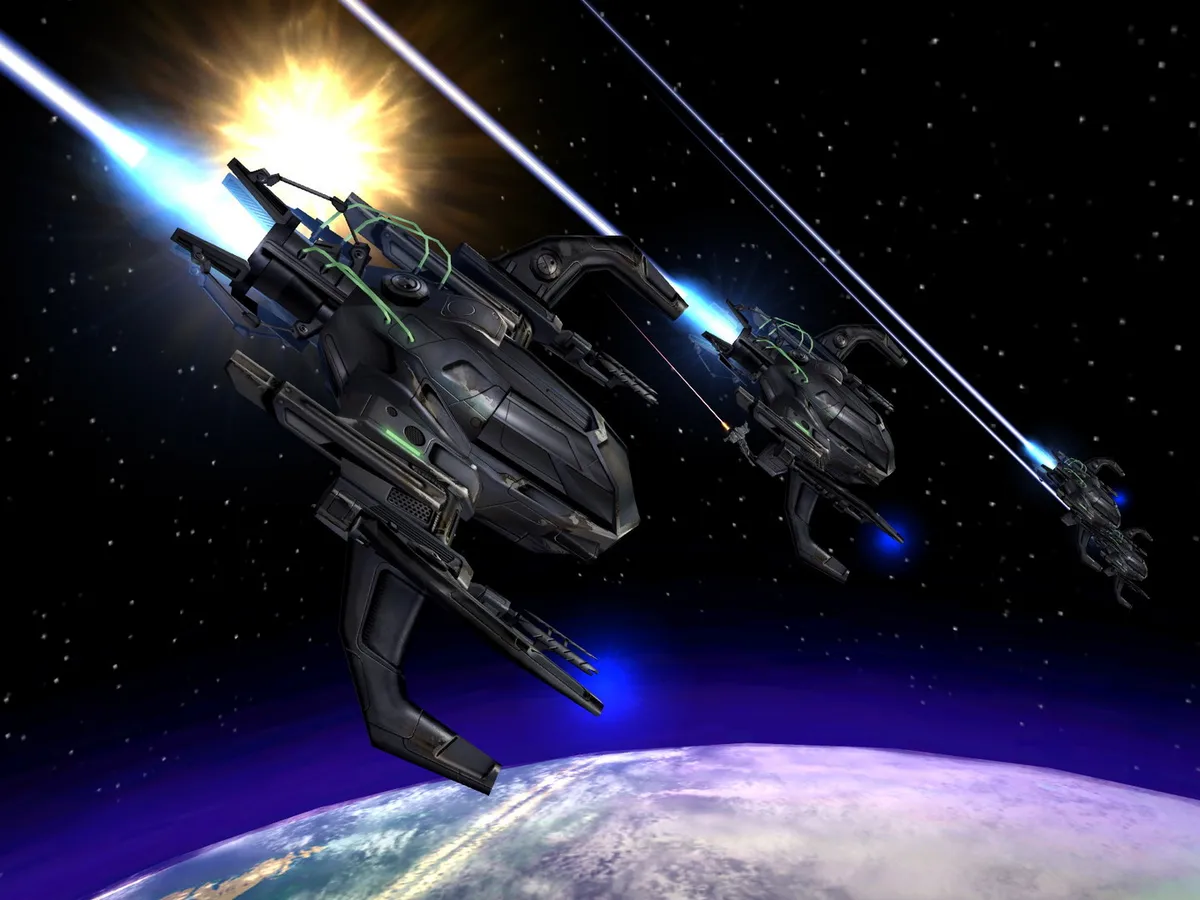
More than 95 maps are available immediately, including more than 45 brand new ones for all existing gameplay modes as well as the new modes of play. The environments fall into documented categories: vast outdoor environments, deep space combat areas, and tightly packed indoor techno-arenas. That spread means a mode is not restricted to one kind of ground—the same mode roster is served by a map pool expanded in the same release rather than grown through later content drops.
Settings and modes interact in ways the documentation supports. Onslaught is described as taking place in massive outdoor environments, which is precisely where vehicular combat comes into its own; the game also offers deep space combat areas and packed indoor techno-arenas among its map categories. A squad that prefers vehicles will find its natural ground in the open; a squad that prefers close-quarters fighting will find its own in the indoor arenas and in fortified Assault positions.
Technology, Edition, and Access
Beyond the content itself, the game is documented as a tremendous technology update over its predecessor, delivering a faster, slicker, deeper experience. The Edition is listed for Windows, developed and published by Epic Games, Inc., and carries a 2008 store product date. Separate from the gameplay rules, there is no documentation here for other platforms, remakes, or later package additions, so the modes, vehicles, maps, and weapons described above are the ones attributed to this release.
Starting Guidance From the Documented Rules
Begin with the mode, not the map. A new player should decide first whether the session will be team-based or free-for-all, because that choice sets whether allies exist at all. In a team mode, working a fortified Assault base means committing to attack or defense with a squad; a free-for-all match removes that coordination and leaves each player against the whole field. With up to 32 other players online, the difference is large: the same lobby becomes either a coordinated push or a contest in which everyone is a target.
For Onslaught, plan around the sequence: capture and hold strategic points, then use that foothold to attack and destroy the enemy power core. Commit vehicles deliberately—a single-seat fighter for a quick approach, a five-person behemoth when the push needs to arrive in numbers to hold a point. Against mechanized opposition, the AVRiL's rockets are tuned to seek and destroy enemy vehicles; the Mine layer rewards seeding approach routes with spider bombs that chase anyone who enters range; and the Grenade Launcher rewards patience, since lodged charges wait for the altfire trigger before they fire.
Choose ground that matches the plan. Onslaught's massive outdoor environments are where vehicular combat comes into its own, while tightly packed indoor techno-arenas and fortified Assault bases favor closer fighting. With more than 95 maps available immediately and more than 45 of them new, there is enough variety to match a mode to a preference rather than accepting whatever arena appears first.
Scroll sideways to see the full table →
| Documented detail | Value |
|---|---|
| Title | Unreal Tournament 2004: Editor's Choice Edition |
| Platform | Windows |
| Developer / Publisher | Epic Games, Inc. |
| Store product date | 2008 |
| Game modes | Ten, team-based and every man for himself |
| Online players | Up to 32 other players |
| Maps | More than 95 available immediately; more than 45 new |
| Vehicles | Land, air, and space; single-seat to five-person |
| New teams | Four, with 32 new characters |
Sources & further reading.
- Unreal Tournament 2004: Editor's Choice Edition — official game profile Retrieved Oct 20, 2026
First published .