 THE GAME ARCHIVE
Retribution with an Axe: Chopping as the Core Objective
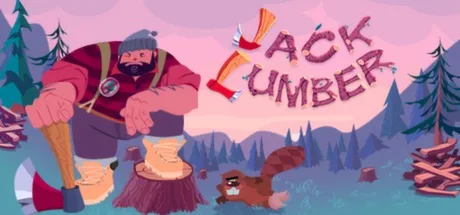
Jack Lumber's central action is swinging an axe into trees and logs. The premise frames that work as revenge: a tree killed his granny, and Jack, a supernatural lumberjack, sets out to settle the score against the forest. Chopping therefore carries the story as well as the play, since every felled trunk and sliced log is both a puzzle move and a step toward making Granny proud. The game presents the result as a time-warping, line-drawing, log-slicing lumberjacking mashup, so the axe work sits inside logic and skill puzzles rather than a simple endurance test of repeated hits.
The objective is expressed directly in the fiction: fight the forest so Granny's death is answered. That revenge goal and the chopping objective are the same activity, because progress comes from cutting trees and logs rather than from a separate confrontation system. The description ties the axe to Jack's supernatural powers and asks players to muster strength and burliness for the puzzles, though it notes that flannel is not actually required. Players are told to massacre the forest, slice logs, and make Granny proud, which keeps the core loop anchored in wood chopping.
Line-Drawing Logic: Solving Skill and Time-Warp Puzzles
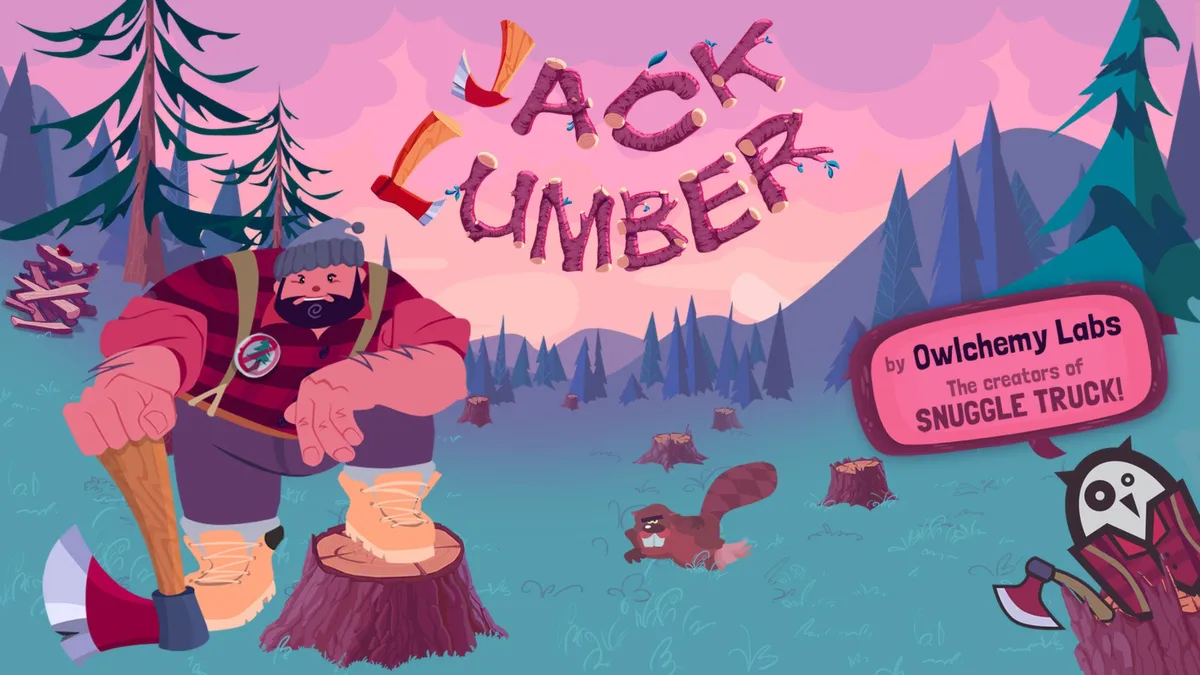
Jack Lumber frames its challenge as skill and logic puzzles solved through axe work, with line-drawing at the center of how a player acts on the forest. Rather than a separate command set, drawing lines constitutes the puzzle interaction: the player traces a path and the supernatural lumberjack's chopping follows from it. The game labels itself a time-warping, line-drawing, log-slicing lumberjacking mashup, which places line-drawing alongside log-slicing as one combined activity. The description also mentions mustering strength and burliness for the puzzles, while noting flannel is not actually required.
Time-warping is listed among the mechanics that define the puzzles, so the drawn line and the manipulation of time are both part of the same solution space. The documented rules therefore interact in two layers: the logic puzzle supplies the arrangement to be solved, the line-drawing supplies the player's means of acting on it, and time-warping adds a temporal dimension to that solving. The revenge fiction stays tied to this because the sliced logs are the objective itself, not a side effect of a separate fight.
Syrup Power-Ups and Beard-Stacking Difficulty
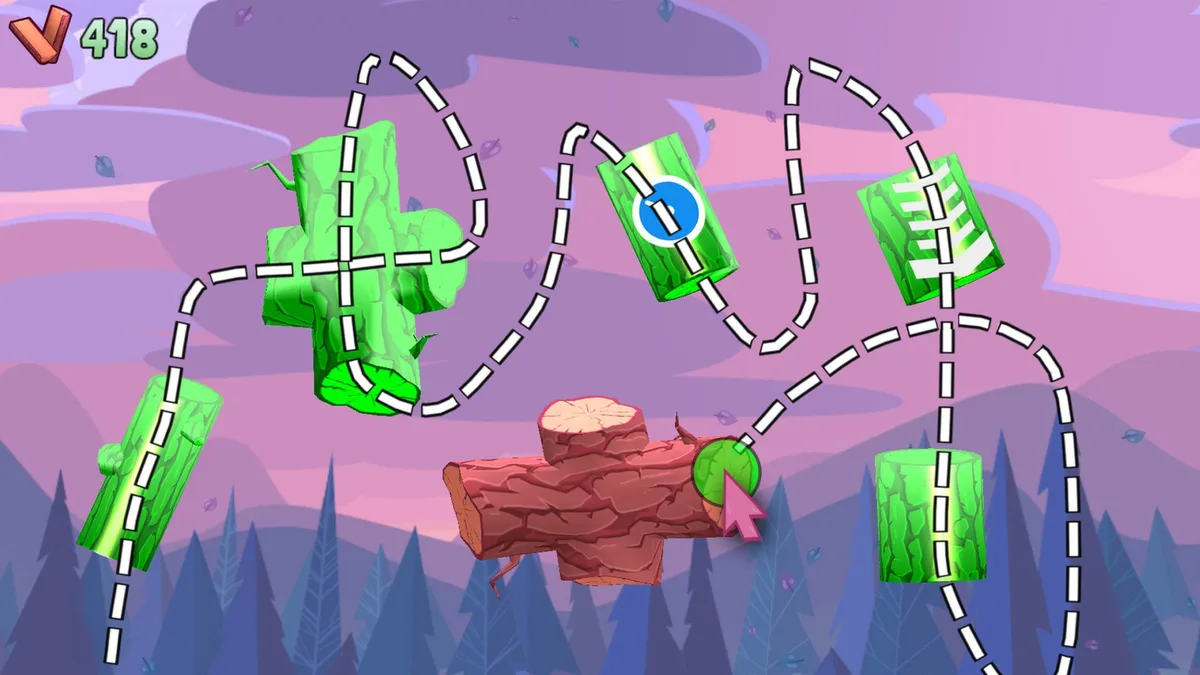
Within the chopping puzzles, Jack can drink Granny's magical syrups, which are consumed to enhance his log-chopping powers. The design points toward mixing these syrups into inventive power-up combinations, so the tone and title of the feature come from a stack of temporary boosts layered onto the axe work rather than from a separate combat menu. The same set of unlocks feeds replay: unlockable missions, player-driven challenges, and inventive syrup power-up combinations are all named as content that extends play beyond the first pass through the trees.
Difficulty is tracked through Jack's beard: beards are stacked the way a pile of flapjacks is stacked, and the more beards accumulated, the more challenge the game presents. This makes the beard a visible gauge of how hard the current run has become, tied directly to the stacking action rather than to a hidden setting. The stacking rule sits alongside the syrup system, since the same progression description groups enhanced chopping powers and escalating beard piles, and the unlockable missions and challenges give the player more situations in which to apply both.
Infinitree Mode, Unlockable Missions and Cabin Critters
Unlockable missions and player-driven challenges sit alongside inventive syrup power-up combinations as content that carries play past the first run through the trees, and the same unlock structure opens Infinitree Mode. In that mode the chopping continues without stopping, so the axe work becomes an open-ended session rather than a single solved arrangement. The documented rules place these extras on one progression track: missions and challenges supply new situations, syrup combinations alter Jack's log-chopping powers within them, and Infinitree Mode provides continuous felling for players who keep going.
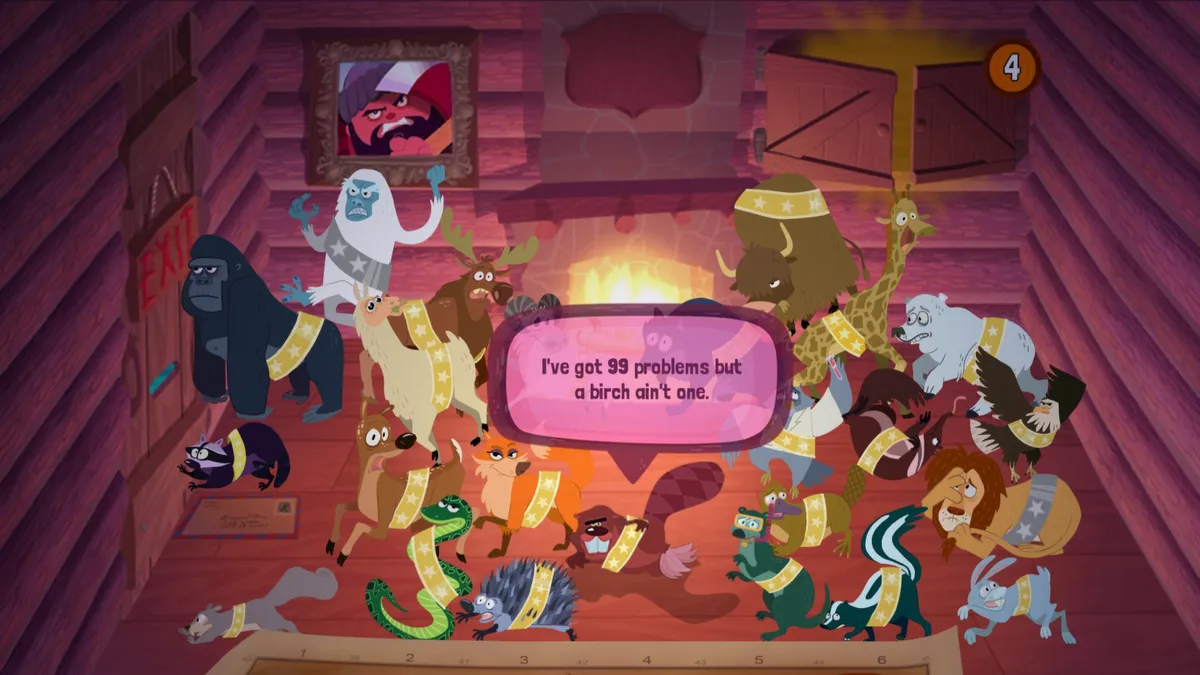
The cabin holds the adorable forest animals displaced by Jack's work, and the player can poke at these critters once their woodland homes have been destroyed. That interaction is a separate diversion from the puzzle solving: it happens indoors, in the cabin, and follows from the destruction the axe causes outdoors. The game also wraps the feature in quirky humor and piles of puns, with alliteration counted as a bonus. These elements accompany the chopping rather than replacing it.
Sources & further reading.
- Jack Lumber — official game profileRetrieved Oct 28, 2026
First published .