 THE GAME ARCHIVE
Close Combat, Ranged Attacks, and Automatic Weapon Selection
Combat in KnightShift splits into two families of action. Close combat covers biting, bare-handed blows, and strikes with swords, clubs, and axes; the Prince, Knights, and Barbarians specialize in this range, though they can still throw a knife. Long-range fighting belongs to Archers, the Amazon Mage, the Priestess, Spearmen, Witches, and Sorcerers, who attack from a distance. How well a close-combat specialist performs with a long-range weapon is left to the player rather than fixed by class.
In RPG mode, a control-bar button enables automatic weapon selection. Once enabled, each fight has the game choose the weapon that dispatches the chosen opponents as quickly as possible, since some creatures only take certain damage types. The selection works only when the character issues direct Attack commands against individual opponents; a hero who merely defends against a horde keeps using whatever weapon is currently held. Poison adds another layer: green clubs and swords and green arrows inflict it, shown by a green skull above the character's head.
Character Creation and Point Distribution Across Eight Heroes
RPG mode opens with a choice from a roster of eight characters: Barbarian, Amazon Sorceress, Wizard, Knight, Priestess, Spearman, Archer and Skeleton. Each entry can be personalized before play by picking hair color and clothing color, then distributing points into basic or special abilities individually per character. The basic skills differ by type: magic characters draw on stamina, mana and magic power, while non-magic characters rely on stamina and strength. Characters earn experience and level up, raising combat potential and magical abilities, and the points gained at each level can be invested into the skills the player wants.
That point distribution ties directly into how characters grow as the adventure proceeds. During game progress a character can learn new spells and new abilities, and the points received for each level up are put into the desired skills of that character. Because the player allocates those points rather than following a fixed template, the manual notes it is nearly impossible to generate two equal characters. Leveling itself is the shared engine: all characters controlled by the player gain experience and advance, increasing combat potential and magical abilities, while newly learned spells and abilities broaden what each build can do.
The Eight-Chapter RPG and the Three RTS Campaigns
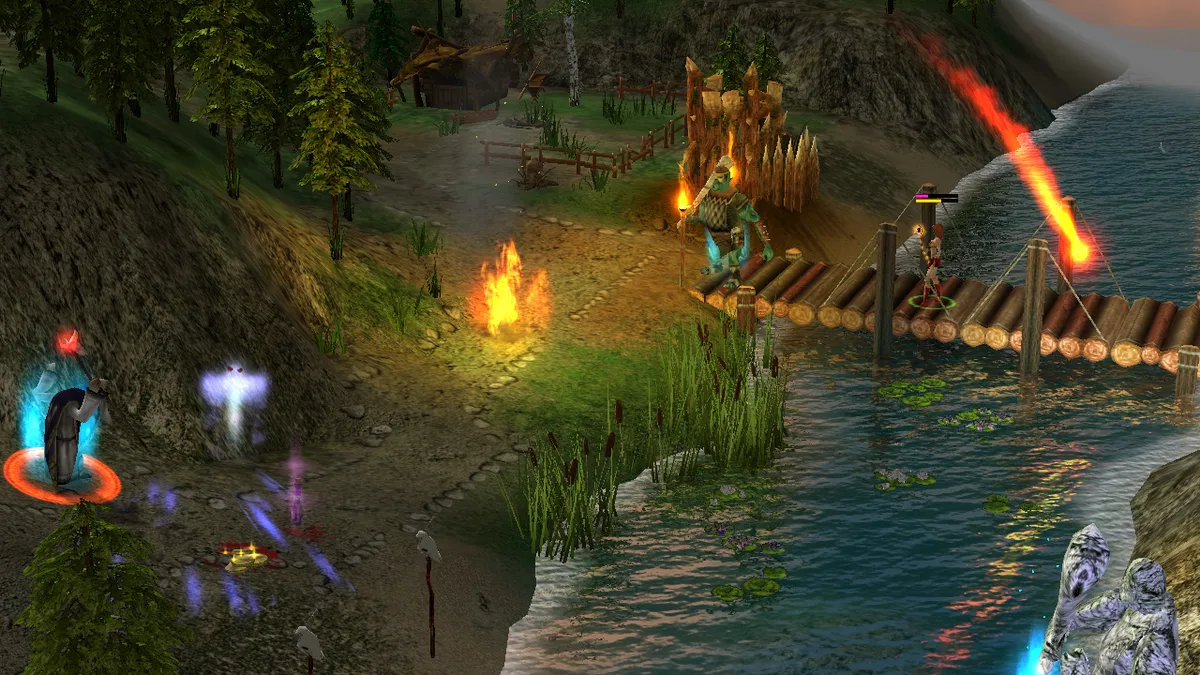
The role-playing half of KnightShift is structured as a story-driven adventure divided into eight chapters. Those chapters carry the hero through dungeons, rare treasures, strange companions and gruesome opponents, with quests threaded through the journey. Character development runs alongside the plot rather than being settled up front: the adventure is built around forming a hero and advancing him, and the game supplies eight individually equipped characters for that action-packed role-play. The player picks which of the eight to develop and helps that hero toward fame as the eight-chapter story unfolds.
The real-time strategy half is organized as three campaigns, each set in a different geographical area and each presenting new challenges, such as rescuing the Princess or fighting the Dragon. Progress during a campaign feeds directly into army building: characters gain access to new weapons, special armor and magic items, and the player can create new characters or construct new structures. Outside the campaigns, Skirmish puts the player against one to seven computer opponents on individual maps, a setting for testing construction and fighting abilities without a campaign framing the match.
Inventory Weight, Red-Marked Loot, and Puzzle Items
Every character carries a personal inventory governed by a weight limit, so what a hero can haul depends on the weight that character can bear. The Barbarian, by virtue of stature, shoulders enormous loads, while amulets, scrolls and similar light goods keep the Amazon's and Priestess's bags comparatively light. Leveling expands the available rucksack space. Items may be used, sold, or traded, and newly acquired objects appear on a slightly flashing background; the manual advises scanning the inventory closely, since a character may be dragging around something useful later on.
Red marking flags two situations: an item the character is not yet experienced or magically powerful enough to deserve, and an item that does not match the character's class. Such objects cannot be used but stay in inventory for sale to a merchant for gold or, in multiplayer, handoff to a comrade-in-arms. Loot arrives from barrels, chests, task rewards and defeated enemies; a left click on an item makes the hero pick it up, and the minimap marks finds with a yellow star or, for magic items, a pink star. Puzzle items carry a small puzzle icon in the inventory's top-right corner once collected, and completing all three parts yields bonuses such as health or mana regeneration.
Mouse Cursors, Hammers, and Building Restrictions
The mouse cursor is the game's central control instrument, appearing as a standard hand until a character receives a command, at which point the pointer changes to match that action. The manual's list of cursor forms covers moving, attacking, casting spells such as Paralyze, Absorb Life, Craze and Firewall, setting a magical trap, and travel orders to a merchant or a mercenary. Because the pointer shape reflects the pending order, the cursor also serves as feedback about which action the game is about to perform before the player commits to it.
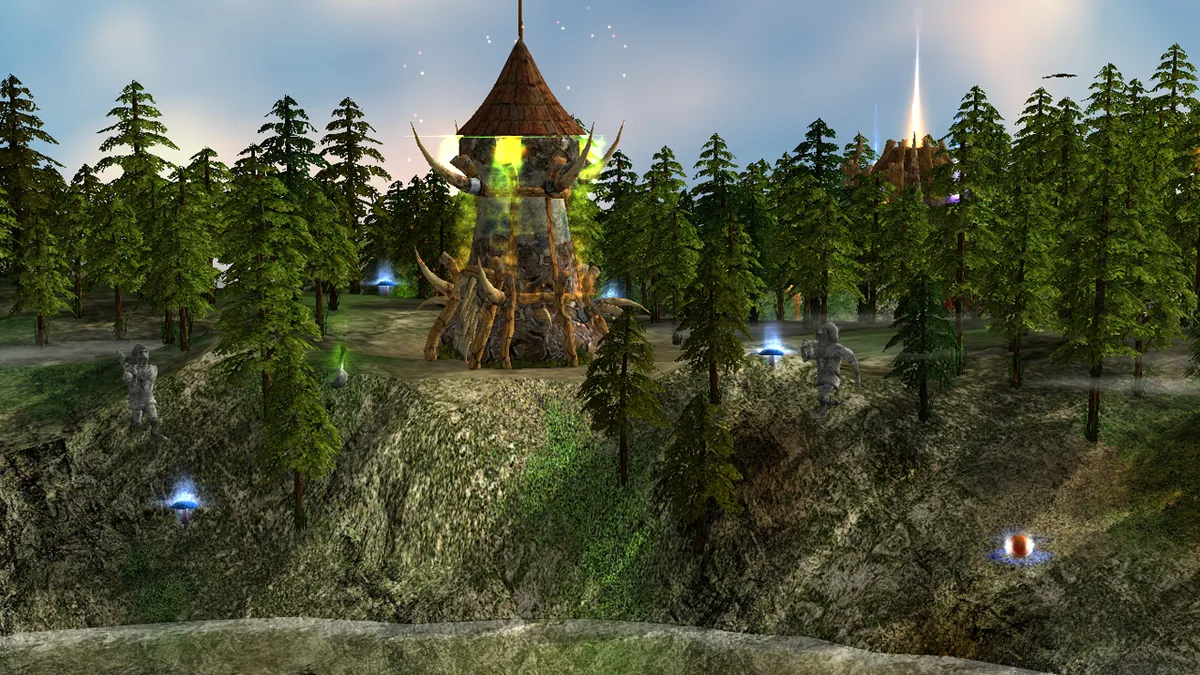
Construction follows placement rules that shape where a settlement can grow. Village buildings must sit beside roads, bridges can only cross rivers, and the cowshed is the single structure allowed on grass. Defensive towers and gates cannot be built first: other buildings must exist beforehand, because otherwise those defenses would stand unguarded. Towers in turn accept archers, spearmen and magical characters as guards, and producing those units requires various buildings. When ordering a character to a building, such as a woodbutcher set to work by clicking the structure, the cursor turns into a small hammer. Milk is tracked per cowshed, with a churn capacity of 100 liters each, so four sheds share a total of 400 liters.
Sources & further reading.
- KnightShift — official game profileRetrieved Oct 29, 2026
- KnightShift — official game profile — publisher-supplied gameplay manualRetrieved Oct 29, 2026
First published .