 THE GAME ARCHIVE
The Endurance Bar Clock: Real-Time Tension, Turn-Based Choices
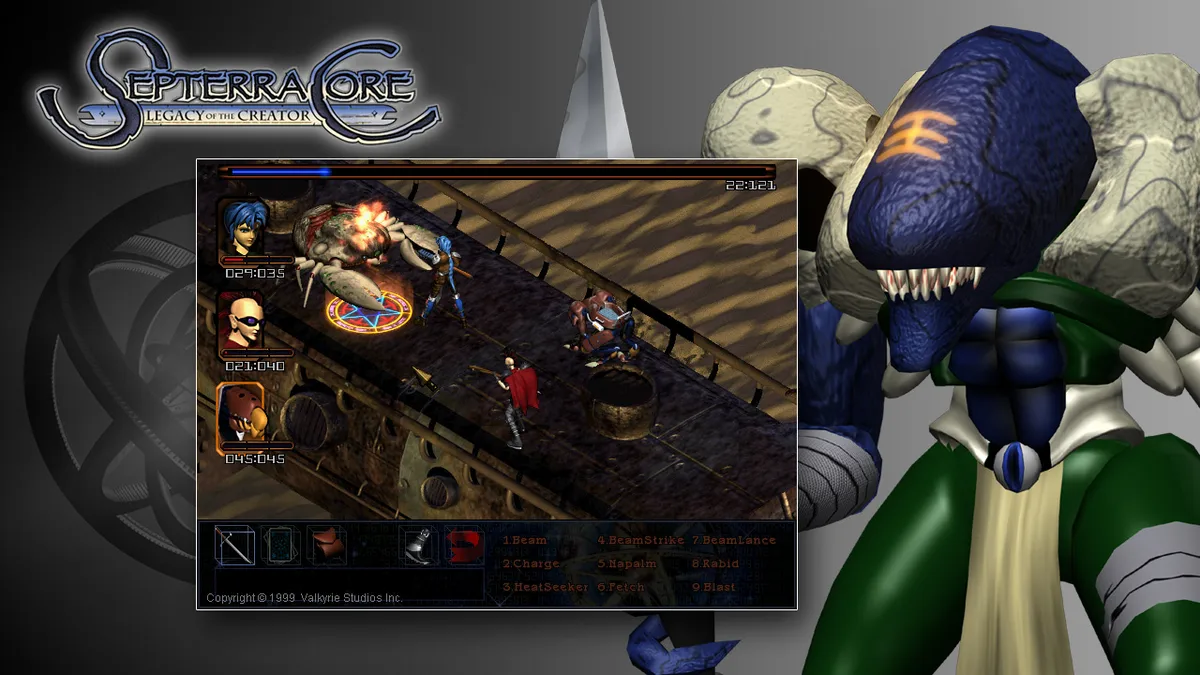
Septerra Core's combat mixes turn-based decisions with real-time pressure. On world maps the party is never attacked, but entering a location environment puts the group at risk of being spotted by hostile characters; if they see you, combat begins. Each combatant then carries an Endurance Bar just below their portrait on the left-hand side of the screen. The meter is divided into three sections and gauges the relative speed of the characters, telling you when each one can act. A character cannot be activated until at least one third of that bar has filled.
The Endurance Bar is where the real-time and turn-based halves meet. Its three-section split turns raw speed into a visible clock: the bar fills in real time, but actions resolve on turns once enough of it has accumulated, so a faster character reaches an activatable third sooner and acts more often. The bar also bears on how lethal an attack can be. Combat therefore opens from spatial danger inside locations rather than on world maps, and once engaged, every character's own bar sets the timing of when their turn arrives.
Skills by Column: Endurance Levels and Core Energy Costs
When a character's turn arrives, the Skills option opens a list organized into three columns, one for each level of Endurance built up in that character's bar. Reaching the third column therefore requires filling all three levels, and a Skill in a lower column is available sooner. The menu holds general attacks as well as party-helping abilities, with Grubb's Repair given as the example of a Skill that aids allies rather than striking an enemy. Choosing a Skill that needs Core Energy displays the exact amount on the Core Bar at the top of the screen, so the cost is visible before the action is confirmed.
Fate Cards extend that endurance economy to the whole party. Once a character is activated, any other character who has at least one Endurance Bar built up shows a gray box beside their portrait ready to receive a card. A card can be clicked into that box, or double-clicked to assign it automatically to the first available character, then a target is selected to cast the resulting Spell. All three characters can throw cards together to produce larger and more complex Spells, and gun components equipped as Items add their related Skills to the character's list for use in combat.
Guns That Grow Their Own Ammo: Components and Core Power
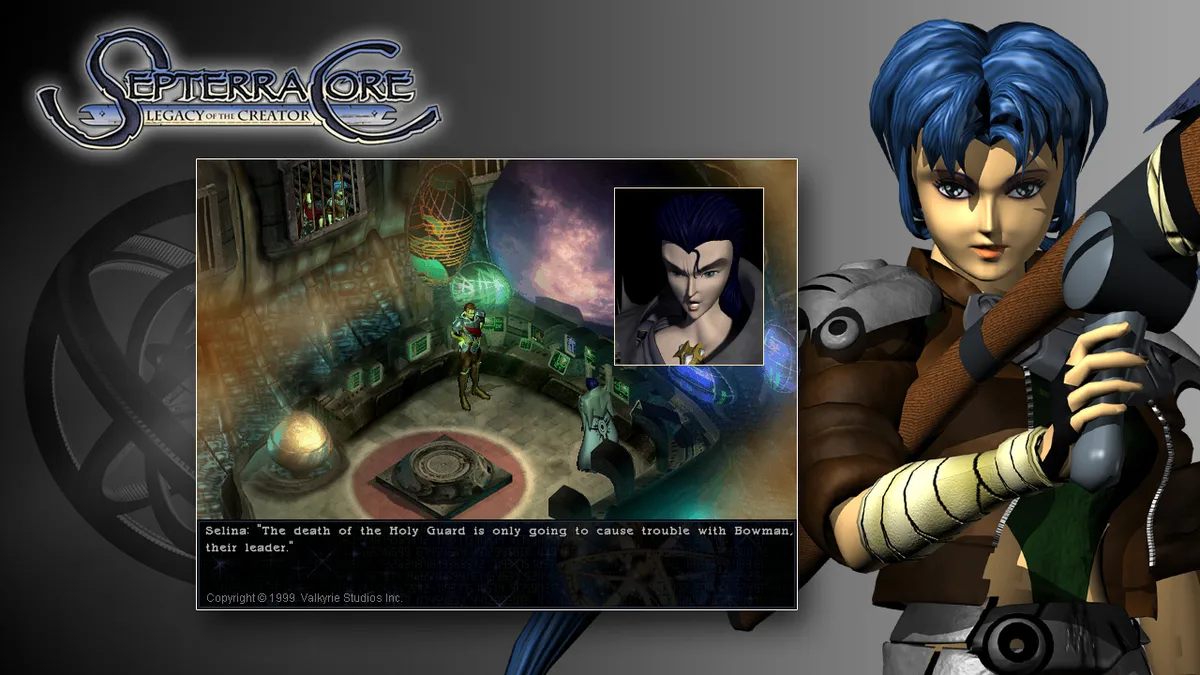
Maya and several other characters wield a gun as their main weapon, and in Septerra's world guns are built with organic components. That construction lets a gun grow the projectiles it needs by drawing on Core Power instead of consuming ammunition. Fitting different components as equipped Items converts the weapon into alternatives such as a grenade launcher or a beam cannon, and each equipped component adds its related Skills to that character's combat Skill list. Attacks enabled this way draw on Core Power, tying gun customization to the same energy resource used for spellcasting.
Statistics improve in two documented ways: gaining levels and changing equipment. On leveling, each character raises statistics at their own pace. Equipment can raise a derived statistic directly, such as Armor, or raise a base statistic, which then lifts derived statistics too; raising Vitality, for instance, affects Armor, Health Points and possibly speed. The five base statistics are Strength, Agility, Perception, Psyche and Vitality, and six derived statistics govern combat, with Agility contributing to hit chance and Perception feeding Strike, Core and ranged Power.
Levels, Equipment and the Five Base Statistics
Septerra Core separates character capability into five base statistics: Strength, Agility, Perception, Psyche and Vitality. These feed six derived statistics that govern combat. Strength contributes to Health Points, Armor and the Power of melee combatants. Agility measures physical quickness and dexterity, determining the chance to hit for physical attacks and contributing to Strike, Power and Speed. Perception reflects the character's ability to sense their surroundings and contributes to Strike, Core, and the Power of ranged combatants. Psyche measures intellectual capacity.
Statistics improve in two documented ways: gaining levels and changing equipment. As characters gain levels, each improves statistics at their own pace. Equipment can work on a derived statistic directly, such as Armor, or raise a base statistic, which then lifts derived statistics too; raising Vitality, for example, affects Armor, Health Points and possibly speed. Leveling rests on experience points: winning combat grants experience and money, and accumulating experience raises the levels of Maya and the other characters, increasing their strength and ability accordingly.
Inventory Puzzles: Heal, Key and Combinable Items
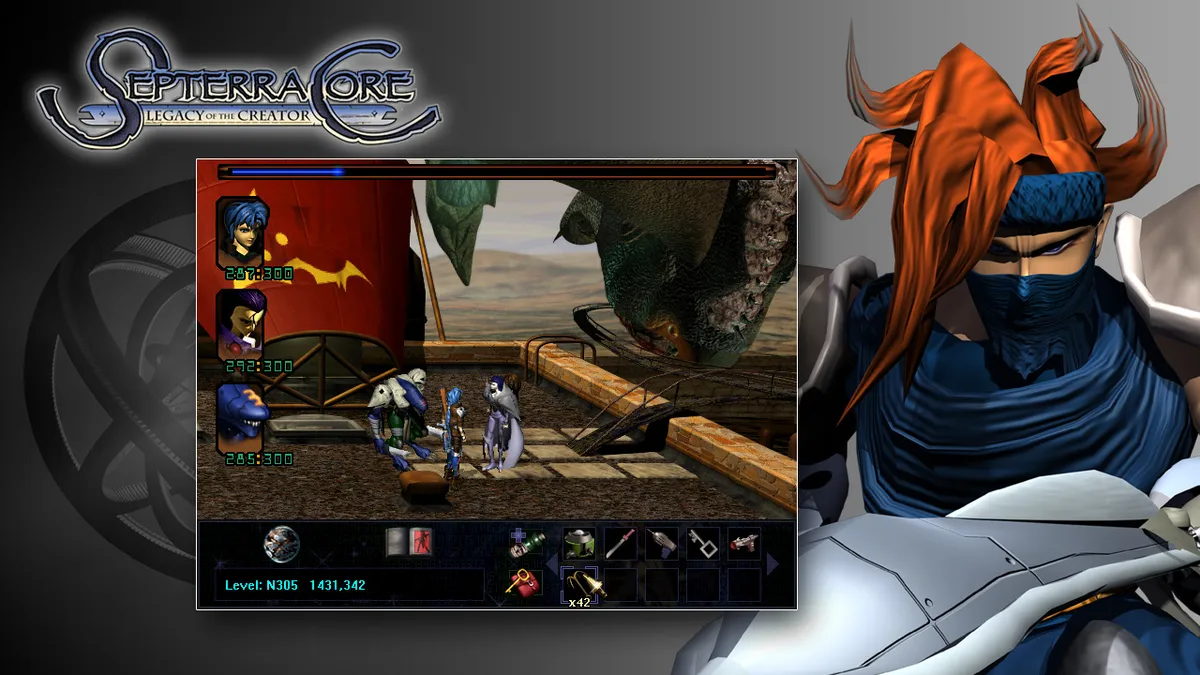
The party inventory appears at the bottom right of the screen when the mouse cursor is moved into the lower interface area, and two buttons switch the display between Heal Items and Key Items. Heal Items are what the party uses to refresh Health or Core Energy or otherwise help their current status, especially during combat. Key Items are the ones that prove useful while exploring the world or solving puzzles. Selecting an item from the inventory turns it into the mouse cursor, so a Heal Item can then be applied to the appropriate character.
The same cursor-based handling carries over into combining. With one item selected as the cursor, moving over another item and clicking the left mouse button joins the two if they can be combined, and a new item appears in the inventory. Puzzle progress links to these tools: locations must be searched carefully to find items, some puzzles require locating hidden switches to open doors, and others call for items placed and used in a certain way to remove obstacles.
Enemy Tricks and the Cost of Losing
Enemies in Septerra Core follow patterns that reward attention. While most simply strike, shoot, or cast a Spell at a character, some carry additional Skills. Certain enemies can charge or gather energy across several turns before releasing a devastating wave of damage, so the threat builds visibly before it lands. Others can call for help, bringing more enemies into the ongoing combat. Periodically the party also faces major encounters with large, powerful creatures, most of which can only be defeated through a particular technique or strategy rather than repeated attacks.
Losing a character in combat is not permanent. A fallen party member is treated as unconscious and gets back up when combat ends with one Health Point. The real failure state comes when all three current party members are down at once; the game is then over and play continues only by reloading a save. Winning, by contrast, grants experience points and money, and sometimes other Items, with accumulated experience raising levels for Maya and the rest of the party and increasing their strength and ability accordingly.
Sources & further reading.
- Septerra Core — official game profileRetrieved Oct 29, 2026
- Septerra Core — official game profile — publisher-supplied gameplay manualRetrieved Oct 29, 2026
First published .