 THE GAME ARCHIVE
LEGO Star Wars: The Complete Saga collects the events of all six Star Wars films into a single Windows game, as described in its official store listing. That store entry identifies the game as a 2009 release developed by Traveller's Tales and published under the LucasArts, Lucasfilm and Disney names, and classifies it in the Adventure genre. The pitch it makes to players is blunt and appealing: you can build and battle your way through a Star Wars galaxy on PC, moving through the story beats of Episodes I through VI in one package.
This piece is a source-based overview rather than a hands-on test. Everything below is drawn from the official store text, so treat the mechanical descriptions as the publisher's account of the design rather than as verified play experience. Where the source is thin or a claim is not directly supported by it, that gap is stated rather than filled in.
The Premise: Six Films, One Save File
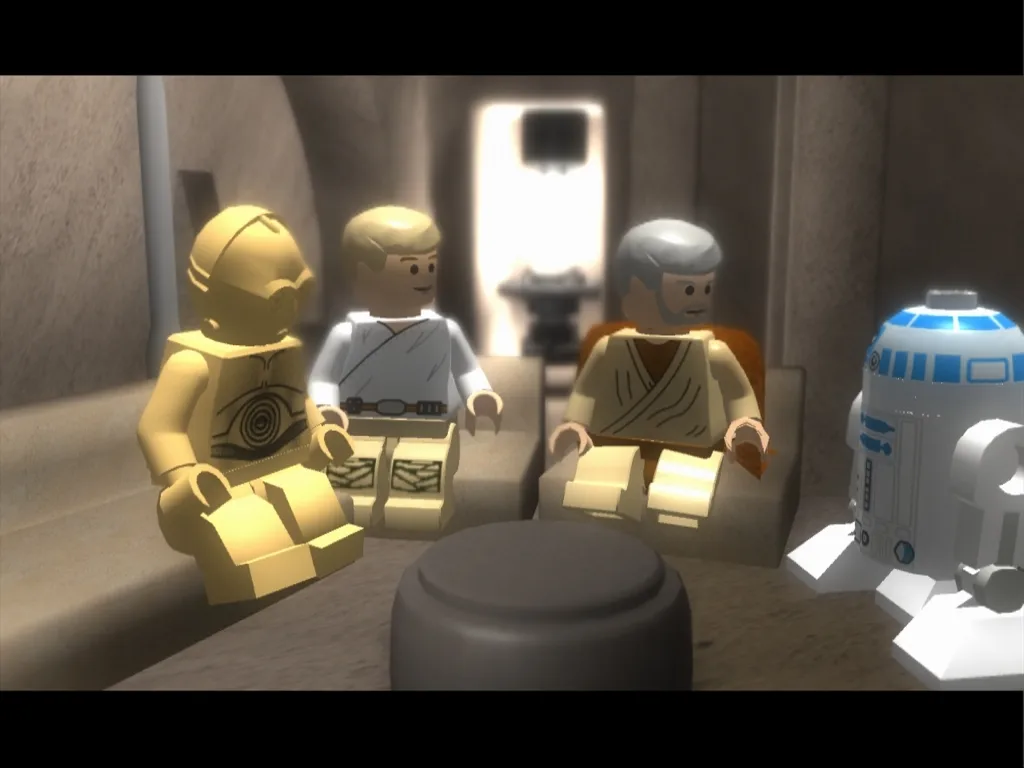
The organizing idea is compression. Instead of adapting a single film, the game asks the player to work through the whole saga, described in the store text as playing through all six Star Wars movies "in one videogame." The tag line "Kick Some Brick in I through VI" signals both the order and the tone: the prequel trilogy and the original trilogy share one continuous product rather than being sold as separate adventures.
Because the store description frames the campaign as movie-based, the natural reading is that level selection and progression follow the film sequence, with each movie contributing its own recognizable locations and set pieces. The source does not enumerate every level or describe menu structure, so the exact ordering and any chapter-select interface remain undocumented here.
The Core Loop: Build, Battle, Solve, Repeat
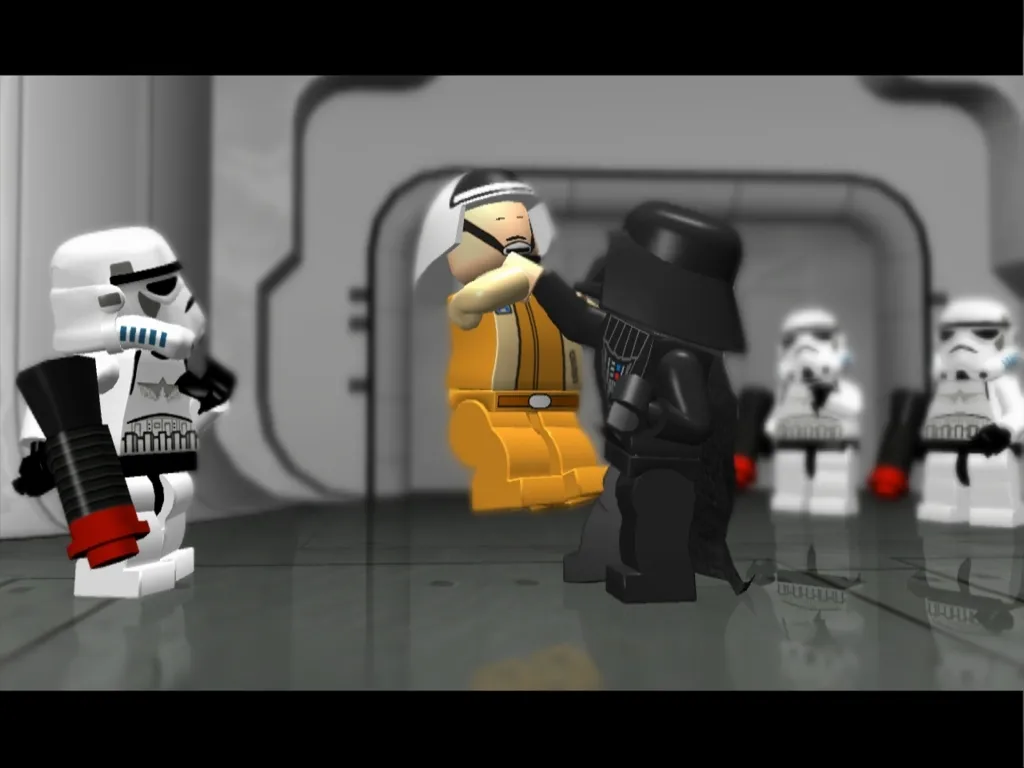
At its most basic, the loop the store text promises is a two-part verb set: build and battle. Combat against enemies is one half of play; the other half is constructive — assembling or manipulating the LEGO-made environment to open the way forward. Puzzles are solved through "creative thinking, teamwork and unique building situations," which places construction at the center of problem-solving rather than treating it as decoration.
The emphasis on teamwork inside a puzzle description is worth noting. In a game whose combat and character-swapping systems are built around cooperation, puzzle design that assumes shared inputs shapes how levels are laid out — one player's ability covers a gap the other cannot cross, and the solution depends on coordinating rather than on a single dominant character. The source states the design intent; it does not spell out specific puzzles, so no example route should be inferred from it.
 View full image ↗
Mechanics and Systems the Store Text Documents
The store description lists several layered systems alongside the basic loop: enhanced Force Powers, power-ups and Challenge Modes. Read together, these suggest that combat is not purely melee — Force abilities act as an expandable toolkit — and that the game offers structured variants on its standard missions rather than one flat difficulty. The source does not explain how Challenge Modes are unlocked, whether they are scored, or how Force Powers are upgraded, so those specifics should be treated as unknown.
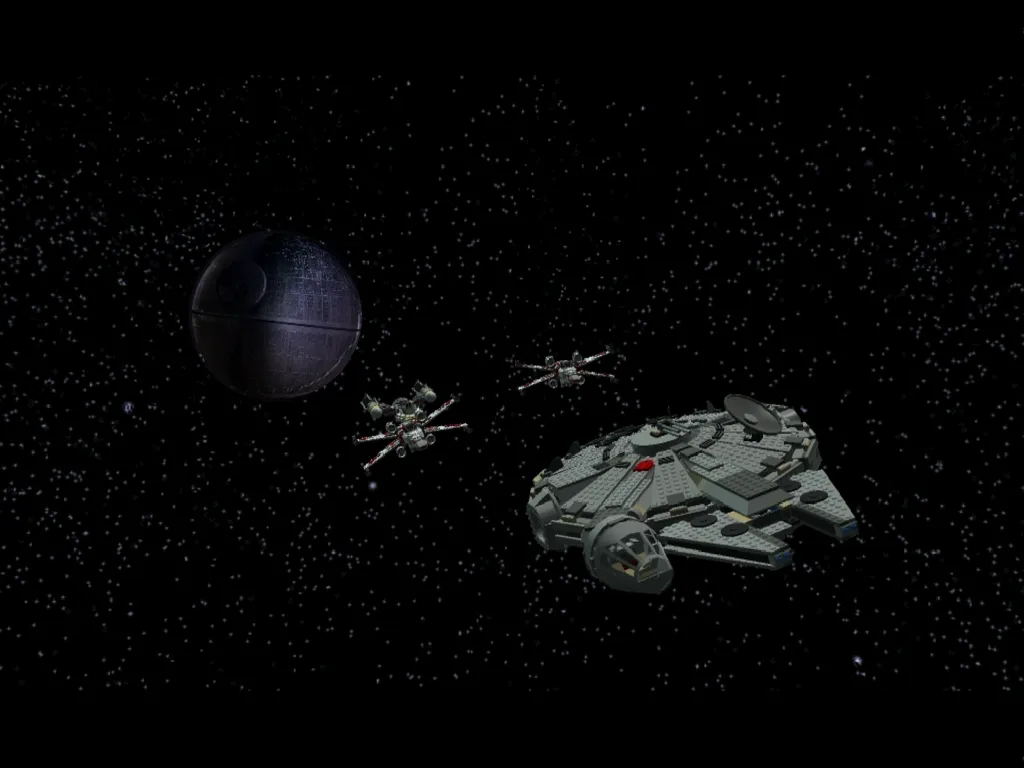
Vehicle play is a distinct pillar. The listing highlights redesigned levels such as "Mos Espa Podrace" and "Gunship Cavalry," reworked to take advantage of the open vehicle gameplay associated with LEGO Star Wars II. That reference is significant: it positions vehicle handling as an inherited, refined system rather than a one-off minigame, and it names two specific sequences where players should expect to be driving or piloting rather than running on foot.
The character roster is the other headline number. The store text claims over 120 playable characters, and calls out Watto, Zam Wesell and Boss Nass as new additions within this package. A roster of that size changes how levels play: it implies that access to certain abilities, vehicles or puzzle solutions is gated behind which characters are available, which is why the game's collectible structure and its combat are hard to separate.
The Character Customizer as a Toy Box
The upgraded Character Customizer is described as allowing "millions of possibilities," drawing on character parts from all six movies. The store text gives two deliberately silly examples of what this produces: cross-trilogy mash-ups like "Han Windu" and "Lando Amidala." The design point is that the customization system is not restricted by era, so parts from the prequels and the original trilogy can be recombined by the player.
That freedom matters for how the game reads as a LEGO product. Where the campaign follows film events, the customizer is where the source material stops being authoritative and becomes a parts bin — the player's own combinations become the content. The store text does not detail slot counts, unlock requirements or whether custom characters can be used in story missions, so those remain open questions.
 View full image ↗
Modes, Co-op and Bonus Content
Two-player local co-op is explicitly documented: the store text says it lets friends and families play together, which frames drop-in shared play as a first-class feature rather than an afterthought. Local co-op also explains why the puzzle design leans on teamwork — the two ideas reinforce each other in the same product description.
Beyond the campaign, the listing describes bonus levels and missions, plus 10 additional Bounty Hunter missions taken from Jabba the Hutt in the prequel trilogy. These read as optional content layered on top of the six-film story: self-contained assignments that reuse the game's characters and locations rather than extending the film narrative. The source does not state how they are unlocked or how long they run.
Starting Guidance, Scoped to the Source
Given only the store description, the practical starting points are the ones it names directly: play through the movie-spanning campaign, expect building-and-battling puzzles along the way, and add a second local player if you want the cooperative experience the game advertises. The listing's bonus content and Bounty Hunter missions are additional layers to look into once the main six-film run is underway.
 View full image ↗
What Makes the Design Distinctive
The distinguishing move is that construction is not scenery — it is a verb. Building situations are how puzzles get solved, and the tone is playful enough that a custom character named Han Windu is presented as a feature rather than an easter egg. That combination of a faithful film-spanning structure with an irreverent parts-based toolkit is the identity the listing sells.
The same logic applies to co-op: a shared screen plus puzzles written around teamwork means the game is built to be talked through. The listing does not describe art style or audio, so any statement about visuals beyond the LEGO framing would be invention; what can be said is that the source consistently presents the game as an accessible, cooperative adaptation rather than a demanding one.
Edition and Access Notes
The metadata attached to this entry lists Windows as the platform and 2009 as the release year. That year should be read as scoped to this official listing rather than as a complete release history: the source does not describe earlier versions, ports to other platforms, or the relationship between this edition and any prior release. Likewise, the publisher names LucasArts, Lucasfilm and Disney reflect how the listing credits the game, not a claim about who developed it — Traveller's Tales is named separately as the developer.
No modern compatibility testing, performance data or current storefront details beyond this listing are included here. For anything beyond the supplied description — system requirements, patch history, current availability — the source material would need to be expanded before it could be written about responsibly.
Scroll sideways to see the full table →
| Field | Value |
|---|---|
| Game title | LEGO Star Wars: The Complete Saga |
| Developer | Traveller's Tales |
| Publishers listed | LucasArts, Lucasfilm, Disney |
| Genre listed | Adventure |
| Platform listed | Windows |
| Release year listed | 2009 |
| Local co-op | Two-player local co-op |
| Character customizer | Upgraded, with parts from all six films |
| Bonus content | Bonus levels and missions; 10 Bounty Hunter missions from Jabba the Hutt |
Sources & further reading.
- LEGO® Star Wars™ - The Complete Saga — official game profile Retrieved Oct 10, 2026
First published .