 THE GAME ARCHIVE
A Dojo Built on Reaction Time
Ninja Reflex: Steamworks Edition is a Windows game from Sanzaru Games and Nunchuck Games, listed on Steam under the Casual and Indie genres. Its premise is narrower and more specific than the genre tags suggest: it uses martial arts challenges to test reflexes, sharpen hand-eye coordination, and measure reaction times to the millisecond. The player does not roam a world or fight through stages; the entire experience is organized around short, timed trials performed with ninja implements.
That framing matters because it sets the player's expectation correctly. In Ninja Reflex, the meaningful decision is when and how precisely to respond to whatever the dojo puts in front of you. The stated goals of reflex testing, coordination practice, and millisecond measurement describe the actual activity inside every challenge. The game's distinctiveness comes from treating timing itself as the subject of play, rather than as a side metric attached to exploration or combat.
Throwing Stars, Katanas, Nunchucks, and Chopsticks
The documented arsenal is throwing stars, katanas, nunchucks, and even chopsticks. This list is best read as a variety of presentation for the same underlying rule: react quickly and accurately to the test in front of you. Each implement gives the player a different thing to time and coordinate with, from a throw to a swing to a motion or a chopstick action, while the scoring standard at the center of every challenge stays constant. The stated purpose of measuring reaction times to the millisecond is what ties the whole toolkit together.
This design keeps the game's systems legible. A player who understands that a challenge rewards a fast, well-timed response can approach a katana trial with the same mental model used for a throwing-star trial. The differences are in the action being timed, not in a separate set of combat or weapon rules. The chopsticks entry in particular signals that the dojo mixes the expected ninja gear with playful variety, which supports the Casual classification without diluting the millisecond standard that defines every trial.
From White Belt to Black Belt, 3rd Degree
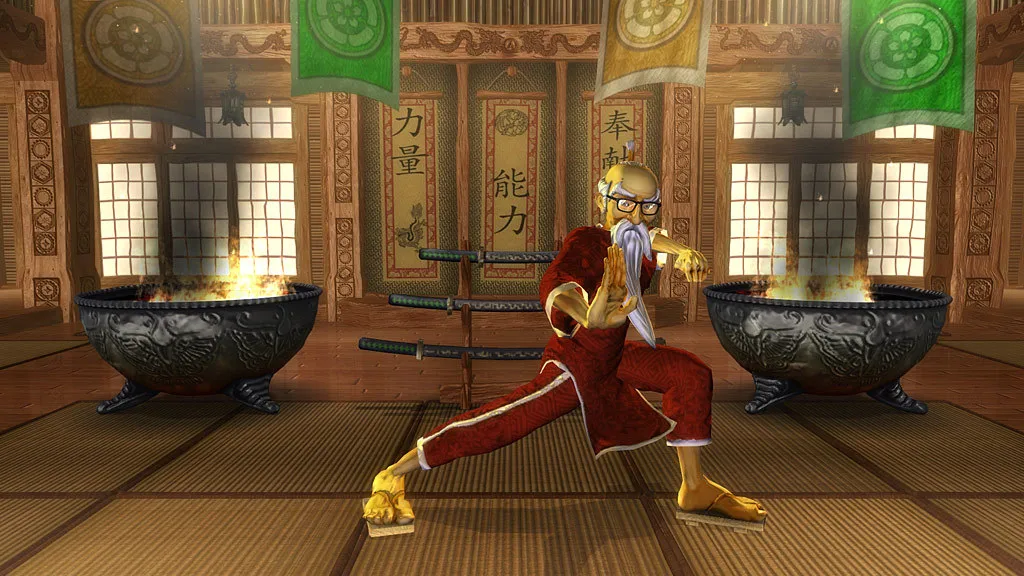
Progression is expressed as a belt ladder: the player starts at White Belt and advances all the way to Black Belt, 3rd Degree. That named endpoint gives the dojo a clearly defined summit, and the rank structure turns a long list of individual timing tests into a single ordered journey. The belt a player holds is the visible record of how far they have come through the game's content, rather than a cosmetic detail detached from play.
The climb runs across 300 ninja challenges to conquer, according to the game's own description. With that many trials feeding into one belt sequence, the player's practical decision-making is about accumulating consistent, accurate responses across a large set rather than clearing a single demanding stage. Each short test contributes to a much longer arc, so the dojo rewards sustained focus and sharpened timing over the full run from White Belt to Black Belt, 3rd Degree.
Alongside the belt ladder, the game sets 50+ Steam achievements to complete, and the official description frames those achievements as part of the same journey toward Black Belt, 3rd Degree. This creates a parallel goal structure: chasing belts defines the main order of play, while the achievements give a second layer of targets to pursue across the challenges. A player can focus squarely on reaching the top rank and still find a separate set of objectives waiting to be cleared.
Local Multiplayer Battles for Up to Four Players
The dojo extends beyond solo practice through local multiplayer battles with up to four players. For a game whose core activity is reflex measurement, multiplayer reframes the same short timing tests as a shared contest, with the player's own reaction speed now measured against other people rather than only against the clock. The supported details confirm the mode is local and capped at four participants; beyond that, treat the battles as an extension of the documented challenge activity rather than a separately described combat system.
Because the single-player structure is built from martial arts challenges measured to the millisecond, the multiplayer option fits naturally alongside it as a competitive outlet for the same kind of skill. Players who want to test their timing against others can do so with up to four people, while the 300-challenge belt climb and the 50+ Steam achievements remain the backbone of solo progress. The mode therefore broadens how the reflex testing can be experienced without displacing the central progression.
Sensei Wisdom, Ninja Names, Meditation, and Easter Eggs
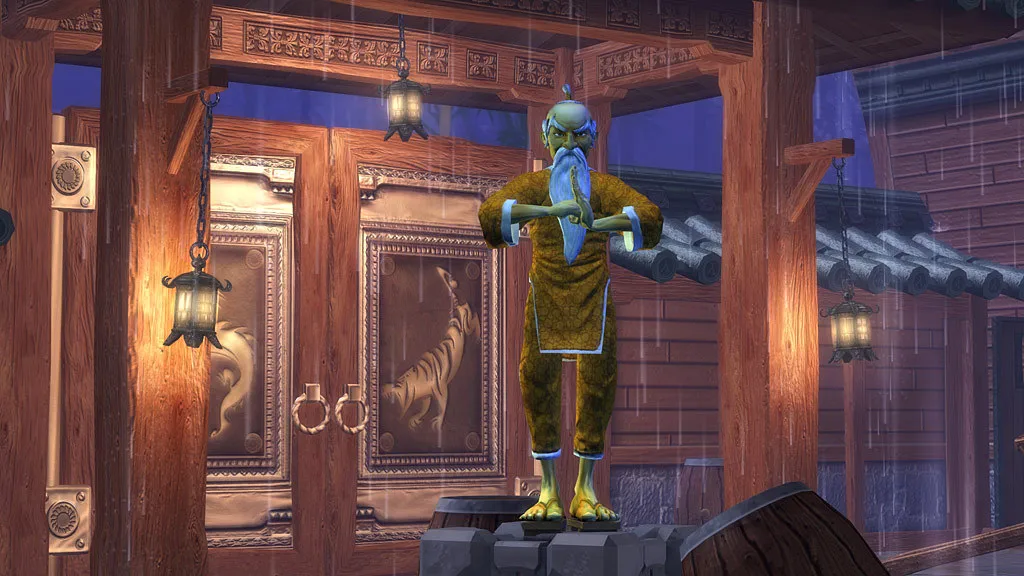
Around the timing tests, the game adds several character and setting elements. The player receives authentic martial arts wisdom from their Sensei, which gives the dojo a guiding voice and frames the drills as lessons within a training tradition. Players also create a Ninja Name from over 25,000 possibilities, so each student can carry a distinct identity into the challenges. Both features are documented parts of the experience and sit outside the reaction-time measurement itself, shaping tone and personalization rather than scoring.
Two further elements round out the package. The game invites players to learn to meditate in order to achieve greater mental focus, a deliberate complement to the speed demands of the challenges. There are also Half-Life and Portal Easter eggs to find, crossover touches that reward curiosity between or around the reflex trials. Together with the Sensei and the name generator, these features give the dojo a personality beyond pure timing drills while leaving the core challenge structure unchanged.
How the Pieces Shape a Session
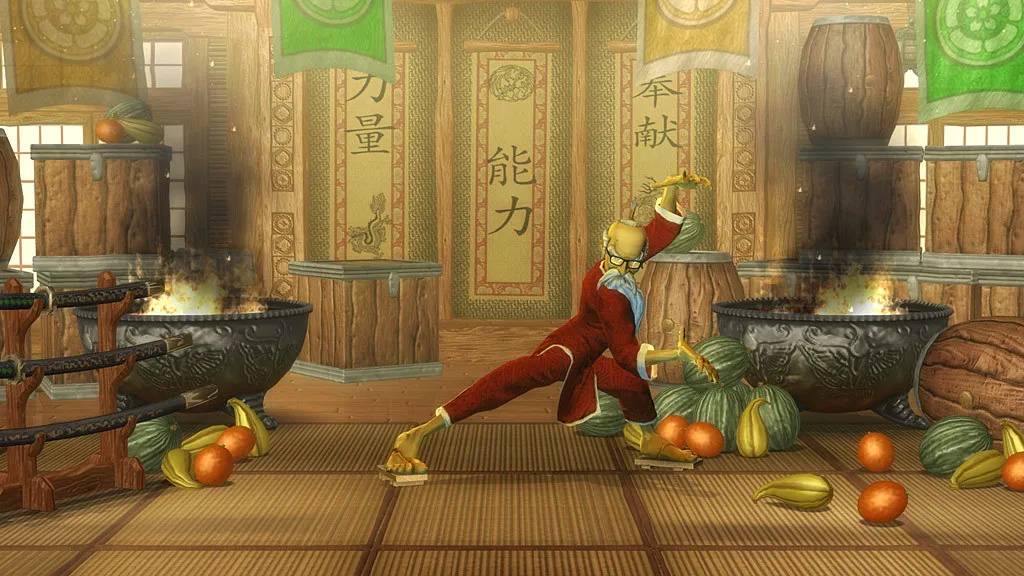
Putting the documented systems together describes an unusually focused kind of play. A session at the dojo is made of short martial arts challenges, each measured to the millisecond, performed with throwing stars, katanas, nunchucks, or chopsticks. Player effort goes into reacting cleanly and consistently, and that effort is tracked through the belt ladder that runs from White Belt to Black Belt, 3rd Degree. The 300-challenge count and the 50+ achievements mark how much of that practice sits ahead of a dedicated player.
The surrounding features give that loop texture without competing with it. The Sensei's wisdom and the option to learn to meditate toward greater mental focus both speak to concentration, which is the same quality the timing tests demand. A generated Ninja Name from over 25,000 possibilities personalizes the student, and the Half-Life and Portal Easter eggs add discovery to the dojo. For players seeking company, local battles for up to four players turn the reflex tests into a group activity, while the solo belt climb and achievement hunt remain the core progression.
The result is a game with a clear internal logic. Everything documented, from the weapon variety to the belt rank endpoint, supports a single purpose of measuring and improving reaction speed and hand-eye coordination. The Sensei, names, meditation, Easter eggs, and four-player battles add tone and variety, but they orbit the millisecond challenge rather than replace it. Readers who prefer a defined ladder to climb and quick, repeatable skill tests will recognize the appeal described here; the article records the documented systems and does not evaluate how the game feels to play.
Edition and Access
The edition covered here is Ninja Reflex: Steamworks Edition, released in 2008 for Windows by Sanzaru Games and Nunchuck Games. Its store listing classifies it as Casual and Indie. The descriptions above describe this Steamworks Edition as documented; the supplied material does not itemize differences from any other release of Ninja Reflex, so no edition comparison is made here.
Scroll sideways to see the full table →
| Field | Detail |
|---|---|
| Title | Ninja Reflex: Steamworks Edition |
| Release year | 2008 |
| Platform | Windows |
| Developer | Sanzaru Games |
| Publisher | Nunchuck Games |
| Genres | Casual, Indie |
| Core activity | Martial arts challenges testing reflexes, hand-eye coordination, and reaction times to the millisecond |
| Implements | Throwing stars, katanas, nunchucks, chopsticks |
| Progression | White Belt to Black Belt, 3rd Degree across 300 ninja challenges |
| Achievements | 50+ Steam achievements |
| Multiplayer | Local battles with up to 4 players |
| Extras | Sensei wisdom, Ninja Name from 25,000+ possibilities, meditation for focus, Half-Life and Portal Easter eggs |
Sources & further reading.
- Ninja Reflex: Steamworks Edition — official game profile Retrieved Oct 21, 2026
First published .