 THE GAME ARCHIVE
Through the Lens: Found-Footage Camera Controls
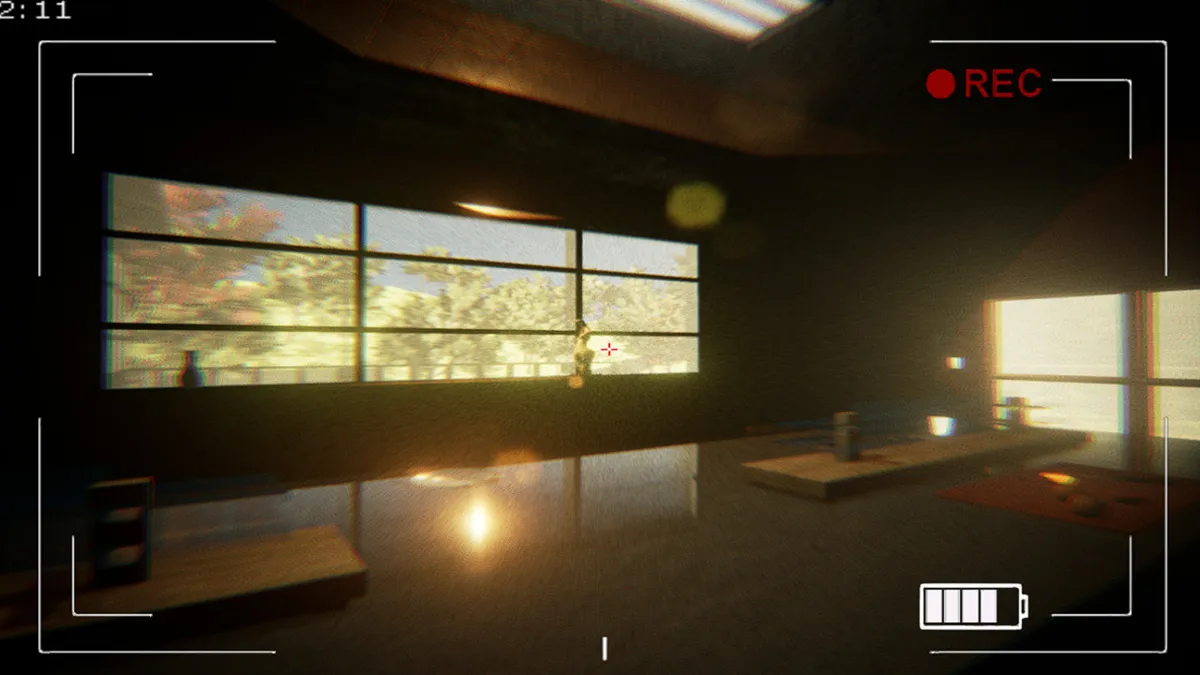
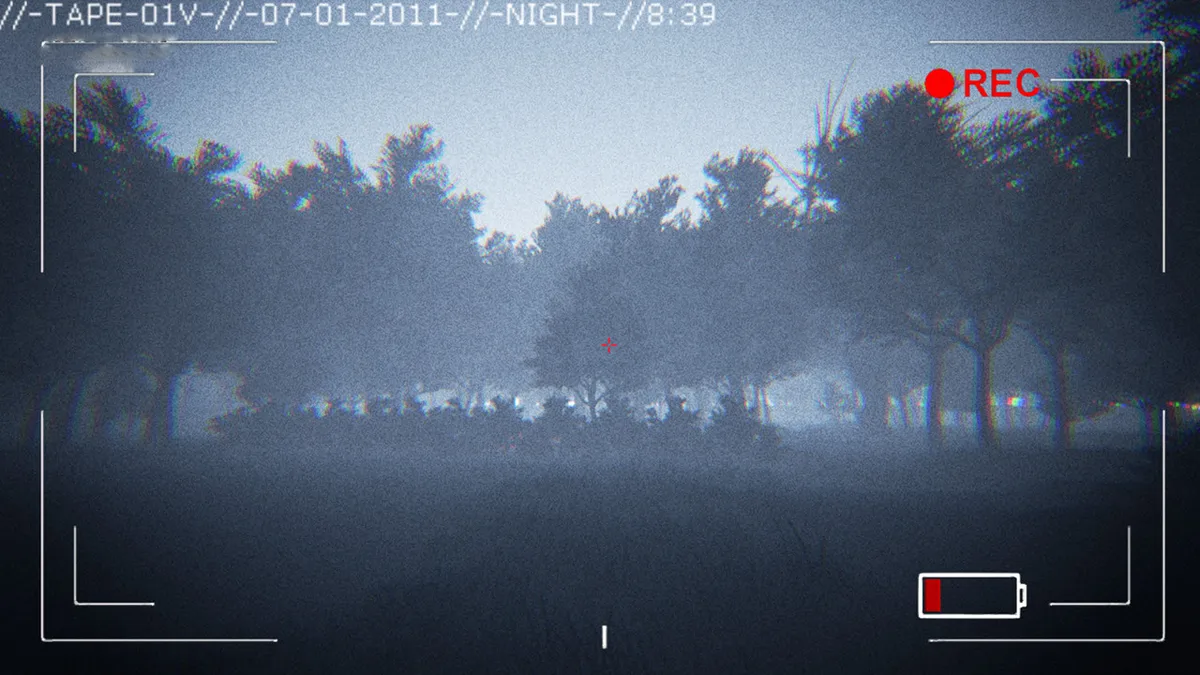
In Paranormal, the player does not steer a free-roaming character but holds a camera that serves as the entire viewpoint, framing the house the way a person would film it. The presentation draws on found-footage horror, styled after films such as Paranormal Activity and The Blair Witch Project, though the game is only inspired by them and is not associated with those movies. A camera screen-space shader applies visible artifacts across the image, including camera shake, pixelation, video distortion, audio distortion, and motion blur. These effects are present throughout the single-player experience.
The setup places the player in the role of Mattel Clarke, an artist who owns a haunted house and decides to record its hauntings with his camera. That decision establishes the viewpoint: the lens is the player's window into the house, and the hauntings are what the camera captures. Progress through the story comes from uncovering the house's troubled and gruesome past, both through the hauntings themselves and through journal entries left by the previous owner. The camera work and the investigation are therefore bound together in one activity.
A Haunting That's Never the Same Twice
The variation in Paranormal comes from a dynamic haunting system rather than a fixed sequence of scares. That system randomizes the experience by combining multiple outcomes, dynamic triggers, and numerous variables with an action-reaction system. In practice, what the player does with the camera feeds into how hauntings respond, so encounters are assembled from changing pieces instead of repeating one scripted order. The hauntings are also described as escalating over the course of the game, gradually building toward something worse and more horrific than the early incidents.
That randomization is tied to the investigation itself: the player uncovers the house's troubled and gruesome past through the hauntings, the previous owner's journal entries, and other findings, while the randomized hauntings still deliver the important material rather than letting variation skip it. The game also includes multiple endings, so a playthrough is not guaranteed to finish the same way as the last. The dynamic triggers and variables shape which hauntings occur and how they react, while journal entries and other discoveries build the history the player is piecing together across the house.
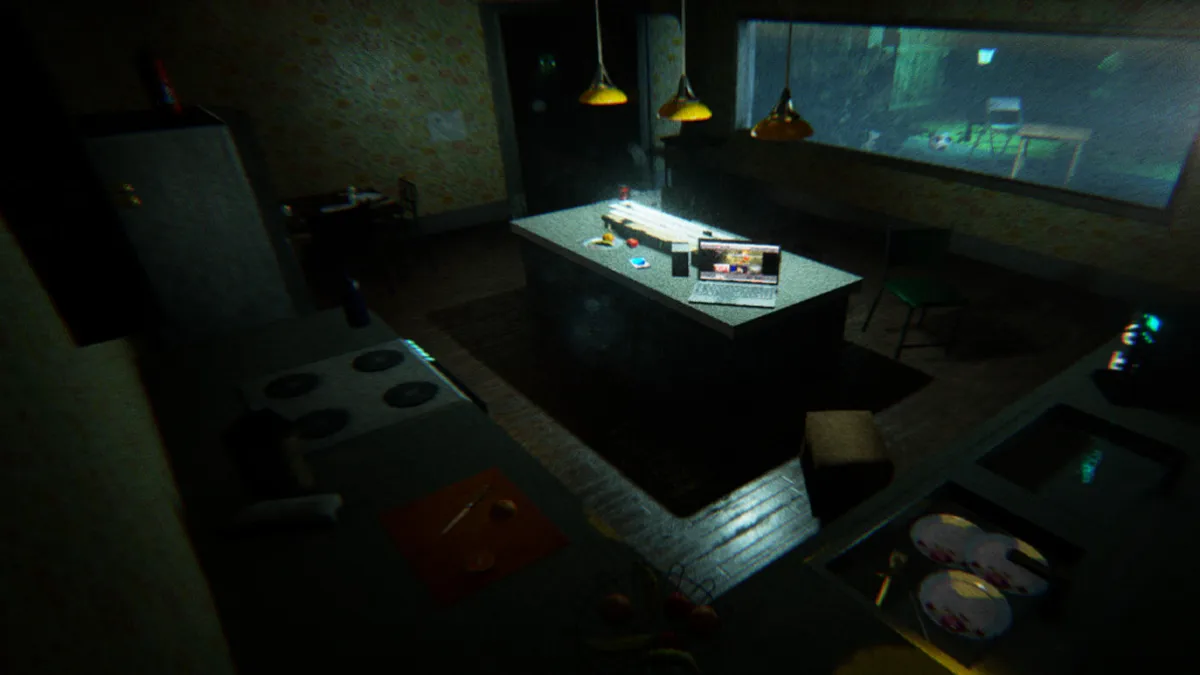
Batteries, Bed, and a Short-Range Camera Light
The camera needs power, and the bed is the recharge station. Sleeping in it restores the camera's batteries, so the act of resting doubles as preparation for another stretch of filming the house. The same sleep session also carries a chance of triggering other events, which means shutting down for the night is not a guaranteed pause. The player can deliberately return to the bed to top up the battery supply, but doing so accepts that the night may not pass quietly, and the recharge itself keeps the camera available for longer investigation runs.
The other light tool is the flashlight mounted on the camera. It produces a bright, short-ranged beam, and the light it throws casts dynamic shadows. Because the beam does not reach far, the player sees clearly only within that short distance, while shadows shift around the edges of whatever the light touches. That range limit works together with the sleep system: batteries drain across filming sessions and are restored by sleeping, so the short throw keeps illumination close and forces the player to move through the house rather than scan it from a distance.
Replay Value and an Evolving Build
Paranormal's replay value rests on two documented pieces: a set of multiple endings and a planned persistent scoring system. Because the campaign can close in more than one way, the final stretch of a playthrough cannot be assumed to match a previous run, so the house's story can be revisited with a different outcome awaiting the player. Alongside that, a persistent scoring layer is planned to sit across sessions, giving repeated visits a cumulative measure to build rather than a clean slate each time. The two ideas pair up: varied endings change where a run lands, while persistence tracks what carries over between them.
The evolving build is described through free content updates and a full remake in Unreal Engine 4. The updates are slated to add new locations, stories, scenarios, scares and gameplay mechanics, with the stated policy that downloadable content for the game will never be charged for. The remake covers the entire game and is planned as a free update for existing owners. In practical terms, the haunting system's randomization can be fed by new locations and scenarios, while the engine rebuild sits underneath the same camera-driven investigation. This listing is a Steam product record, so any date attached to it should be read as the Steam product date rather than the original release.
Planned Controls and Features
The planned control layer centers on gamepad support: work had already begun to make Paranormal fully controller-compatible, and because the camera is the entire viewpoint, a gamepad would let the player frame shots, pan the lens, and operate the mounted flashlight through one input method. Virtual Reality support is also slated to arrive free for owners, extending the same camera-held perspective into a headset. Separately, translations of the interface and in-game text are planned for German, Swedish, and Spanish. None of these additions alters the documented haunting randomization or the battery-and-sleep loop that governs filming sessions.
Two more planned features concern continuity across play. Steam Achievements are listed for the game, with the stated intent that there will be plenty to chase; the persistent scoring system described earlier sits alongside them as a cross-session measure. Steam Cloud Saves are also named for players who switch between machines, so progress stored from one computer can be picked up on another. How achievements and cloud saves would interact with the free content updates, the promised never-charged downloadable content, or the full Unreal Engine 4 remake is not documented in the supplied material.
Sources & further reading.
- Paranormal — official game profileRetrieved Oct 28, 2026
First published .