 THE GAME ARCHIVE
A Defense Game Built on Robot Production
Power of Defense, released by 4sdk in 2010 for Windows and macOS, presents itself as a strategy and defense mix in which your own machines are the answer to an invasion. The core rule is direct: fight the incoming robots by producing your own robots, then send the attackers back to their native world. Instead of placing static emplacements, you assemble a defensive force, improve it, and push it against waves of oil-smelling robots arriving from the platform between two parallel universes.
The Premise: One Defender Against Invaders From Between Universes
The setup is a planetary emergency. Evil, oil-smelling robots are coming from the platform that lies between both parallel universes, and your job is to defend your world from them. The player is cast as the last hero on earth and the only one the government could find (and pay), which frames the entire defense as a solo responsibility. That premise explains why the game is organized around a single defender building up a personal robot force rather than commanding an established army.
The Core Loop: Produce, Upgrade, and Send Them Home
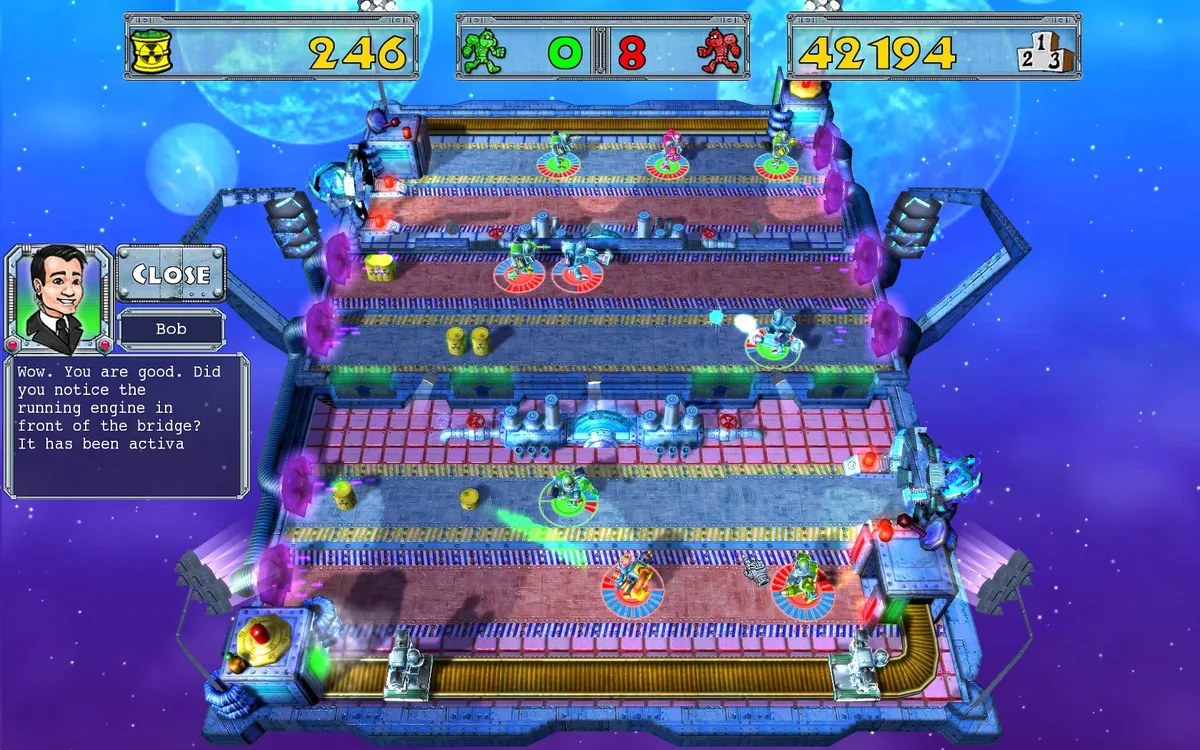
The documented defense loop has three interlocking steps. First, enemy robots arrive from the platform between the parallel universes. Second, you produce your own custom robots to fight on that contested ground. Third, upgraded robots are used to repel the attackers and send them back to their native world. Because both sides are robots and the battleground is the shared platform between universes, every decision you make is about the composition and strength of your produced force rather than about building passive walls.
The key point for a new player is that production and upgrading are not separate side systems; they are the way you win. Upgrading a robot increases its force, so the same robot you built can be made more effective against what comes at it. That creates an ongoing choice during a match: spend effort bringing new robots into the fight, or invest in making existing ones stronger. The rules describe both actions as part of the repellent, which is why the game reads as a build-and-hold defense rather than a twitch reaction test.
Mechanics and Systems: 13 Robots and the Combine Option
The unit pool is set at 13 individual robots. That number matters because it defines how varied your defensive options can become: each of the 13 robots is a separate unit you can produce and field. On top of the raw roster, the game offers a combination system. Combining robots is described as a way to extend strategical possibilities, meaning the merge option broadens what your force can do rather than simply stacking identical units. Combined with upgrading, which raises a robot's force, the systems give you two levers over the same 13-robot pool: change what the units are by combining them, or make a given unit hit harder by upgrading it.
Reading these rules together gives a practical picture of play. You cycle through producing robots from the 13 available, decide which of them to pair up through the combination system to open new tactical options, and decide which individual units are worth upgrading for more force. Because robots are the primary weapons for defense, every one of those choices directly affects how well you can repel the invaders. The documented rules do not spell out exact merge recipes or costs, so the sensible approach is to treat combination as your flexibility tool and upgrading as your raw-strength tool.
Three Arenas, Double Bridges, and Traps
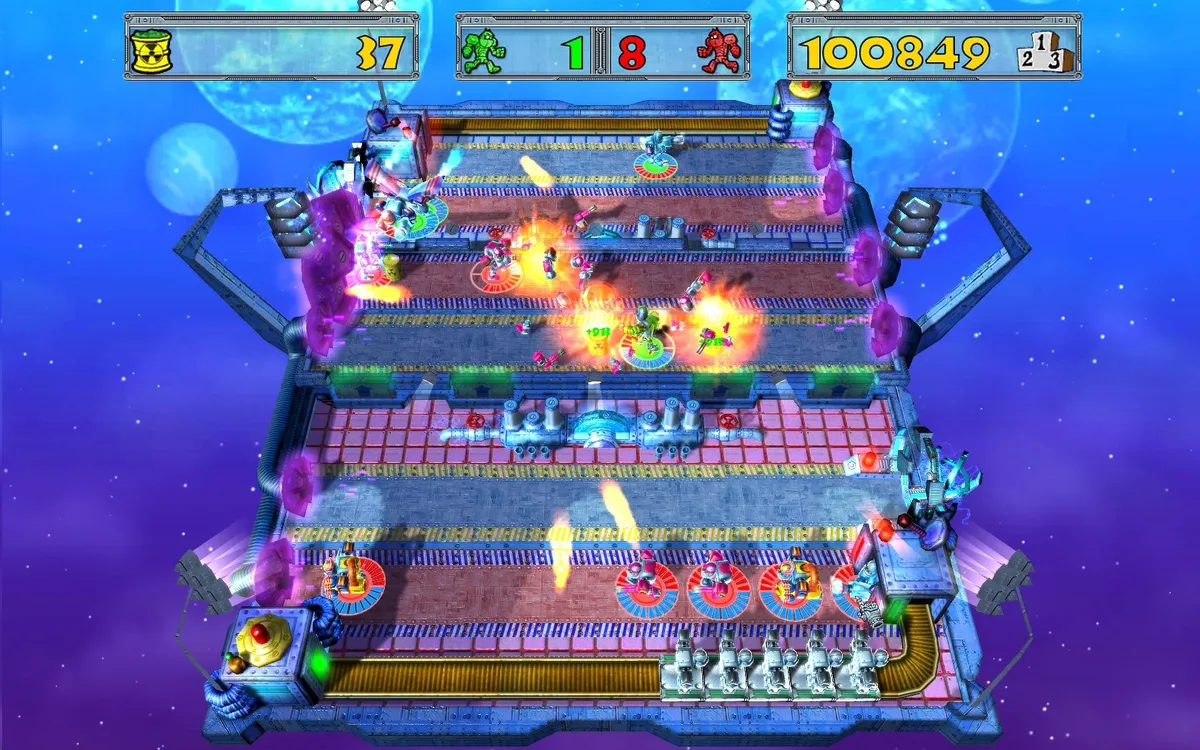
Defense happens across three different arenas. These arenas are the settings where your robot-building and defending take place, so switching arenas changes the theater of the fight even though the core production and upgrade rules stay the same. The game also advertises highly replayable game levels, which signals an intent for players to return to the same arenas and try different approaches to the same defense problem rather than treating each stage as a one-and-done script.
The level design adds specific terrain features: levels with double bridges and traps. These are presented as new level content, so they are part of the terrain the defending player contends with when sending enemies back. The documented material does not describe the exact geometry of a double bridge or the precise effect of a trap, so players should treat them as elements to learn within the arenas rather than assume fixed rules. What is supported is that the featured levels were built around these two named features.
Singleplayer Bonus Levels and Multiplayer Mode
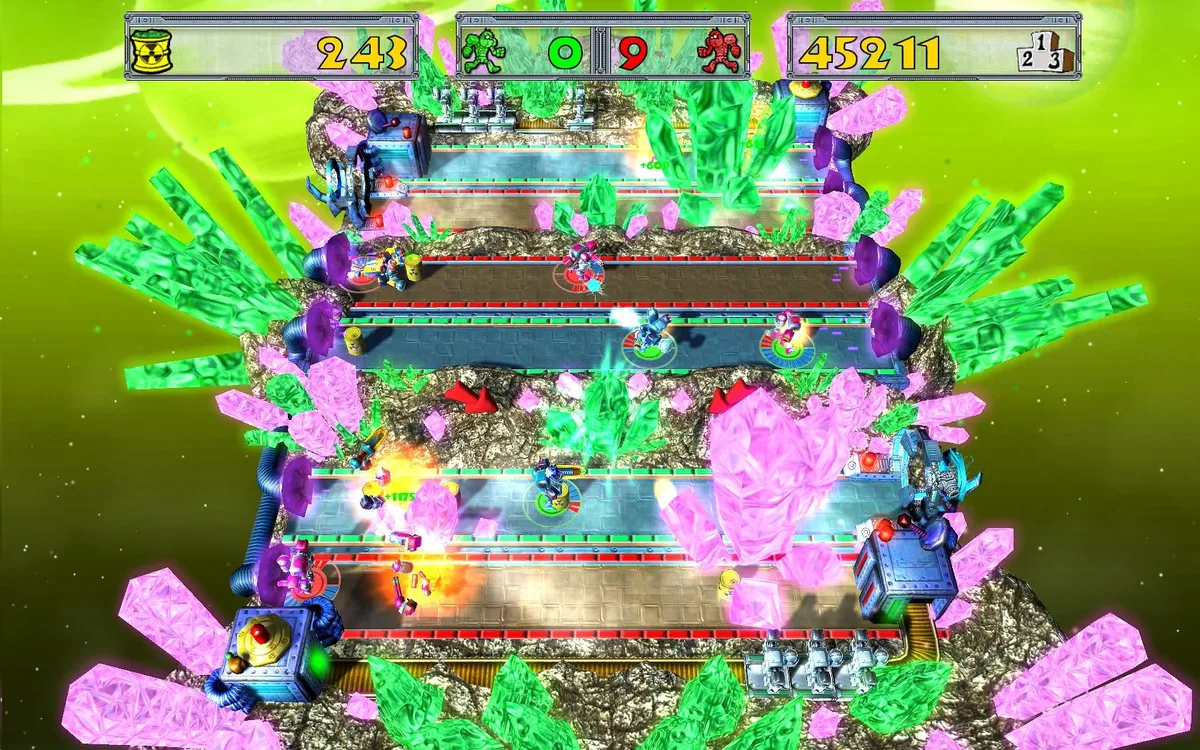
Power of Defense splits its play between singleplayer and multiplayer. The singleplayer side received nine bonus levels, while multiplayer mode lets you play against other people and received seven added levels. Both modes sit alongside the double-bridge-and-trap level additions and the three-arena lineup, so the same robot-production and upgrade rules carry across solo and competitive play. For a new player, this means the singleplayer bonus levels are the place to sharpen your production-and-combination decisions before taking that force-building loop into matches against people.
In multiplayer, playing against other people means your opponent is also working with the same kind of force-building toolkit. The documented rules are the same core loop: produce robots, combine them to extend strategic possibilities, and upgrade them for force. Multiplayer therefore turns the defense puzzle into a head-to-head test of which player better uses the 13-robot pool and the combine-or-upgrade decision. The seven added multiplayer levels are the stages for that contest, just as the nine bonus levels extend the singleplayer side.
Starting Guidance
Based on the documented rules, a few starting habits are worth forming. First, get robots produced early so you have a working force before the invaders build up. Second, experiment with combination, since extending strategical possibilities is its stated purpose and the merge option is what lets one of the 13 robots do more than its baseline job. Third, use upgrades deliberately on the robots you rely on most, because upgrading increases force and directly helps send attackers back to their native world. Finally, treat arenas and their double bridges and traps as part of the problem to solve, not just scenery, and use the singleplayer bonus levels to practice before testing the same decisions in multiplayer.
Scroll sideways to see the full table →
| Detail | Value |
|---|---|
| Title | Power of Defense |
| Release year | 2010 |
| Developer / Publisher | 4sdk |
| Platforms | Windows, macOS |
| Genres | Strategy, Indie |
| Arenas | 3 different arenas |
| Robot roster | 13 individual robots |
| Modes | Singleplayer (9 bonus levels), Multiplayer (7 added levels, play against other people) |
| Level features | Double bridges and traps; highly replayable game levels |
Sources & further reading.
- Power of Defense — official game profile Retrieved Oct 18, 2026
First published .