 THE GAME ARCHIVE
Puzzle Kingdoms, a casual Windows release from developer Infinite Interactive and publisher Strategy First, asks players to plan out strategic attacks to defeat their opponents. Its distinguishing idea is that the puzzle board is not a side activity. Ordering troops across the map and conquering cities happens through the game's puzzle gameplay, and the same gem-matching that resolves battles also feeds the resource you spend on your heaviest strikes.
The campaign frame is a world in danger: players build and manage armies led by heroic commanders to save Etheria from the brink of destruction. Everything the publisher documents about play sits between those two poles — the gem board where damage and mana are generated, and the map where troops are ordered and cities fall.
The Gem Board Is the Battlefield
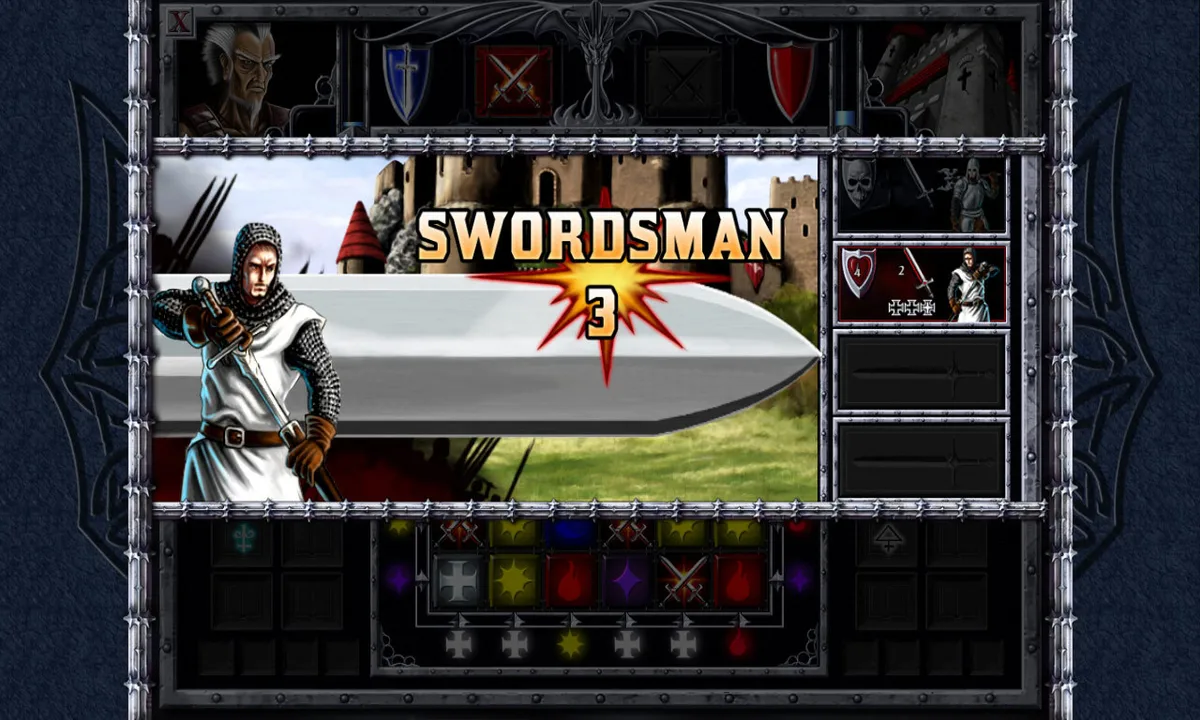
By matching corresponding gems on the game board, players do two things in the same action: they inflict damage on enemy forces and they build mana. That dual output is the core rule the rest of the game hangs on. A match is never wasted in only one direction — every successful pairing advances the fight and stocks the reserve you need for stronger attacks. The board is described as the place where players match gems with exactly those two effects, not as a separate minigame played between battles.
The stated goal of battle is to defeat opponents by planning out strategic attacks, and the gem board is where that planning is executed. Because a single match serves both damage and mana, the layout in front of you is simultaneously an offensive question and a resource question. The documented rules stop short of describing specific gem types, board sizes, moves or combo rules, so the safest reading is the one the source supports: matching gems is the input, damage and mana are the outputs, and defeating opponents is the aim.
Mana, and the Case for Saving It
Mana is generated by the same matching that deals damage, and it is spent on devastating attacks that will cripple opponents. That gives the board a two-speed rhythm. Ordinary matches are the steady, always-available pressure on enemy forces; banked mana is the heavier tool you release when you judge the moment right. The rules do not specify mana costs, thresholds or attack types, so what is documented is the relationship itself: matching builds the reserve, and the reserve converts into crippling attacks.
The decision this creates is a timing decision. Since the goal is to defeat opponents through planned strategic attacks, and since devastating attacks are the mana payoff, the player is effectively choosing when accumulated puzzle work becomes a decisive blow rather than ordinary chip damage. That is the main tactical texture the source supports: play the board to feed both tracks, then aim the heavier strikes at the foe.
Troops, Cities and the Map of Etheria
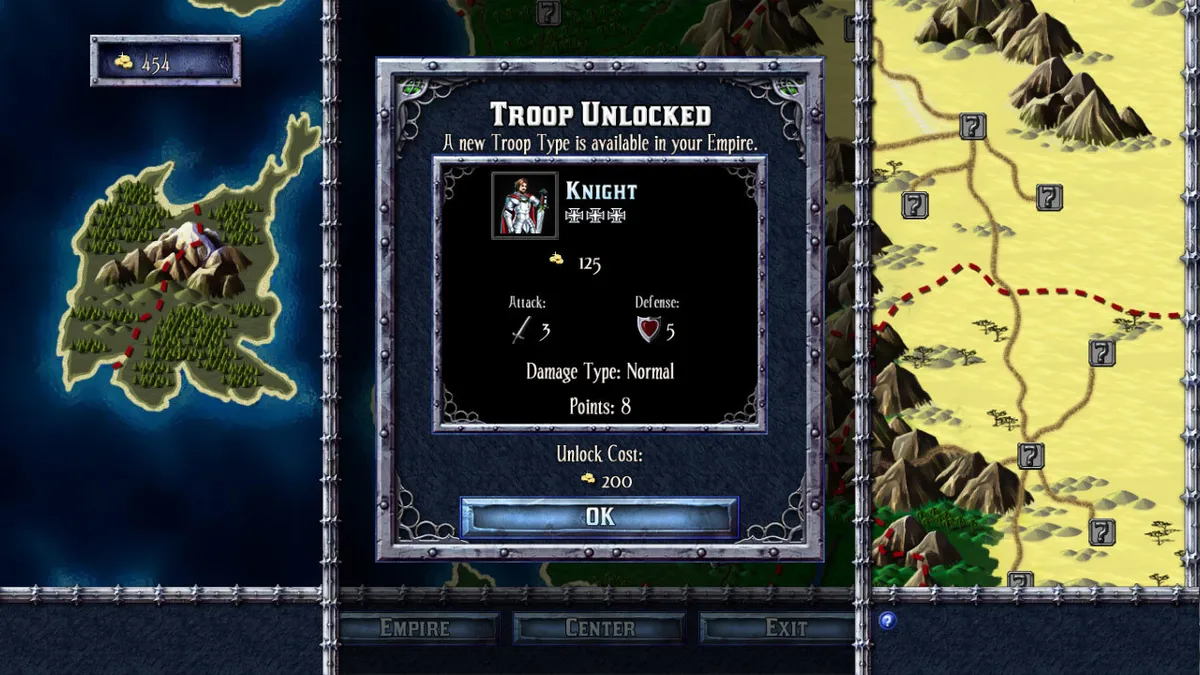
Away from the board, the game asks you to order troops across the map and to conquer cities through its puzzle gameplay. Those two statements define the campaign's shape: map movement positions and commits your forces, while the puzzle is the mechanism by which a city is actually taken. City conquest is therefore not a separate battle mode with its own rules; it is the outcome of the same gem-matching system described above.
This is where the documented systems interlock. Since the board is the only described way to inflict damage on enemy forces, the troops you order across the map ultimately resolve their fights through the puzzle. The map tells you which city matters and where your armies are going; the board decides whether they get it. Neither layer is described as operating independently of the other.
Heroic Commanders and the Army You Build
Players build and manage armies led by heroic commanders. That is the documented progression layer: the force you take onto the map is something you assemble and maintain, and the commanders are the named leaders around whom it is organized. The publisher does not describe commander statistics, recruitment rules, upgrade paths or army caps, so any advice beyond the stated facts — build the army, manage it, let commanders lead it — would be invention.
What can be said is how army building relates to everything else. The army exists to be ordered across the map and to conquer cities; the conquest is resolved through gem-matching that deals damage and builds mana. So improvement at the board — reading matches, managing damage against mana — is the practical skill that carries your commander-led force forward. The army is the frame; the puzzle is the engine.
How the Campaign Fits Together
Read end to end, the documented loop runs in one direction. Build and manage a commander-led army; order those troops across the map; take cities through puzzle gameplay; in the puzzle, match gems to damage enemy forces and accumulate mana; spend mana on devastating attacks to cripple opponents. Defeating opponents and conquering cities serve the stated aim of saving Etheria from the brink of destruction.
Because the same match feeds damage and mana, the strategic-attack framing applies at every scale: the skirmish on the board, the capture of a city, and the campaign to save the world all route through the same input. That coherence — one puzzle system carrying both the tactical fight and the territorial push — is the clearest thing the documented material says about what makes Puzzle Kingdoms its own game rather than a map game with a puzzle bolted on.
Practical Habits for New Commanders
- Derived directly from the documented rules:
- - Treat every match as double duty. Since a match both damages enemy forces and builds mana, favor moves that keep both tracks moving rather than only one.
- - Hold mana for the moment it hurts. Devastating attacks are meant to cripple opponents, so the documented payoff is the heavy strike, not the small one.
- - Remember what the map is for. Troops are ordered across the map to reach cities, and cities are conquered through the puzzle; positioning and matching are one campaign.
- - Build around commanders. Armies are built and managed under heroic commanders, so army composition and leadership are part of the plan, not backdrop.
These are habits, not a walkthrough. The publisher's description does not document specific levels, enemy types, gem colors, costs or difficulty settings, so there is no honest route to give beyond the rules above. What a new player can rely on is the structure: matches do double duty, mana buys the decisive blow, the map moves the army, and the puzzle takes the city.
Release and Access
Puzzle Kingdoms is credited to Infinite Interactive as developer and Strategy First as publisher, and it is listed on Steam as a casual Windows game. The store listing carries a 2009 product date. That is the scope of what the official material establishes about availability: a Windows title from those two companies, categorized as casual, offered through Steam. Nothing in the supplied source describes ports, remakes or later bundle contents, so the game should be treated as the original 2009 release rather than an expanded edition.
Record at a Glance
Scroll sideways to see the full table →
| Item | Detail |
|---|---|
| Title | Puzzle Kingdoms |
| Release | 2009 (Steam product date) |
| Platform | Windows |
| Genre | Casual |
| Developer | Infinite Interactive |
| Publisher | Strategy First |
| Core input | Matching corresponding gems on the game board |
| Board outputs | Damage to enemy forces; mana for devastating attacks |
| Map layer | Order troops across the map; conquer cities through puzzle gameplay |
| Army layer | Build and manage armies led by heroic commanders |
| Stated aim | Save Etheria from the brink of destruction |
Sources & further reading.
- Puzzle Kingdoms — official game profile Retrieved Oct 20, 2026
First published .