 THE GAME ARCHIVE

Red Faction Guerrilla Steam Edition sells itself on a single idea with a dozen applications: the battlefield is made of parts you can remove. Properly dynamic, physics-driven destruction is not decoration here but the main instrument of play, built into an open Martian world where the player is an insurgent fighter in the re-established Red Faction movement, battling for liberation from the oppressive Earth Defense Force.
The Steam Edition package is documented for Windows as an Action title, and the official profile describes a huge open-world game of fast-paced guerrilla-style combat paired with true physics-based destruction. What follows is drawn from that publisher description; this feature is a source summary rather than a hands-on report.
The Premise: Insurgents Against the EDF
The campaign is set 50 years after the climactic events of the original Red Faction. The player takes the role of an insurgent fighter within the newly re-established Red Faction movement, and the movement's purpose is explicit: battle for liberation from the oppressive Earth Defense Force. That framing matters mechanically, because it puts the EDF at the center of the map as the target set the player is expected to attack, undermine and erode.
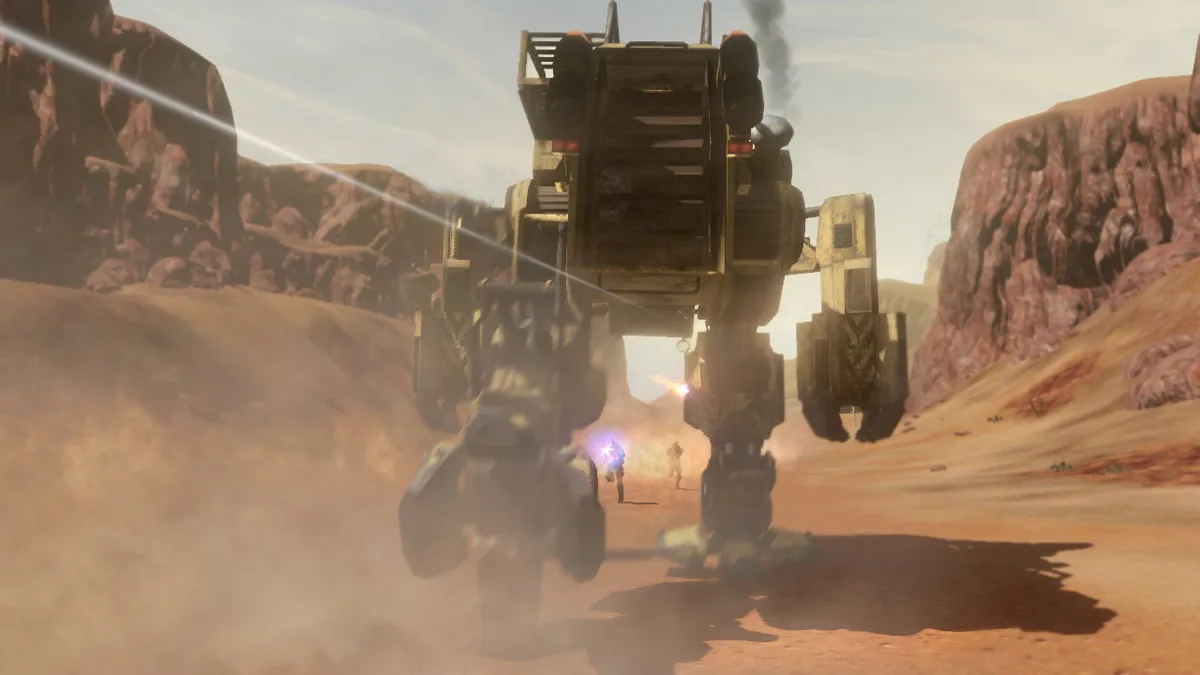
The world hosting that struggle is the huge, unforgiving Martian landscape, running from the desolate mining outpost of Parker to the gleaming EDF capital city of Eos. Even before a shot is fired, the geography sets up the conflict: an industrial settlement on one side and the occupier's polished seat of power on the other, with both sitting inside the same fully destructible open-world environments.
The Core Loop: Choose the Fight, Then Reshape It
The documented loop starts with authorship. The player decides who, when, where and how to battle, using guerrilla tactics, improvised weaponry and modified vehicles to lead insurgent attacks on EDF targets. Attacks can be launched according to personal gameplay style, and missions can be taken in any order the player chooses. The alternative to a mission is not idleness but a different kind of pressure: engaging in destructive activities to weaken the EDF's grip on Mars.
That combination changes how a session can be planned. Rather than following a single prescribed route, a player can pick a target, pick an approach, and pick a toolset, then let the destruction rules decide how the fight develops. The profile places destruction at the tactical center: use it to your advantage, setting ambushes or chaining explosions against enemy strongholds, and permanently modify the game environment in the process.
Destruction as a Rule Set, Not Scenery
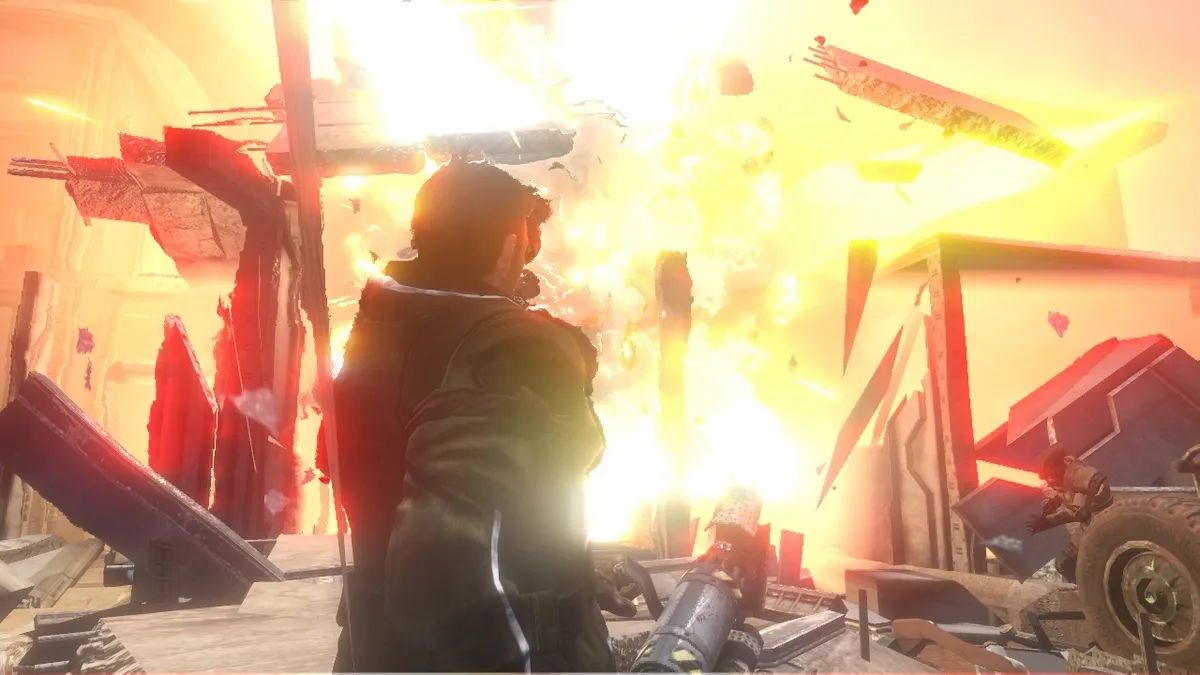
The documented tool is fully dynamic physics-based destruction, used to improvise on the fly. The profile names four canonical plays. Blow a hole in a wall or floor to set an ambush. Use the same kind of breach to escape. Take out a staircase to stop pursuers. Drive vehicles through blown-out walls. Each is a small decision with a large consequence, because the change persists: destruction permanently modifies the game environment.
Permanence is what turns these tricks into tactics. A wall opened for an ambush remains an opening; a stairwell removed for a retreat remains impassable ground. Players who plan ahead can therefore shape a stronghold before the shooting starts, and players caught in a bad fight can still cut a new exit. The profile frames the same idea from the other direction as an ever-changing landscape that the player carves a path through, improvising combat tactics by mixing gameplay styles, vehicles, weapons and explosives to defeat the EDF.
The Guerrilla Toolkit: Weapons, Vehicles and Chain Reactions
Three supported tools fill out the destruction system: guerrilla tactics, improvised weaponry and modified vehicles. The profile consistently groups them as the means by which insurgent attacks are led against EDF targets. Vehicles deserve particular attention because the documented use is structural rather than purely mobile: driving through a blown-out wall converts a hole into a doorway wide enough for a vehicle, which in turn makes a breach an approach route as well as an escape route.
Explosives are the second multiplier. The profile lists chain reaction explosions as a way to attack enemy strongholds, so a single detonation is not necessarily the end of the interaction; it can be the start of a sequence that spreads damage across a target. Read together with the permanent-environment rule, the toolkit rewards a player who thinks about how one action creates the conditions for the next: the wall that opens the firing line, the stairs that close the pursuit, the chain that clears the stronghold.
Where the Fighting Happens: Campaign and Multiplayer
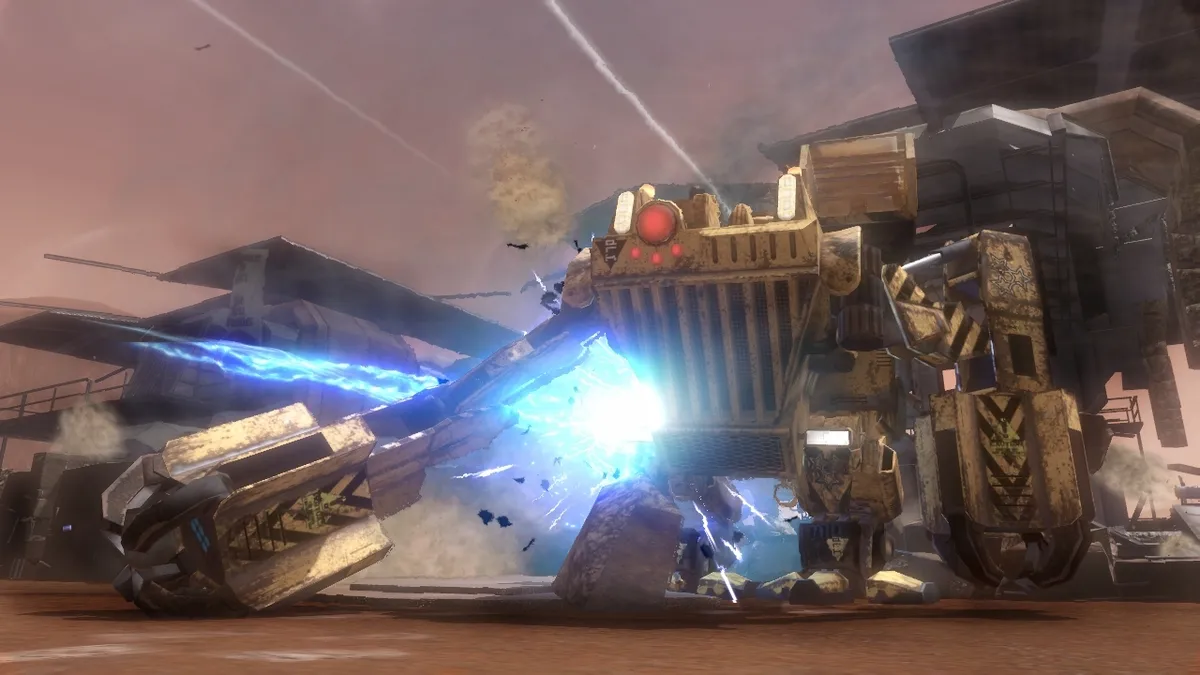
The single-player campaign is the insurgent-fighter role described above, played out across the Martian open world from Parker to Eos. Its pitch is fast-paced guerrilla-style combat combined with true physics-based destruction, and the player decides who, when, where and how to battle using guerrilla tactics, improvised weaponry and modified vehicles. The world itself is populated, in the profile's words, by EDF forces, Red Faction resistance fighters and downtrodden settlers caught in the cross-fire.
Multiplayer Combat is the second documented mode. The profile's promise is that there is no place to hide when guerrilla warfare skills are tested across a variety of highly destructive multiplayer combat modes. That is the full extent of the supported description: a set of modes organized around destruction, echoing the same improvisational skills the campaign asks for.
Why the Design Coheres
The pieces reinforce one another. An open world with missions in any order supplies the freedom of choice; a destructible environment supplies the freedom of method; and a persistent change model makes earlier choices matter later. The profile labels this evolving and emergent gameplay, in which the player carves a path through an ever-changing landscape by improvising and mixing combat styles, vehicles, weapons and explosives. The result, as described, is a game whose memorable moments come from combinations the player assembles rather than from a fixed sequence of set pieces.
The visual contrast reinforces the same theme. A desolate mining outpost and a gleaming capital city imply different kinds of structures to fight through, and both sit inside the same fully destructible world. The wide-open Martian setting is the raw material; the player's decisions decide what remains standing.
Scroll sideways to see the full table →
| Item | Documented detail |
|---|---|
| Title | Red Faction Guerrilla Steam Edition |
| Genre | Action |
| Platform | Windows |
| Store record date | 2009 |
| Setting | Mars, 50 years after the original Red Faction |
| Named locations | Parker mining outpost; EDF capital city Eos |
| Core hook | Fully dynamic physics-based destruction |
| Guerrilla toolkit | Guerrilla tactics, improvised weaponry, modified vehicles |
| Mission structure | Missions in any order; destructive activities weaken the EDF |
| Modes | Single-player campaign; multiplayer combat modes |
Sources & further reading.
- Red Faction Guerrilla Steam Edition — official game profile Retrieved Oct 18, 2026
First published .