 THE GAME ARCHIVE
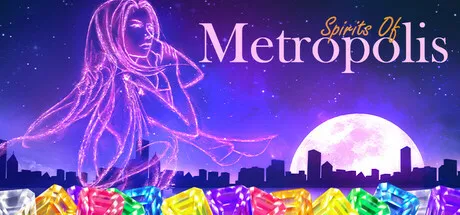
Spirits of Metropolis: Legacy Edition puts a decision between matching gems and watching them explode: you control when chaining begins. Linking dozens of gems before setting them off makes preparation part of the attraction, not just the resulting blast. Around that central action, the game offers several different reasons to keep playing, from traveling through branching constellation paths to solving puzzles, making levels for friends and competing for a high score.
Matching Is Preparation; Starting the Chain Is a Decision
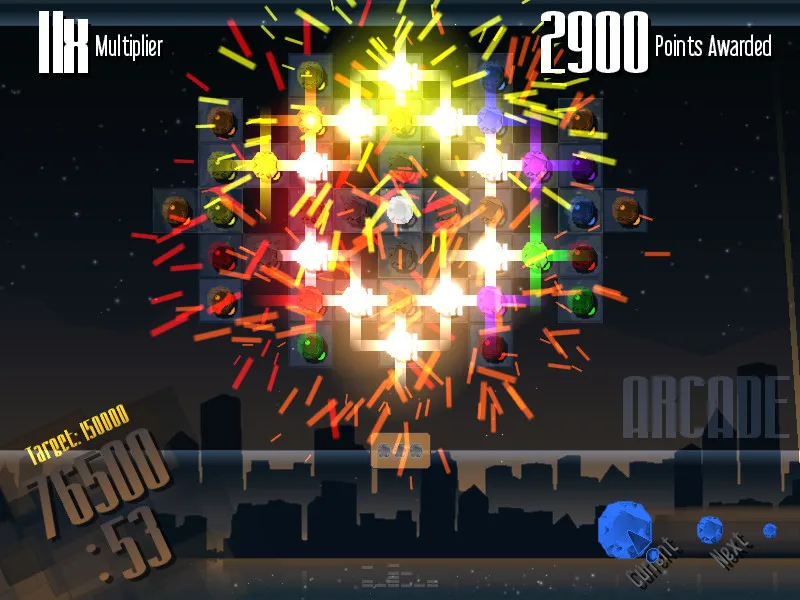
The core action is matching multiple gems to create explosions. Its distinctive element is scale combined with timing: matches can link dozens of gems into a large chain before you set it off. That separates constructing the arrangement from activating it. The player is not merely looking for a match in isolation, but working toward a linked collection whose explosion begins at a player-chosen moment.
A useful starting approach is to treat linking and triggering as separate questions. First consider the gems you can bring into the chain; then decide when to begin it. This follows directly from the control the game gives you, rather than assuming that finding a match must immediately end the preparation. New obstacles on each level also make it worth examining the current challenge before committing to a familiar arrangement.
Journey Connects Branching Routes with World Unlocks
Journey carries the matching game across several constellations and more than 70 levels. Branching paths give this mode a route structure rather than a single straight sequence. For a player choosing where to focus, Journey is the option built around traveling through a connected set of stages. Its appeal is therefore different from selecting an individual puzzle to solve or pursuing the highest score as the main objective.
Unlocking a world introduces new modes, so progress changes the available play as well as advancing the journey. Level obstacles operate at a smaller scale, presenting something new within individual stages. These two layers give players different things to attend to: the immediate obstacle while preparing a chain, and the broader prospect of opening another world. Journey's progression is consequently about access to new modes as well as completing levels.
Puzzle Challenges and the Move from Solver to Creator
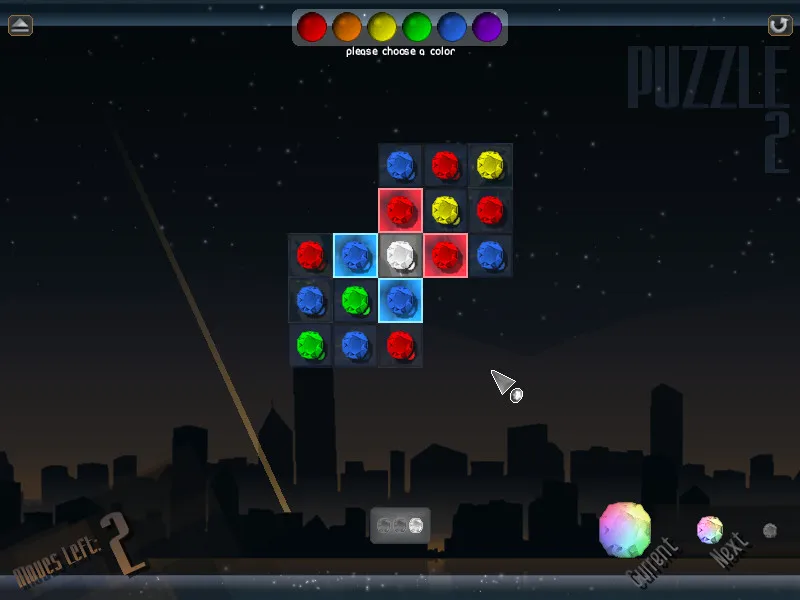
Puzzle Challenges supplies more than 50 puzzle levels. This is a distinct collection with solving as its stated goal, making it a natural choice when you want a puzzle-focused session rather than Journey's branching progression. The distinction matters when deciding what to pursue: the puzzle collection offers problems to work through, while Journey organizes its levels around paths and world unlocks. The two modes provide different structures around the gem-matching premise.
Level creation changes your role from solving supplied puzzles to making your own. You can share those custom levels with friends, giving the feature an audience beyond the person building the puzzle. For someone interested in that side of play, the important choice is whether to tackle an existing challenge or author one for another player. Creation is thus a separate activity, not simply another entry in the supplied puzzle count.
Medals and Milestones Lets You Choose the Challenge Level
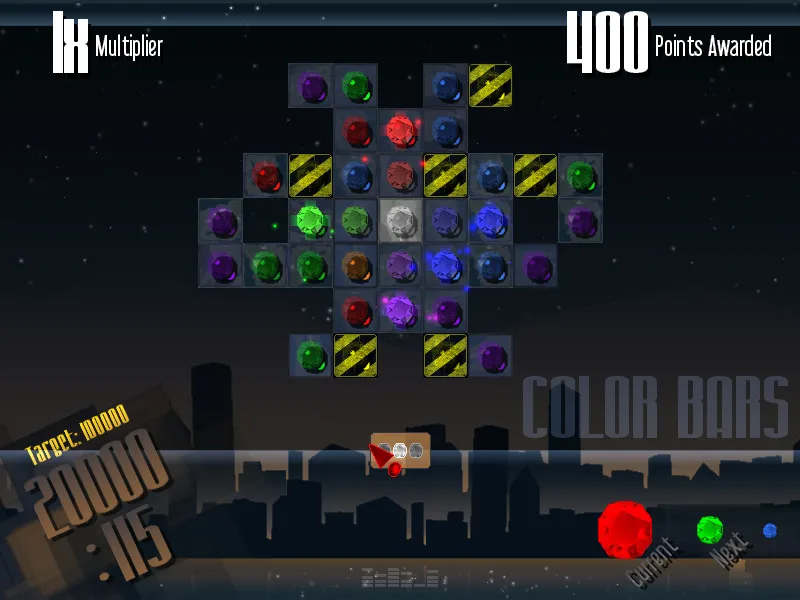
Medals and Milestones is an unlocking system that rewards both ordinary play and completion of particular challenges. Those are different incentives: you can receive rewards through participation, while specific challenges give you a more deliberate target. Crucially, the challenge attempt can take place on a level of your choosing. Selecting the stage is therefore part of pursuing that objective, rather than every challenge necessarily prescribing its own location.
When pursuing a particular challenge, make the level choice deliberately: consider the challenge you are trying to complete before selecting where to attempt it. Rank Mode offers another direction, competition for the highest score. That changes the immediate emphasis from earning a specified reward to chasing a numerical result. Together, these systems accommodate different goals without making world progression the only reason to return to gem matching.
Gem Clarity and Multiple Profiles
The colorblind editor addresses the visual task underlying all that matching: distinguishing gems. It lets you change each gem's color values or use gem shapes for greater clarity. If the supplied colors are difficult to distinguish, these are practical options to explore before concentrating on chain construction. Shape identification provides an alternative to relying on color alone, connecting the appearance settings directly to reading the pieces you are trying to match.
Multiple player profiles are also supported. This complements a game that offers several kinds of engagement: following Journey, solving puzzles, authoring levels or chasing scores. The central decision remains when to begin a prepared chain, but the surrounding systems let players choose what that matching session is for. Clearer gem identification helps with the immediate action; selecting a mode or challenge supplies the larger purpose.
Sources & further reading.
- Spirits of Metropolis: Legacy Edition — official game profileRetrieved Nov 7, 2026
First published .