 THE GAME ARCHIVE
Left Click to Kill: Melee and Ranged Combat Basics
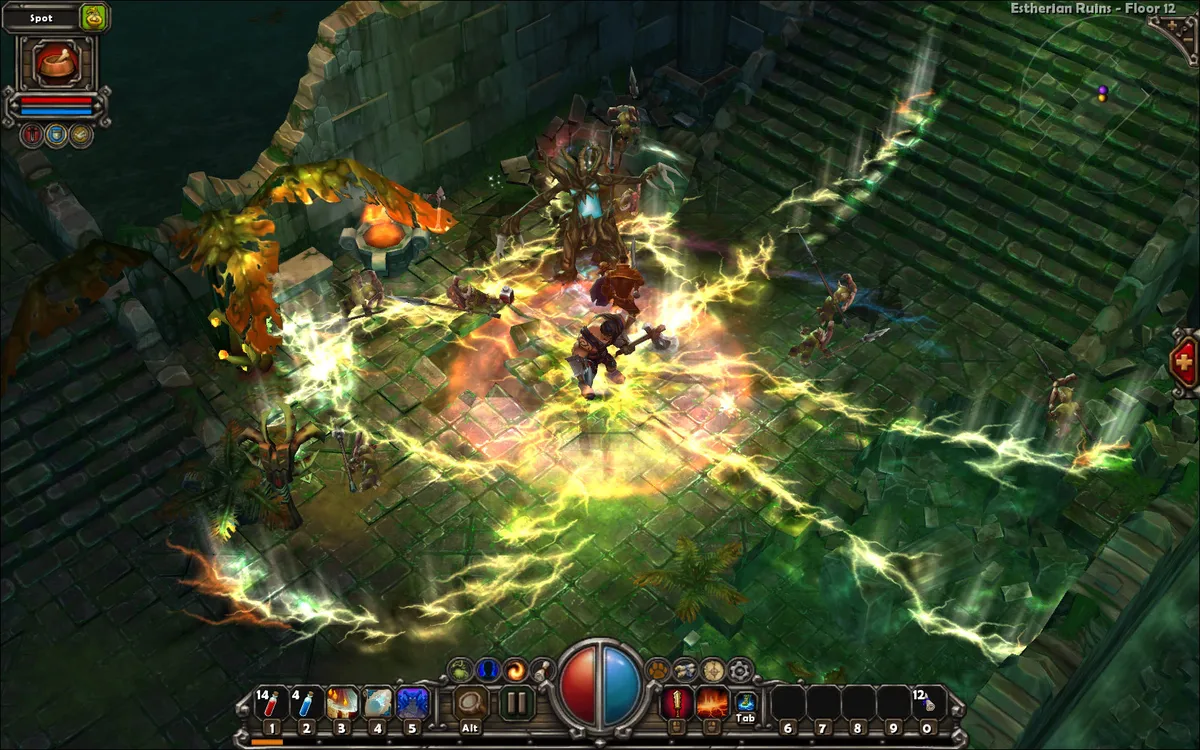
Before a fight begins, rolling the gauntlet cursor over a monster targets it. A left-click then performs a weapon attack, while a right-click casts an assigned spell, so the same encounter calls for choosing between steel and magic. Attack with a weapon by moving close and left-clicking the target; holding the left mouse button down keeps attacking that same target repeatedly. A companion pet may join the fight, though it is not guaranteed to do so.
Melee combat means close-quarters fighting with bladed weapons, maces, or even fangs and claws. Standing adjacent to enemies exposes the hero to counterblows and melee weapon damage, so high Strength and Defense attributes matter: the goal is to deal more damage than foes while keeping enough health through the skirmish. Until level building raises those attributes, equipping the best available armor compensates. Ranged combat instead means casting offensive spells or shooting from a distance with bows, guns, and crossbows; its advantage is striking foes before they close, and high Dexterity supports it.
Weapons, Armor, and Sockets: Outfitting Your Hero
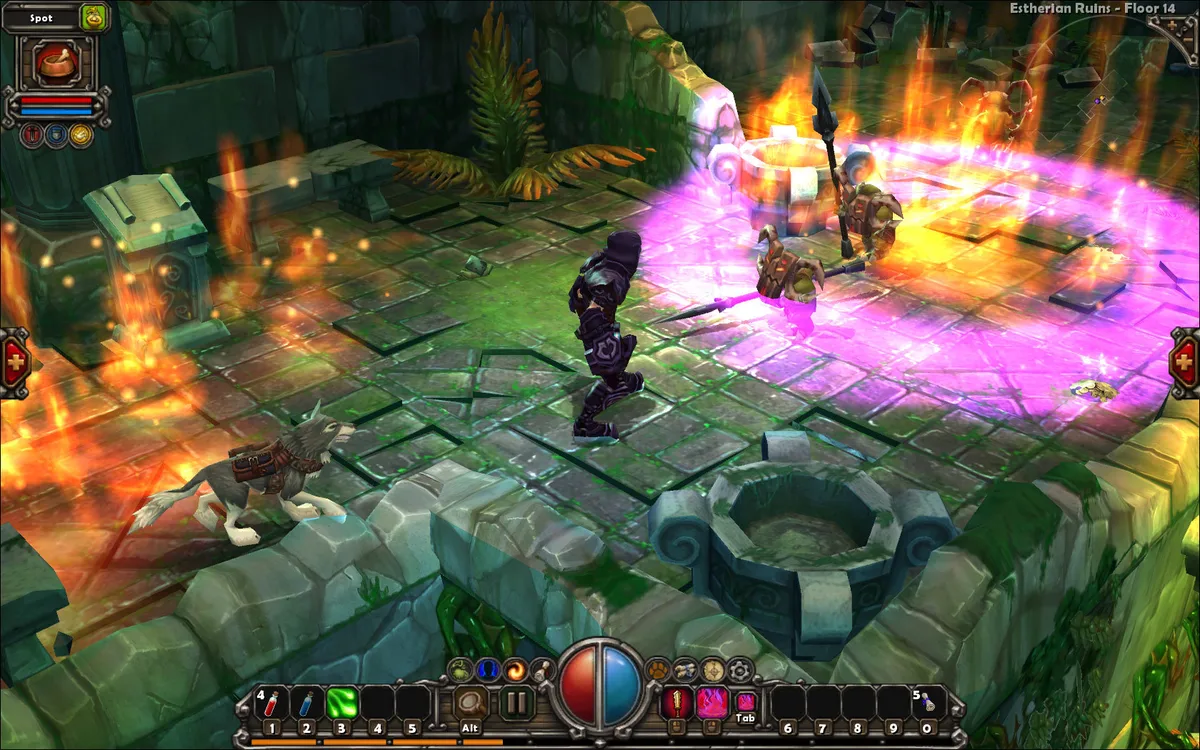
Weapons in Torchlight split into melee and ranged categories. Melee options include swords, daggers, staffs, and polearms, each carrying its own physical damage range that subtracts from enemy health. Ranged weapons cover bows, guns, crossbows, and wands. Both groups are marked as either one-handed or two-handed, so a character must devote one or both hands to the equipped weapon; one-handed weapons matter most for players who invest skill points in the Dual Wielding skill. Every weapon also displays a Damage per Second number, the average damage it deals over one second of combat, factoring in bonuses from magical properties or enchantments.
Armor works differently from many role-playing games: no character class is barred from any armor type. A Destroyer, Vanquisher, or Alchemist can all wear whatever clothing or shield carries the highest armor rating, though bonuses to magical armor and the weapon paired with the equipment deserve consideration. A one-handed weapon without the Dual Wielding skill pairs well with a shield for blocking attacks. Socketed arms and armor reward customization: transmuting collected ember into higher-quality pieces lets you insert improved ember into sockets, and since ember types offer distinct advantages, choices are optimized around your character's class and specialized skills.
Leveling Up: Skill Points, Stats, and Class Skills
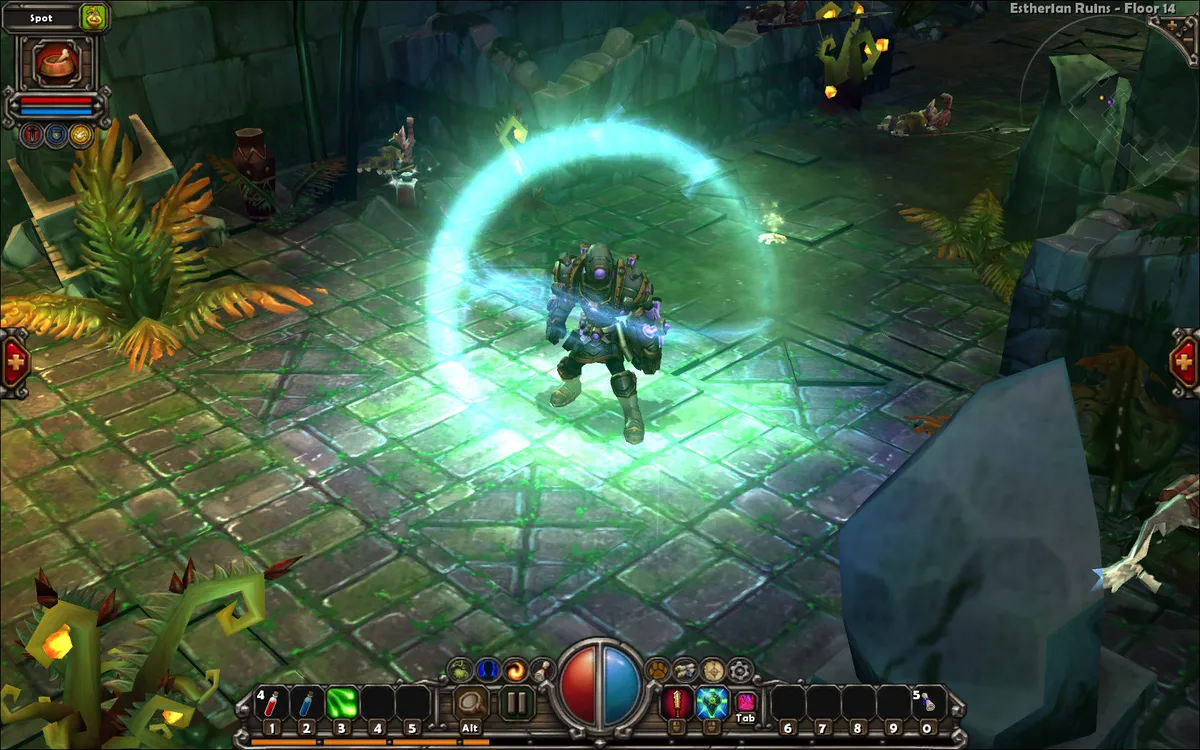
Advancing a level in experience or fame produces a skill point, which is spent in the Skills menu to purchase talents arranged in three tiers for each class. Every skill can climb to ten ranks, and spending enough points turns a modest entry into a devastating version of itself; the manual contrasts a Vanquisher's Rank 1 Lightning Bomb, useful against low-level monsters, with the far heavier Rank 10 form. Points may be mixed freely across tiers, with no prerequisite path locking one tier behind another. Some heroes also share talent options such as Dual Wielding and adventuring skills.
Each level also grants five Stat Points to divide among Strength, Dexterity, Magic, and Defense. A spent point cannot be edited or redistributed afterward, so the allocation is permanent and benefits from a plan made before clicking; the manual warns against building attributes around whatever items currently sit in the inventory. Defense investment can be reviewed on the Character Sheet, where hovering over the Defense numbers shows points, damage absorbed, and Block Chance. Resistances from rare, unique, and enchanted gear appear along the bottom of that sheet.
Pets, Portals, and Retirement: Companions and Legacy
A pet that joins the fight can be directed through three stance icons. The sword icon sets an aggressive stance: left-clicking it orders the pet to attack any nearby enemy, which suits levels occupied by weak monsters but can create a stampede of trouble against challenging mobs. The shield icon sets a defensive stance, ordering the pet to attack only when you are attacked. A pet's spellcasting cannot be controlled for timing or location in combat. The pet sheet shows the beast class, level, experience, slots for spells, rings and a necklace, its melee, elemental and ranged attack ratings, and armor absorption.
Below the pet's combat ratings sit 21 pack slots for stowing items, treasure and other valuables, turning the companion into portable storage. Town Portal scrolls and spells should be used in open areas, because a poorly placed portal can drop you where you cannot escape; if that happens, the Town Portal on the southern side of Torchlight returns you to the closest nearby destination in the mine or tomb. Retirement ends a hero's run but carries a prized item imbued with unique attributes down to a new hero, preserving that item's special properties across characters.
Sources & further reading.
- Torchlight — official game profile Retrieved Oct 19, 2026
- Torchlight — official game profile — publisher-supplied gameplay manual Retrieved Oct 19, 2026
First published .