 THE GAME ARCHIVE
Food First: Feeding the Tribe Without Starving It
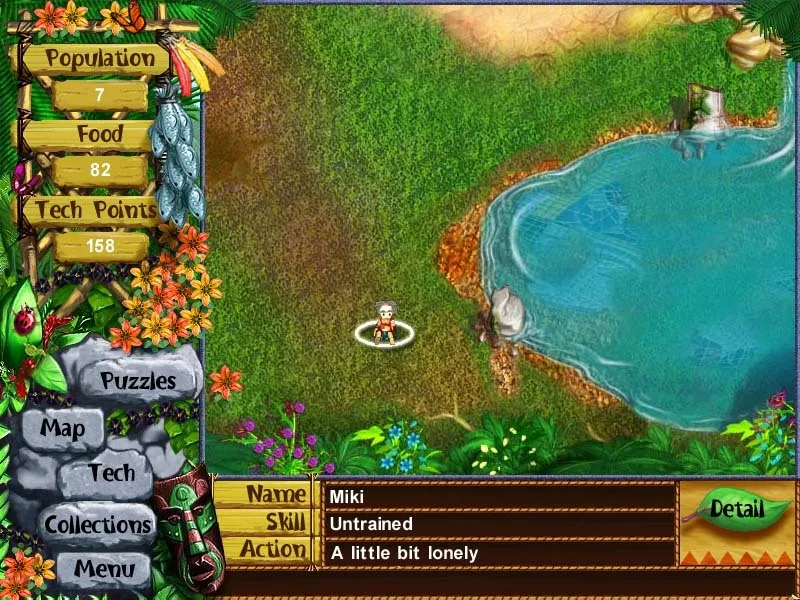
Food is the tribe's primary need, so the opening priority on Isola is keeping the food supply ahead of the villagers who depend on it. The manual frames the core pressure plainly: expand too fast, and the tribe runs out of food and must lean on children to gather mushrooms just to hold starvation back. Children can locate and harvest mushrooms to supplement the village's food stores, but they only do so when told to. Because they must be directed, a player watching the food level can send the children out before reserves fall to zero.
The interaction the manual stresses is between food supply and population growth. Adequate housing lets the tribe grow in number and gain skills for the puzzles, but growing too quickly leaves everyone with nothing to eat, and the writing calls for finding the right balance to be sure of success. Hunger also feeds into health: villagers can be weakened by prolonged disease, starvation, on-the-job injuries, Island Events or old age, and a weakened villager generally recovers over time unless sick, elderly or still suffering injuries. Moving that villager to a less demanding job speeds recovery.
Housing, Population Balance and the Cost of Too Many Babies
Adequate housing is what lets the tribe grow in number and gain the skills needed for Isola's puzzles, so construction and population are tied together. Babies eat as much as adults, which means making too many babies too soon can quickly create a food crisis. The manual's warning is that growing the tribe too quickly leaves everyone with nothing to eat, forcing the children to gather mushrooms to keep starvation at bay, and it asks the player to find the right balance to be sure of success.
Sickness is handled villager by villager. Heal another villager only when that villager's status reads Sick on the Details screen, and note that any villager, including a sick one or a child, can perform the healing. If a sick villager resists a particular doctor's attempt, try again with a different villager. Sick villagers must be healed or they weaken and die, while the weakened can recover over time unless sick, elderly or still injured.
Teaching Jobs, Raising Village Tech and Watching for Clues
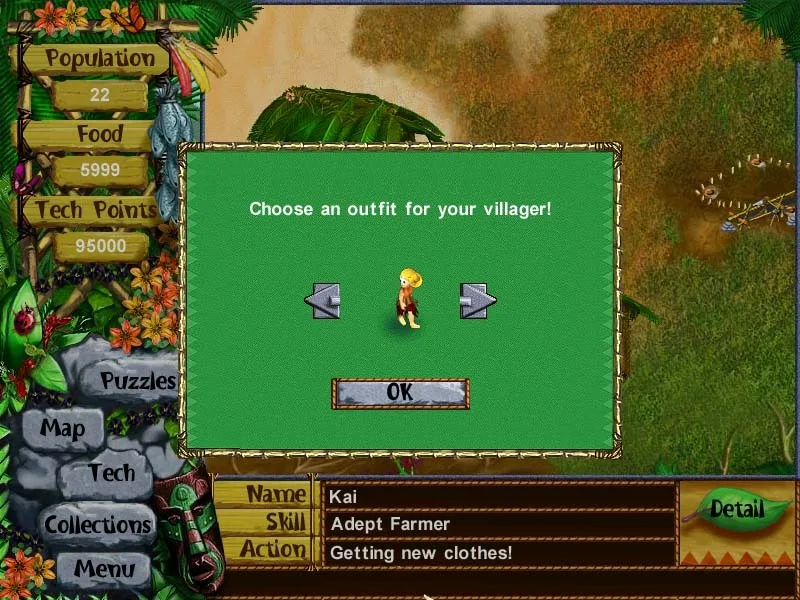
Jobs are not automatic. A villager assigned to a new task will not begin working it independently; the player must teach the job first, then monitor that villager's learning progress until the Trainee status is reached. Once a villager is a Trainee, the work continues more reliably without constant supervision. Skill development therefore comes from training and accumulated experience, and those developed skills are what later tasks and the sixteen puzzles draw on.
Village Tech is purchased in an order the player chooses. On the Village Tech screen, the question-mark button for each technology opens information about that advancement, and reading it before buying helps decide which technology to acquire next. Separate from any purchase, the villagers' own curiosity frequently supplies clues toward solving puzzles, so watching what draws their attention can point toward a solution rather than a technology.
Sixteen Puzzles, a Nine-Sector Map and Villagers Who Age
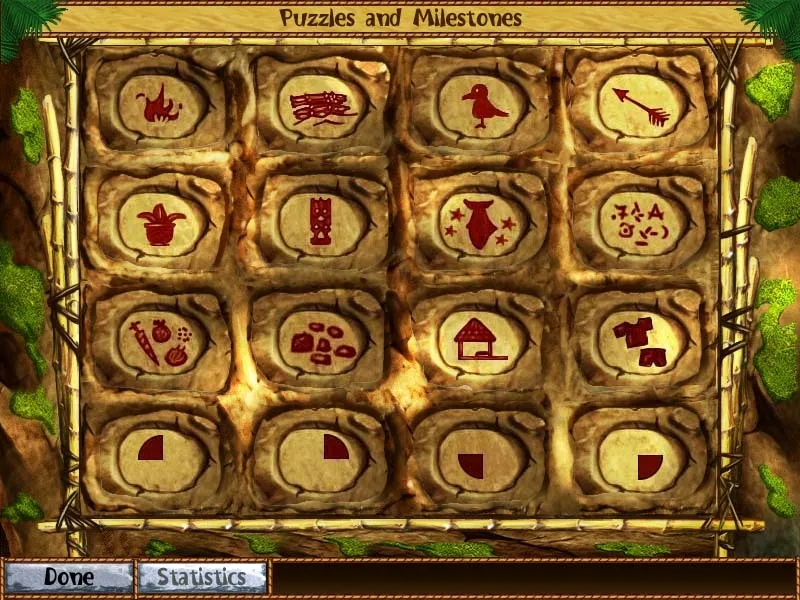
The sixteen puzzles sit at the center of the campaign and call for combinations of Village Tech, villager skills and other puzzles. Only some puzzles wait on the completion of specific puzzles, and the set is rarely finished in the order shown on the puzzle screen, so the displayed sequence is not a strict checklist. Solving puzzles is what uncovers the secrets of Isola and moves the game forward. Clues arrive from what villagers are curious about and from the messages that appear when an adult villager is taken exploring around the island.
The map is split into nine sectors that correspond to the numbers one through nine on the numeric keypad, and the top row of number keys works when a numeric keypad is absent. Sweeping across the map this way makes searching for collectible items easier, and picking up a villager while they work interrupts them, causing them to drop and lose whatever object they were carrying. Over real time the game keeps producing new surprises each time it is turned on, and villagers pass from toddlers to adults to grey-haired elders, with each stage carrying its own roles and abilities.
Sources & further reading.
- Virtual Villagers: The Lost Children — official game profileRetrieved Oct 30, 2026
- Virtual Villagers: The Lost Children — official game profile — publisher-supplied gameplay manualRetrieved Oct 30, 2026
First published .